
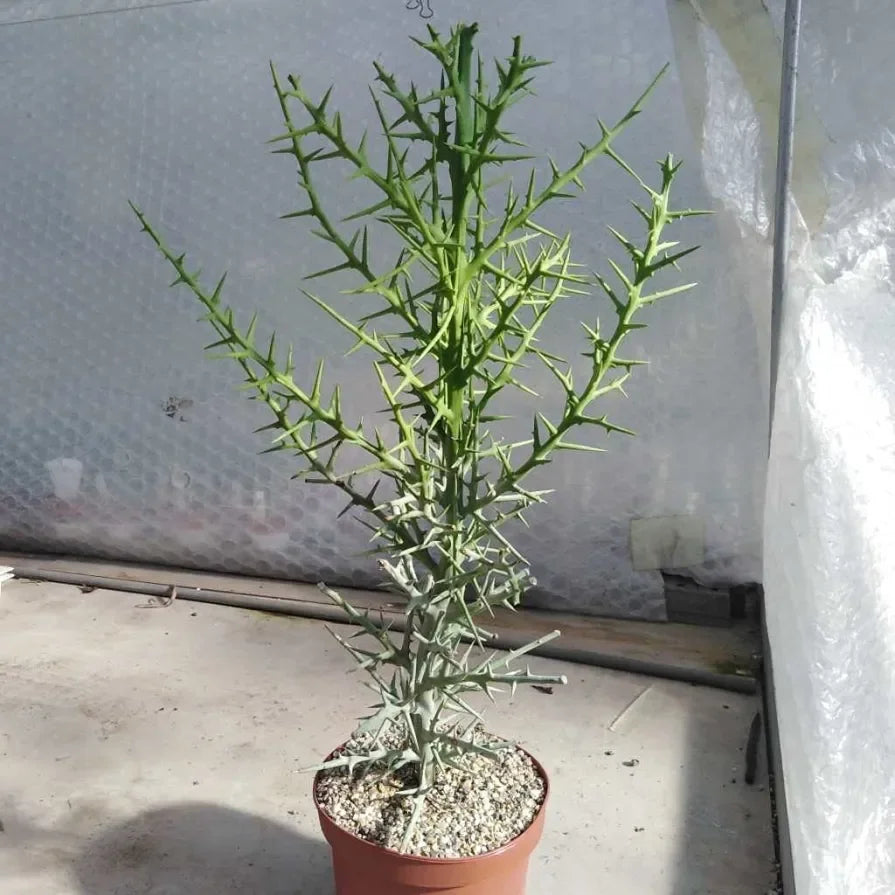
Euphorbia Stenoclada
Euphorbia stenoclada, commonly known as the Thin-Stemmed Euphorbia or Madagascar Candle Tree, is a striking succulent shrub native to the arid regions and dry forests of Madagascar.
-
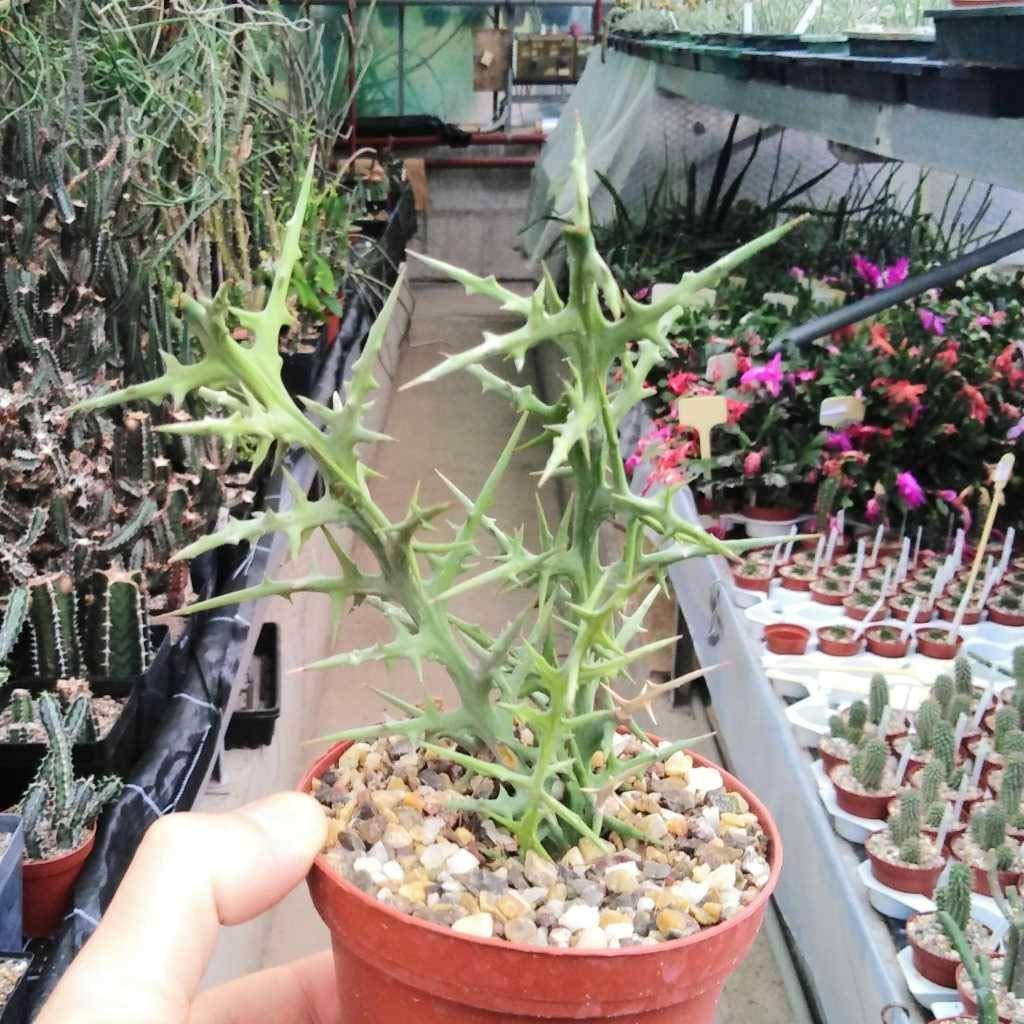
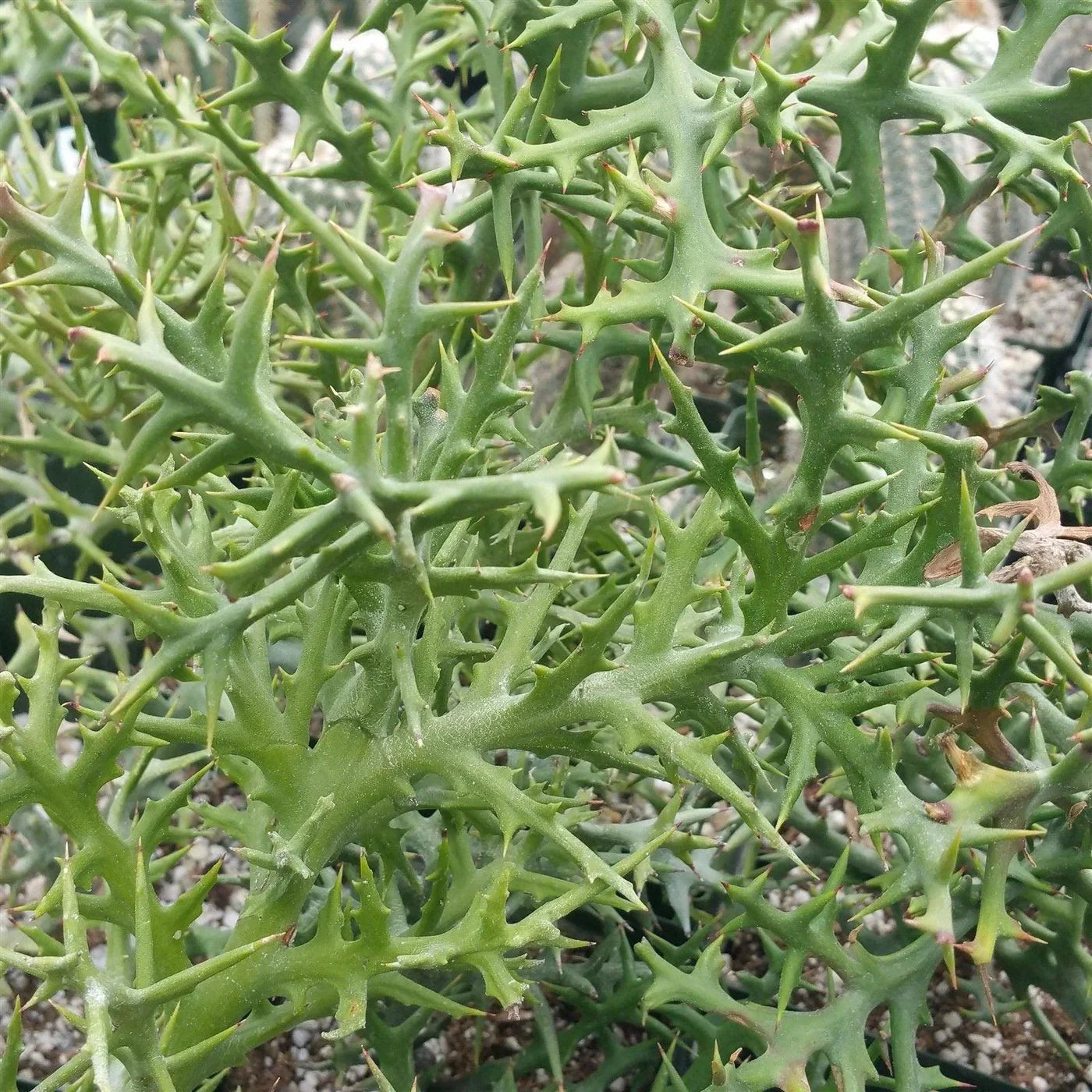
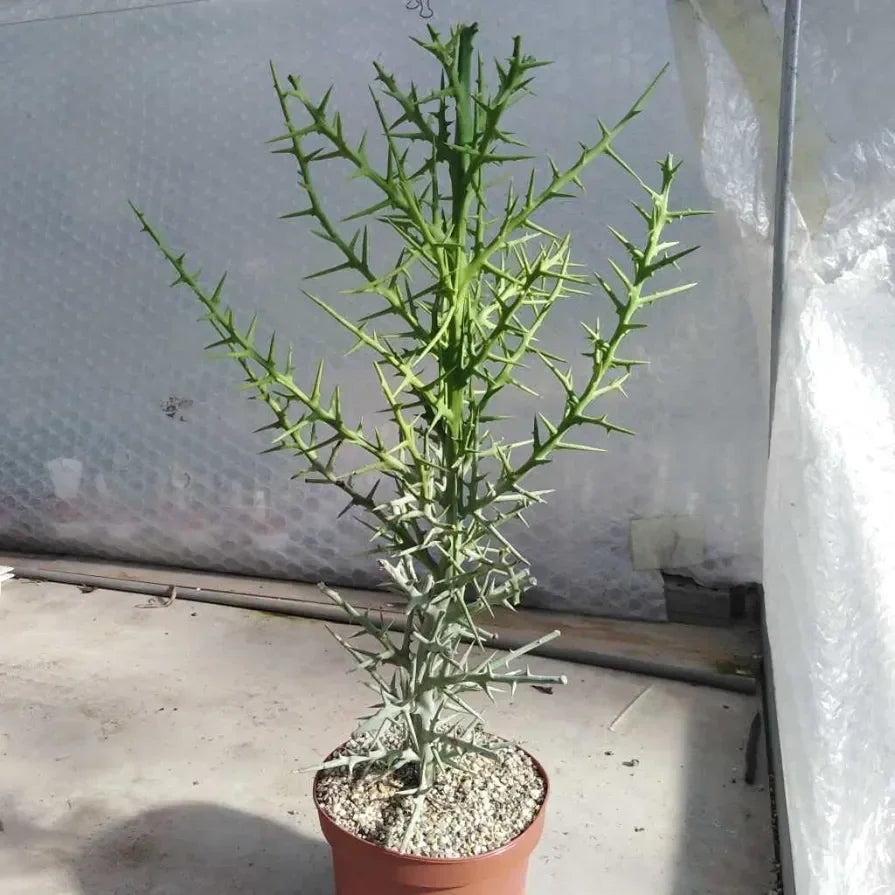
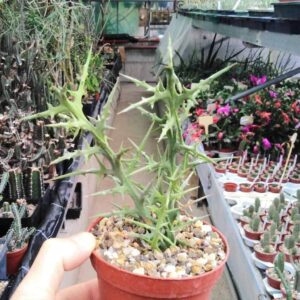
Appearance: Euphorbia Stenoclada features a unique, sculptural growth habit with narrow, cylindrical, greenish-grey to bluish stems that branch intricately, creating a dense, twiggy, and somewhat weeping canopy.
-
Foliage: True to its succulent nature, it rarely holds onto leaves for long. Tiny, narrow leaves may appear briefly on new growth, but the stems themselves handle photosynthesis.
-
Defense: Like other members of the Euphorbia genus, it contains a milky white sap (latex) that can be irritating to the skin and eyes, so it’s best to wear gloves when pruning or handling it.
Care Requirements
Growing Euphorbia Stenoclada is relatively straightforward if you mimic its native arid environment.
1. Light Requirements
-
Provide full sun to bright, indirect light.
-
Placing it in a sunny south- or west-facing window indoors, or giving it full sun outdoors, ensures compact growth and prevents it from becoming leggy.
2. Soil & Potting
-
Requires extremely well-draining soil.
-
Use a commercial cactus and succulent mix amended with perlite, pumice, or coarse sand to ensure water never pools around the roots.
-
Always use a pot with drainage holes.
3. Watering
-
Follow the “soak and dry” method: water thoroughly until it drains out the bottom, then allow the soil to dry out completely before watering again.
-
Being drought-tolerant, it stores water in its stems. Under-watering is always safer than over-watering, as root rot is its primary threat. Reduce watering significantly during the cooler winter months.
4. Temperature & Humidity
-
Thrives in warm temperatures and cannot tolerate frost. Protect it if temperatures drop below 10°C (50°F).
-
It prefers low to average household humidity and dislikes damp, stagnant environments.
Origin
-
Native Habitat: Endemic to the southern and western regions of Madagascar.
-
Environment: It grows naturally in dry, rocky scrublands and coastal thickets, where it has evolved to withstand intense heat, blazing sunlight, and prolonged periods of drought.
Reviews
There are no reviews yet.