
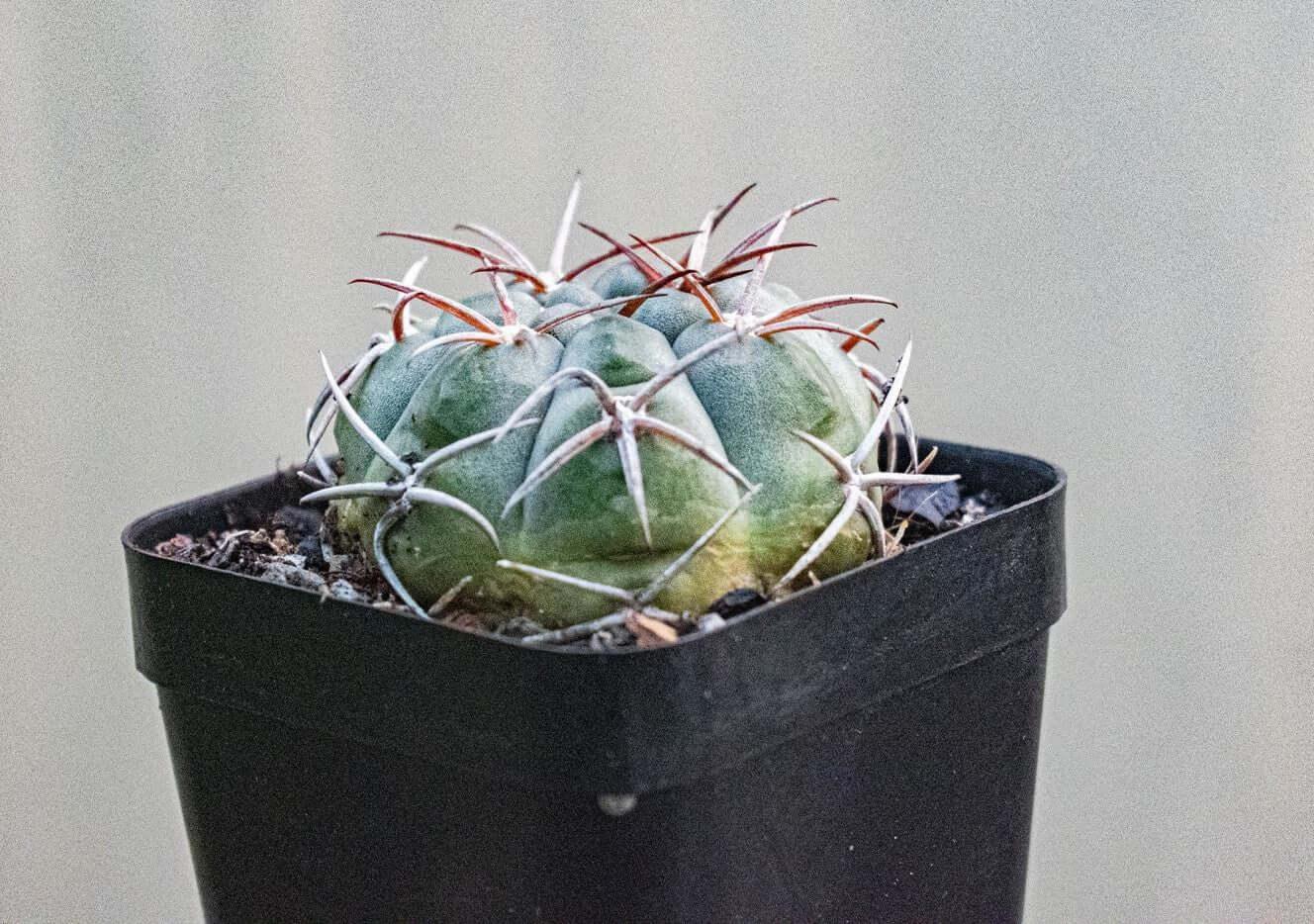
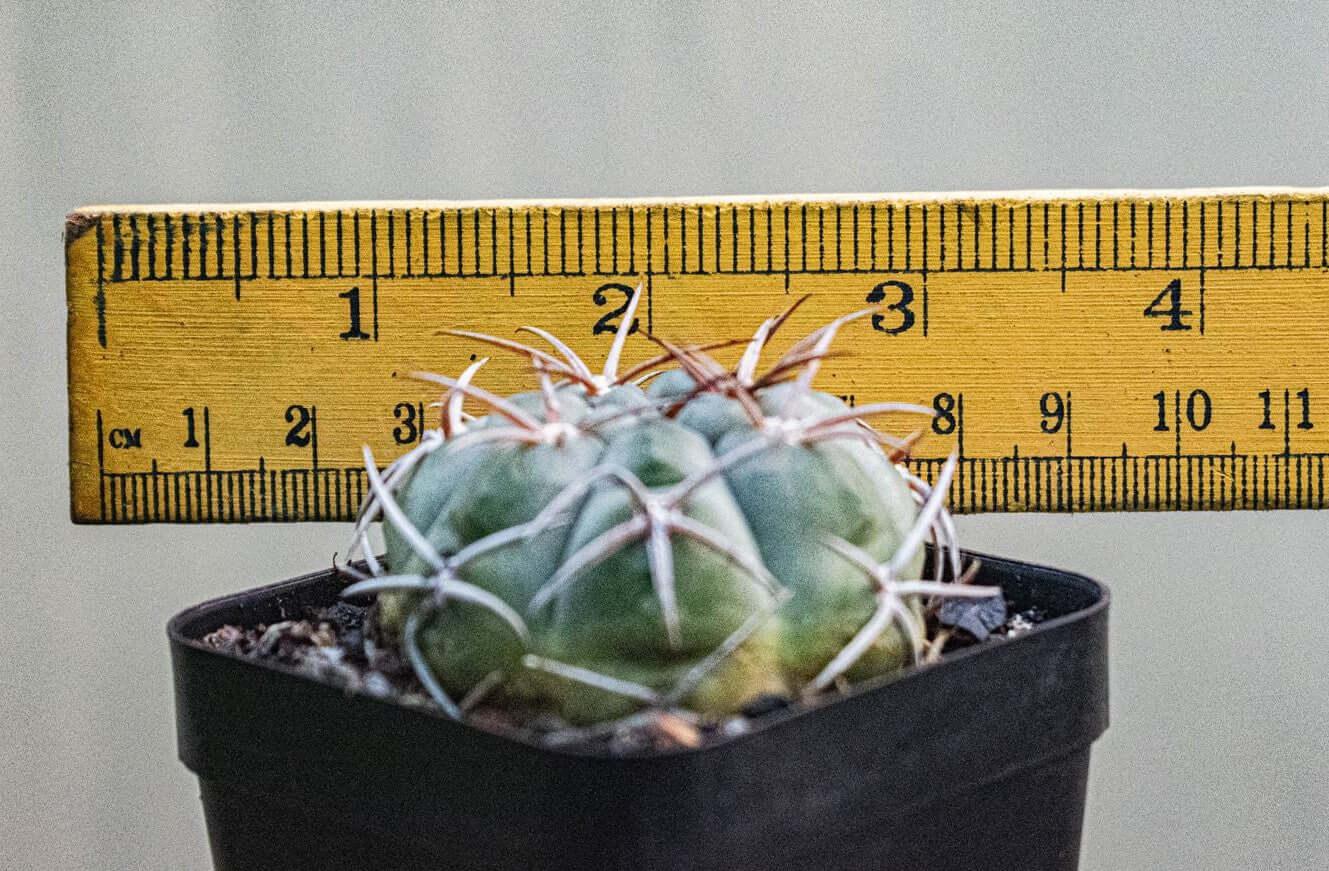
Gymnocalycium Bayrianum
Origin and Natural Habitat
-
Native Range: Gymnocalycium bayrianum is native to South America, specifically localized around Cerro-Medina in the Tucumán province of Argentina.
-
Habitat: It typically thrives at elevations ranging from 1,000 to 1,500 meters, growing safely tucked under the protective canopy of native grasses, low shrubs, and rocky slopes that shield it from intense, direct exposure.
Key Characteristics
-
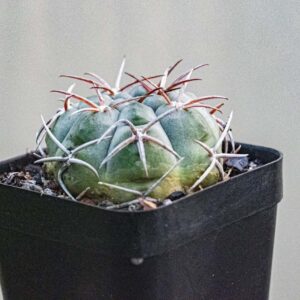
Appearance: A distinct, solitary, flattened-globular cactus growing roughly 10 cm wide and 4–5 cm tall. Its body color transitions from light or blue-green to a striking dark brownish-cherry shade when exposed to high sun stress.
-
Spines: Gymnocalycium Bayrianum is renowned for having some of the most dramatic armature in the genus. It features robust, heavily curved, light brown spines that pair up tightly to resemble buffalo horns.
-
Flowers: Gymnocalycium Bayrianum produces large, eye-catching, funnel-shaped creamy-white flowers featuring a contrasting soft reddish throat.
-
Roots: Develops a significant taproot system, meaning it prefers deeper containers compared to shallower-rooting cactus species.
Essential Care Guide
-
Light: Provide bright, indirect to direct morning sunlight. Strong light brings out its gorgeous bronze-purple stress colors and encourages heavy flowering, but intense midday or afternoon rays during peak summer can cause sunburn.
-
Soil: Requires a mineral-heavy, highly porous, fast-draining medium. Mix standard cactus soil with substantial inorganic drainage materials like pumice, perlite, or coarse grit.
-
Watering: Employ the “soak and dry” method. Water deeply during spring and summer, ensuring excess water drains away completely, and let the soil dry out entirely before watering again. Keep it bone-dry throughout the winter.
-
Pot Selection: Due to its natural taproot, choose a pot that is relatively deep rather than shallow, ensuring it has functional drainage holes.
-
Temperature: Enjoys warm conditions during the growing season. In winter, keep the plant in a cool, dry resting environment (around 8°C to 12°C) to trigger spring blooming, protecting it entirely from frost.
Reviews
There are no reviews yet.