
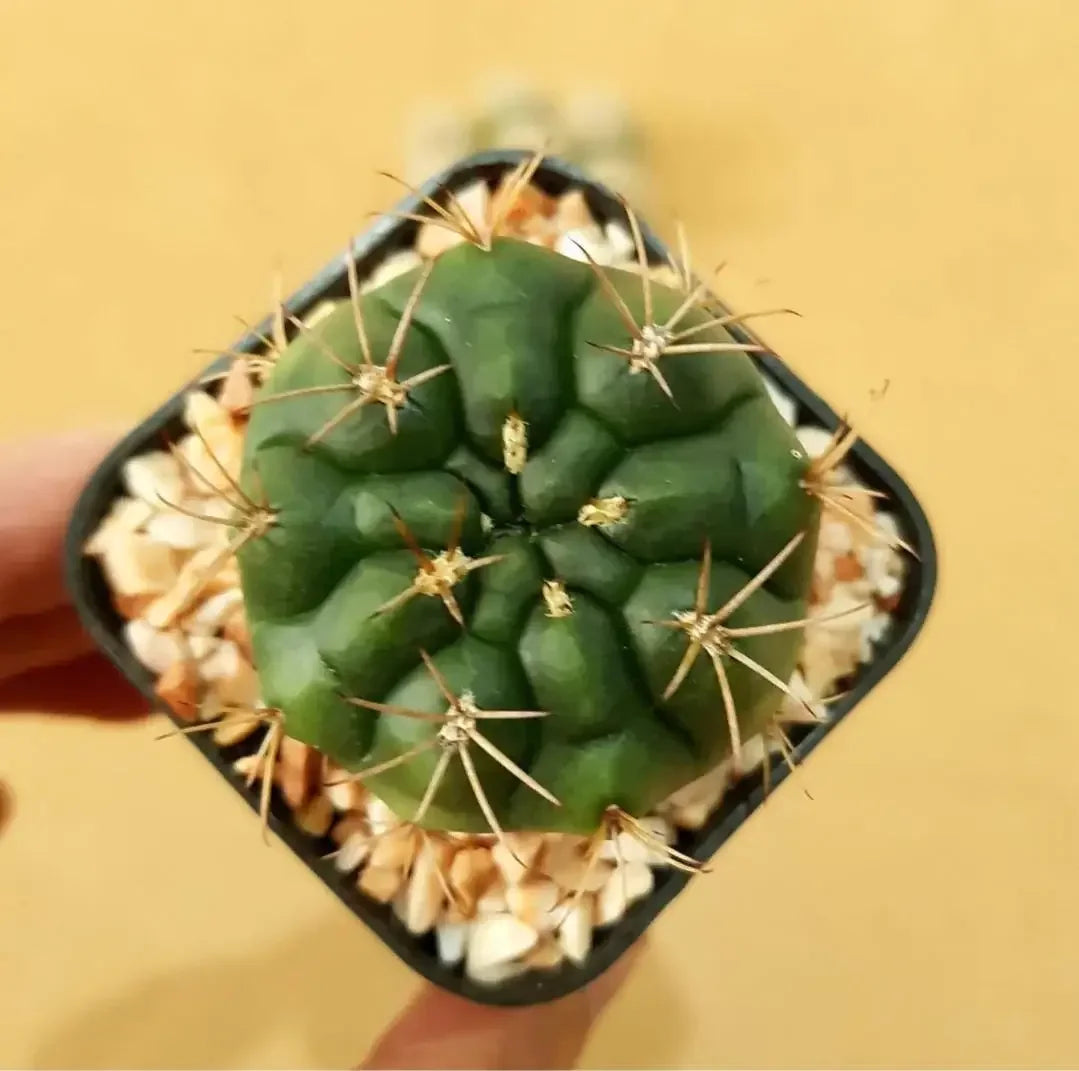
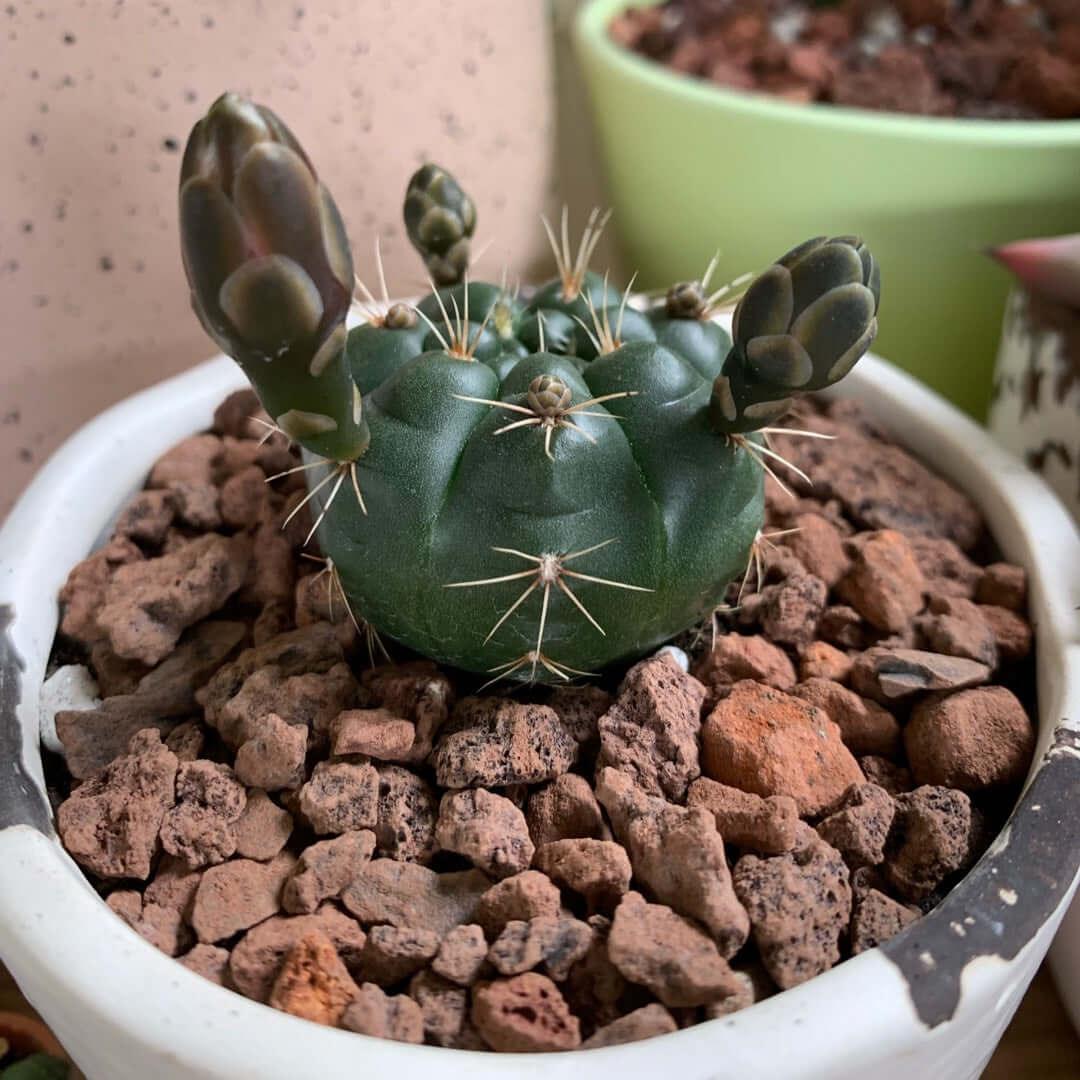
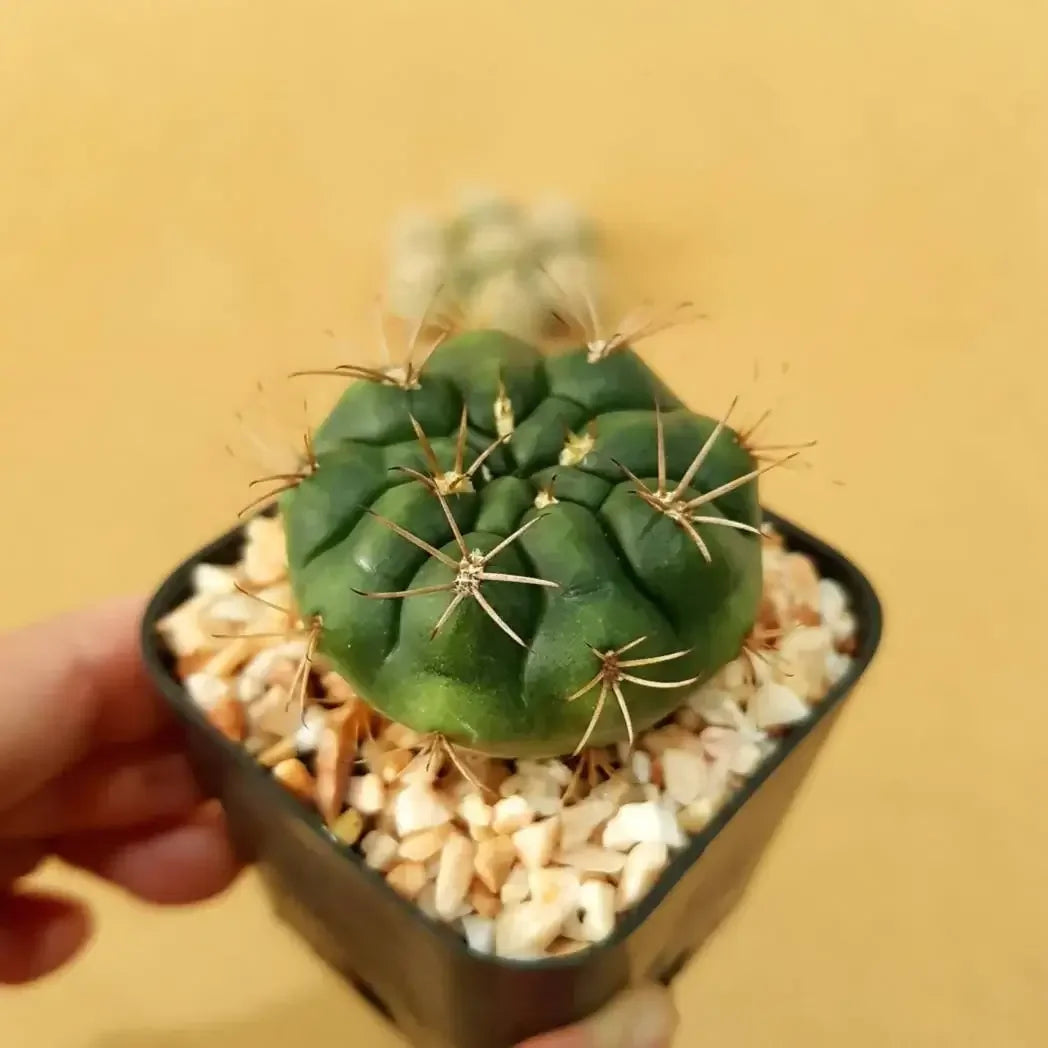
Gymnocalycium Damsii
Origin and Natural Habitat
-
Native Range: Gymnocalycium damsii (frequently classified taxonomically as a subspecies of Gymnocalycium anisitsii) originates from South America, specifically spreading across parts of Bolivia, Paraguay, and western Brazil.
-
Habitat: It typically grows at lower altitudes (roughly 100 to 800 meters), often nestled under low shrubs, grassy areas, or rock formations that offer partial shelter from the intense tropical and subtropical sun.
Key Characteristics
-
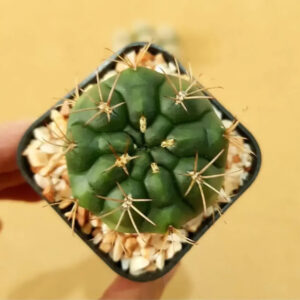
Appearance: Gymnocalycium Damsii is a charming, compact, globular cactus that flattens slightly at the top as it ages. It features roughly 10 distinct, rounded ribs broken into chin-like tubercles. Its skin tone varies seasonally—turning a deep coppery-brown or purplish-bronze under strong sun stress, and reverting to a rich fresh green during active growth.
-
Spines: Generally features only short, flexible radial spines (5 to 8 per areola) that hug the body and are relatively soft, making it one of the more “user-friendly” cacti to handle.
-
Flowers: Known for being an exceptionally free-flowering species. It produces funnel-shaped flowers ranging from snowy white to delicate pale pink and reddish-violet, often blooming repeatedly from spring through autumn.
Essential Care Guide
-
Light: Gymnocalycium Damsii thrives in bright light, such as a sunny south- or west-facing window. While it loves strong light (which brings out its gorgeous bronze stress-colors and encourages heavy blooming), protect it from harsh, scorching mid-afternoon summer sun to prevent sunburn.
-
Soil: Requires a highly porous, mineral-based, fast-draining substrate. A mix combining standard cactus soil with substantial inorganic drainage amendments like pumice, perlite, or coarse sand (roughly a 50/50 balance) is ideal to prevent root rot.
-
Watering: Apply the “soak and dry” rule. Water thoroughly during the spring and summer growing season, allowing the soil to dry out completely between waterings. In winter, cut back drastically and keep the plant nearly dry to support its rest period.
-
Temperature: Enjoys warm conditions during summer. In winter, provide a cool, dry rest period (ideally between 7°C to 12°C), though it can handle brief dips below freezing if kept completely bone-dry.
-
Fertilizing: Feed once a month during spring and summer using a balanced or low-nitrogen cactus fertilizer diluted to half strength. Cease fertilizing entirely during autumn and winter dormancy.
Reviews
There are no reviews yet.