
Sansevieria Pagoda Hybrid
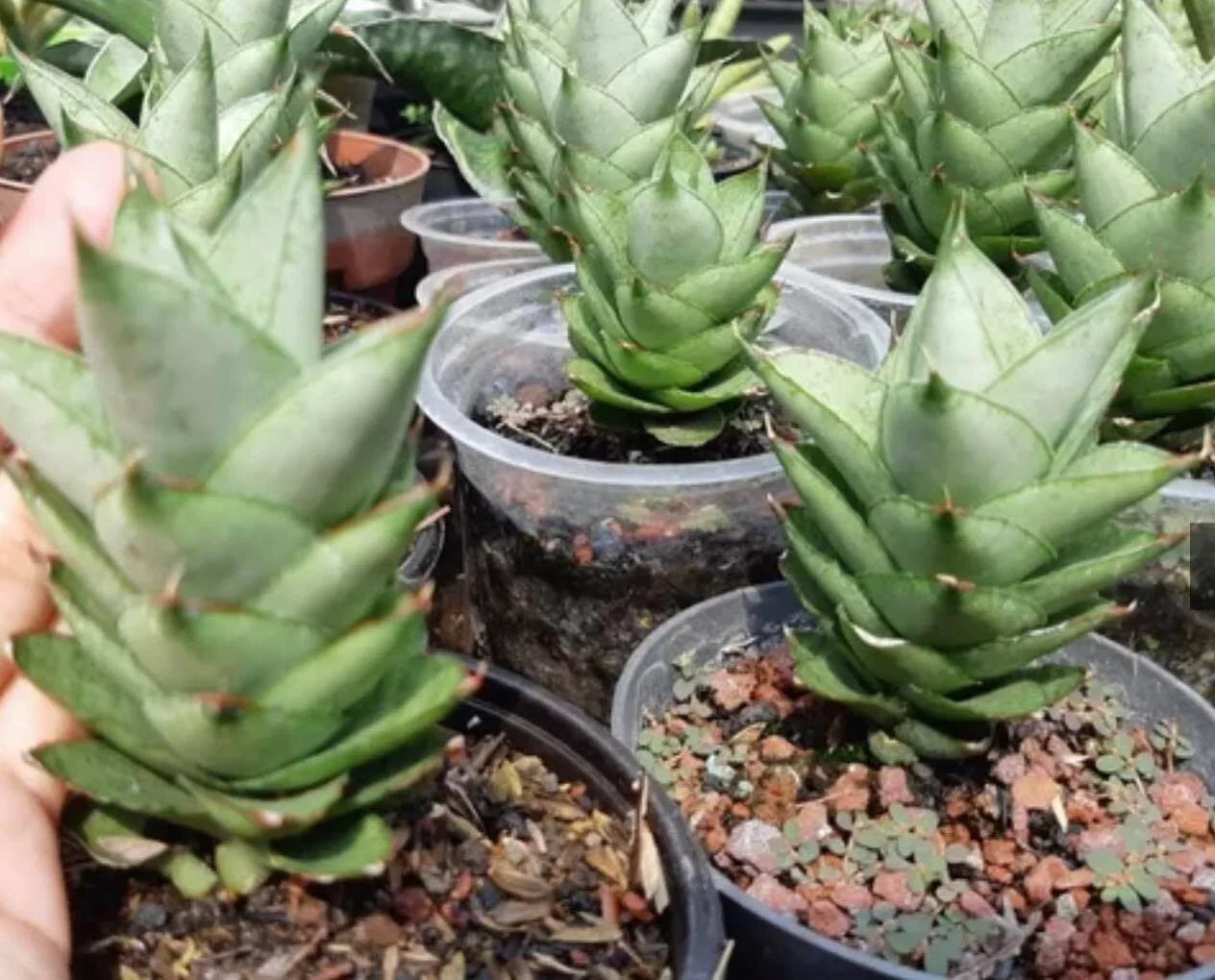
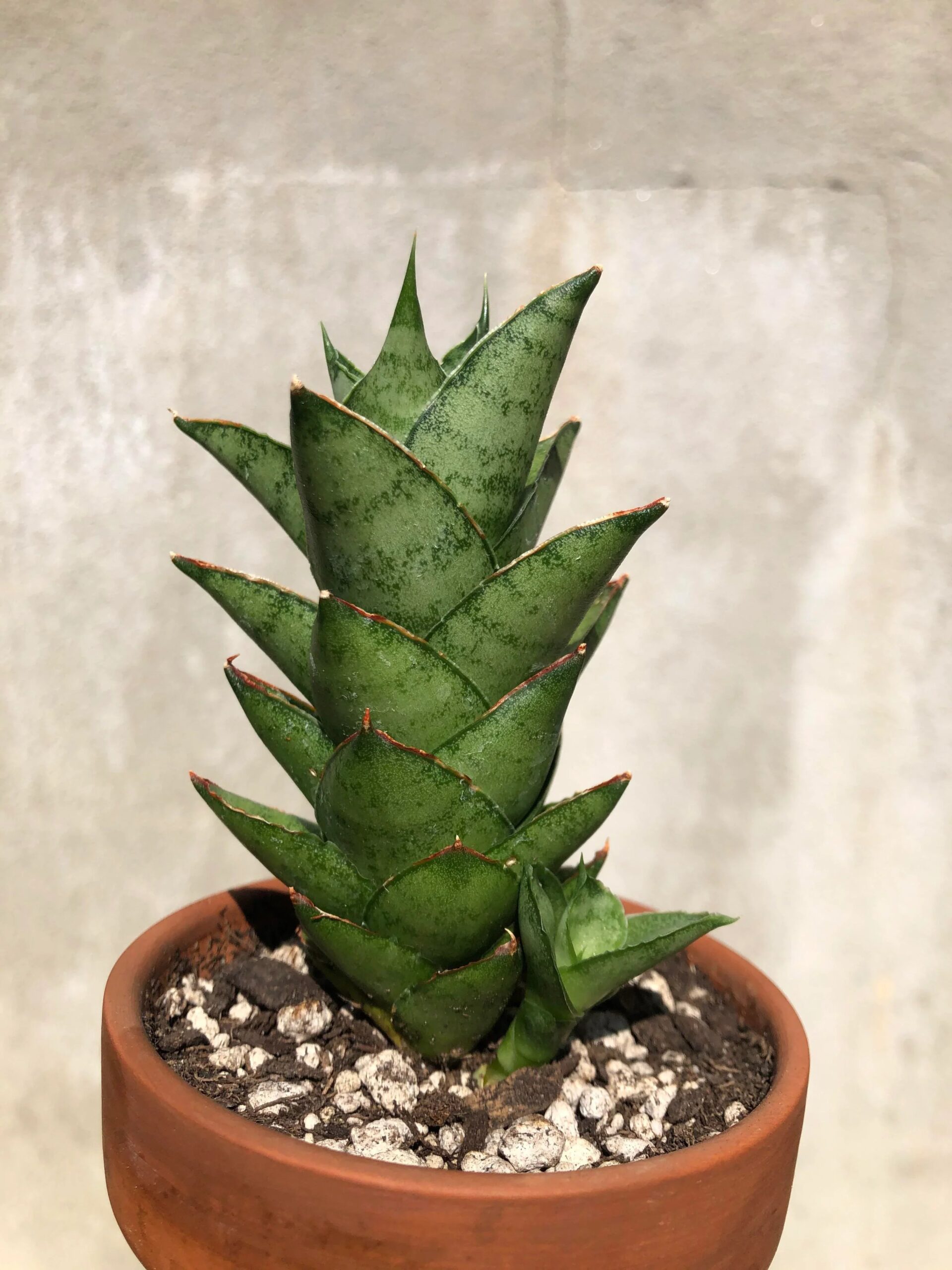
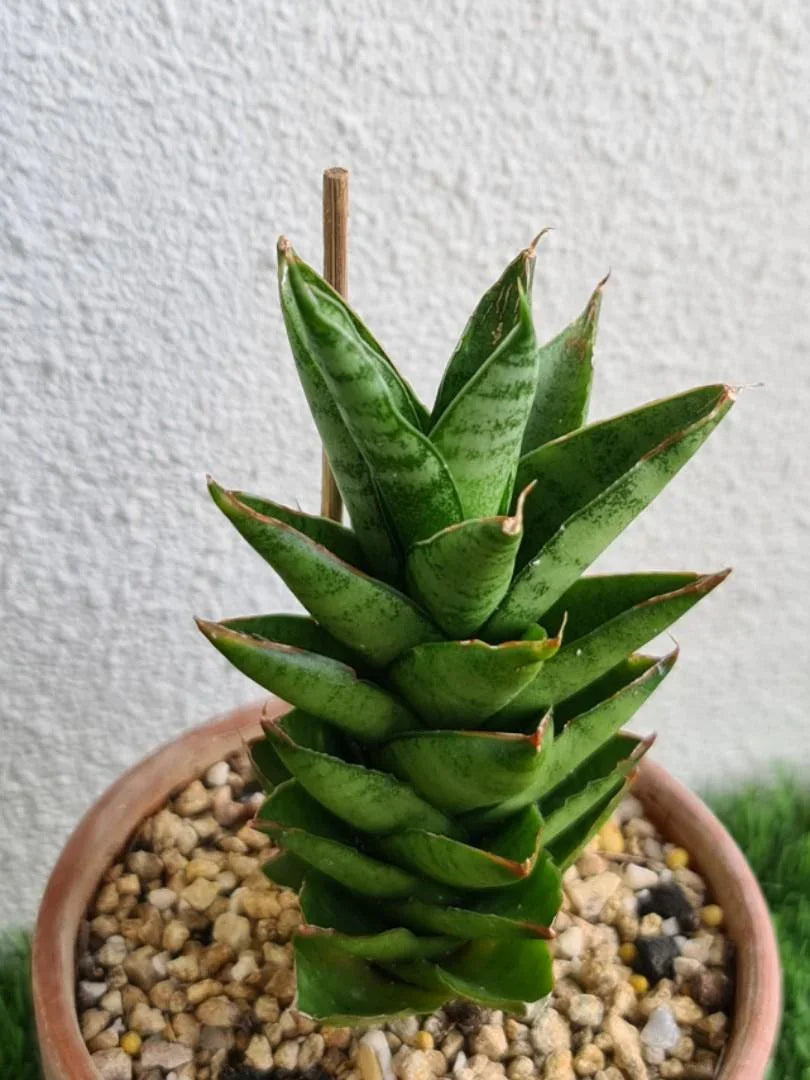
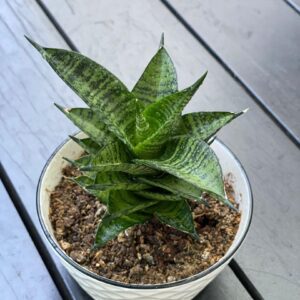
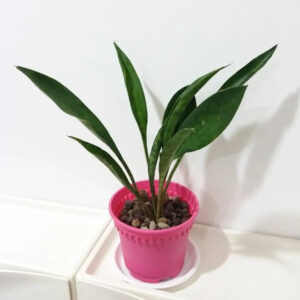
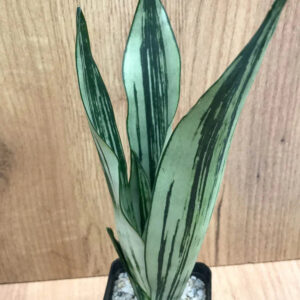
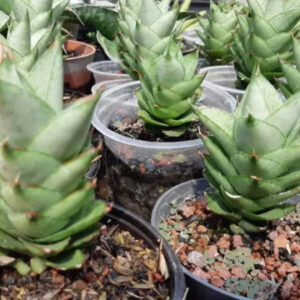
Sansevieria Pagoda Hybrid (syn. Dracaena ‘Pagoda’) is a prized, structural hybrid snake plant distinct for its stacked leaf architecture reminiscent of a tier-roofed Asian pagoda.
Key Characteristics
-
Tiered Column Structure: Leaves grow in a tight, geometric spiral, stacking directly on top of one another to build a distinct vertical column over time.
-
Foliage & Texture: Features short, thick, V-shaped or concave leaves with sharp, rigid tips. The foliage is dark olive to silvery-green with fine horizontal mottling and sharply defined reddish-brown margins.
-
Growth Profile: A semi-dwarf cultivar generally growing 6 to 12 inches (15–30 cm) tall, maintaining a tidy, sculptural footprint ideal for shelves, desks, or focused collector displays.
-
Air Purification: Employs Crassulacean Acid Metabolism (CAM) to absorb carbon dioxide and release oxygen during the night.
Care & Cultivation Overview
| Aspect | Care Requirement |
| Light | Bright, indirect sun to partial direct morning light. Adequate light prevents stretching (etiolation) and keeps the leaf stack dense. |
| Substrate | Highly porous mineral substrate (60–70% inorganic pumice, coarse sand, and perlite + 30% organic mix). |
| Watering | Low. Allow soil to dry out completely between waterings. Avoid letting water settle inside the central leaf cup to prevent crown rot. |
| Temperature | Prefers warm environments between 16°C and 30°C (60°F–86°F). Protect strictly from temperatures below 10°C (50°F). |
Origin
-
Cultivated Hybrid: Sansevieria Pagoda Hybrid is a horticultural cultivar created in nursery culture through selective breeding.
-
Breeding Origin: Hybridized primarily by specialist succulent growers in Thailand, selecting for compact, heavy-leafed rosettes with rigid stacking habits.
-
Ancestral Lineage: Derived from thick-leaved, channelled African species (such as Sansevieria ehrenbergii, S. rorida, or compact S. lavranos selections).
Reviews
There are no reviews yet.