
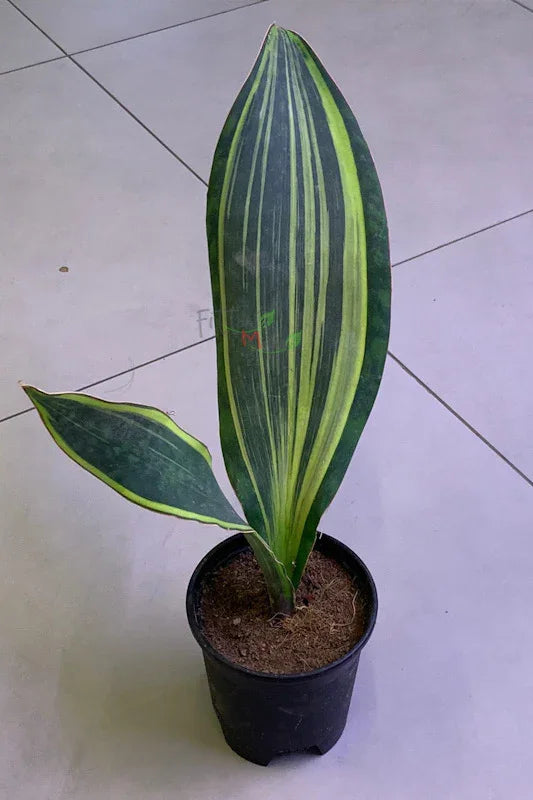
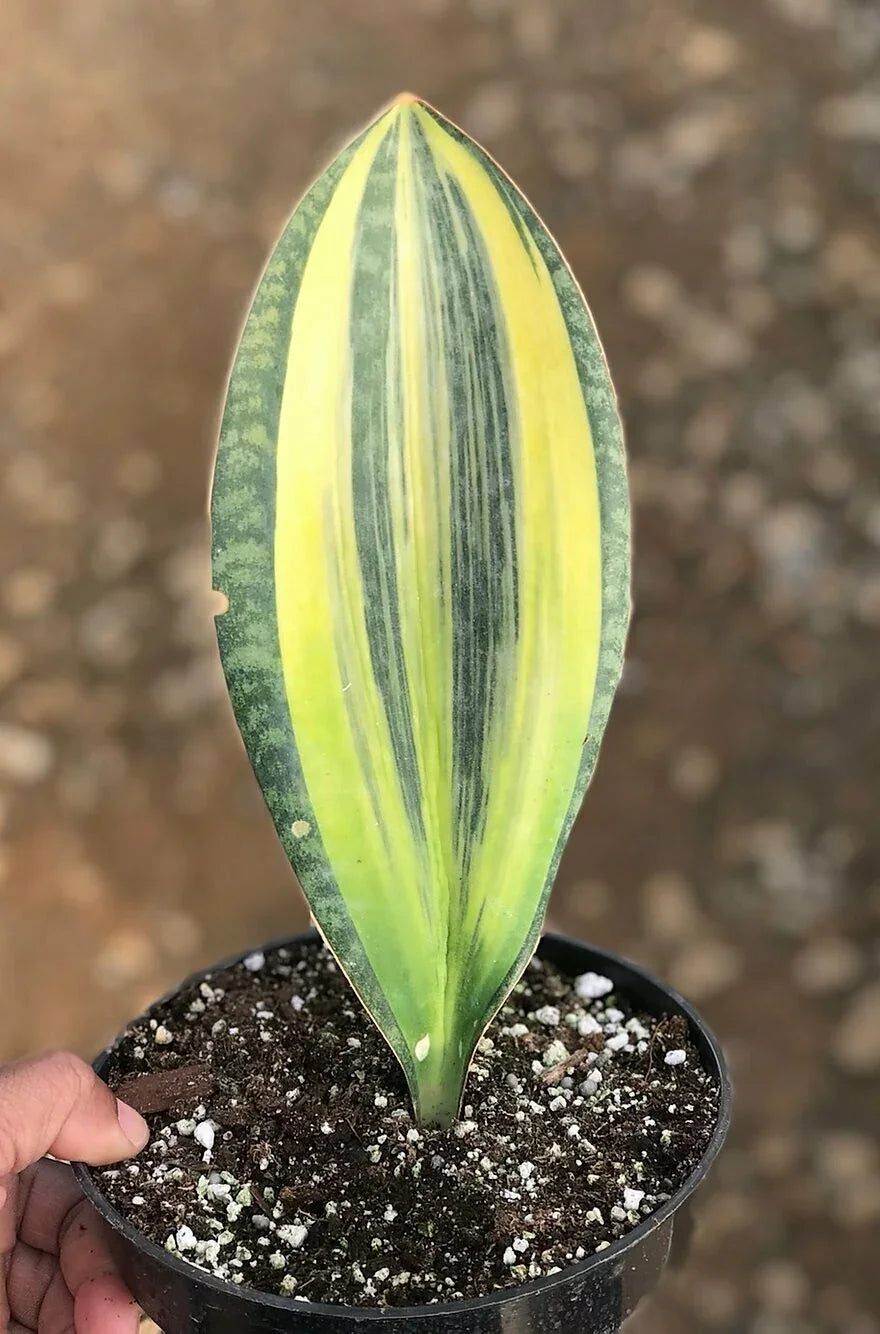
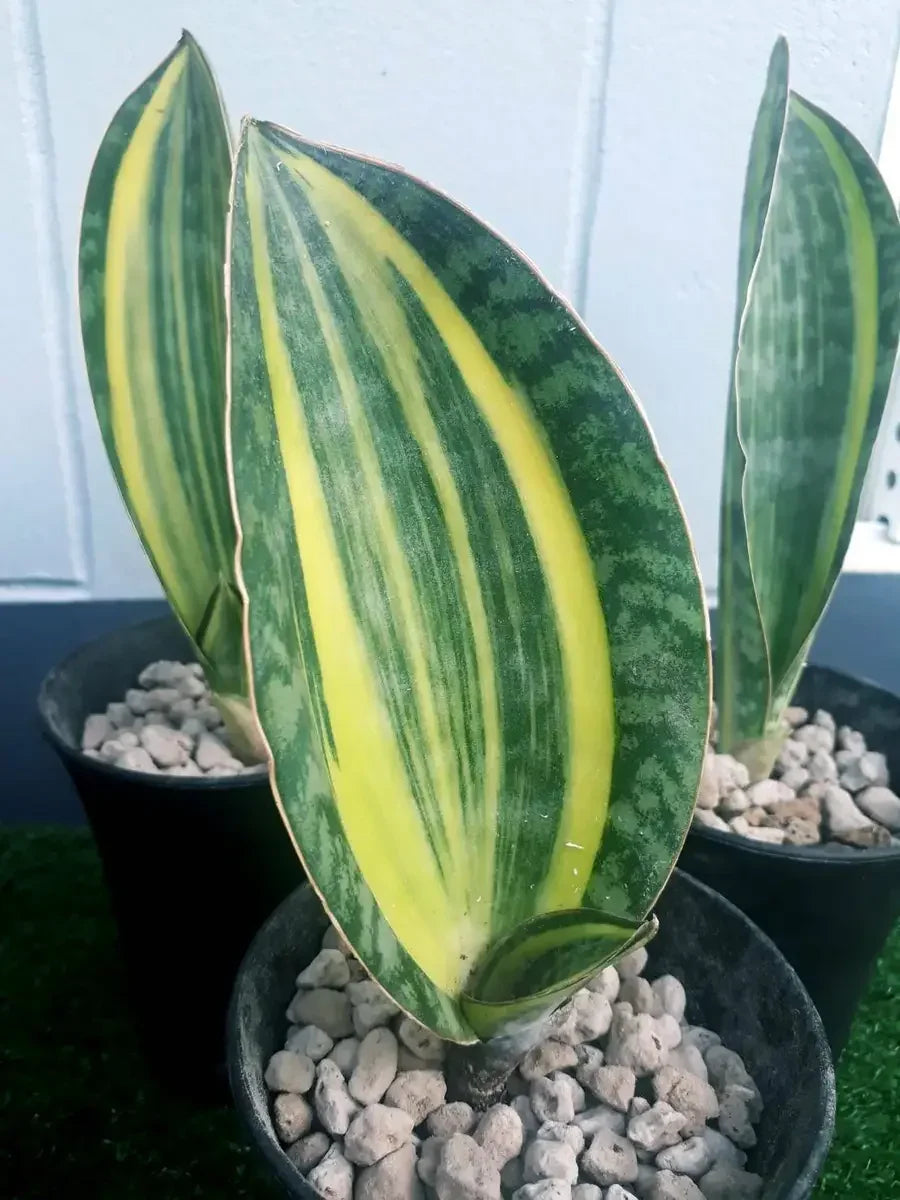
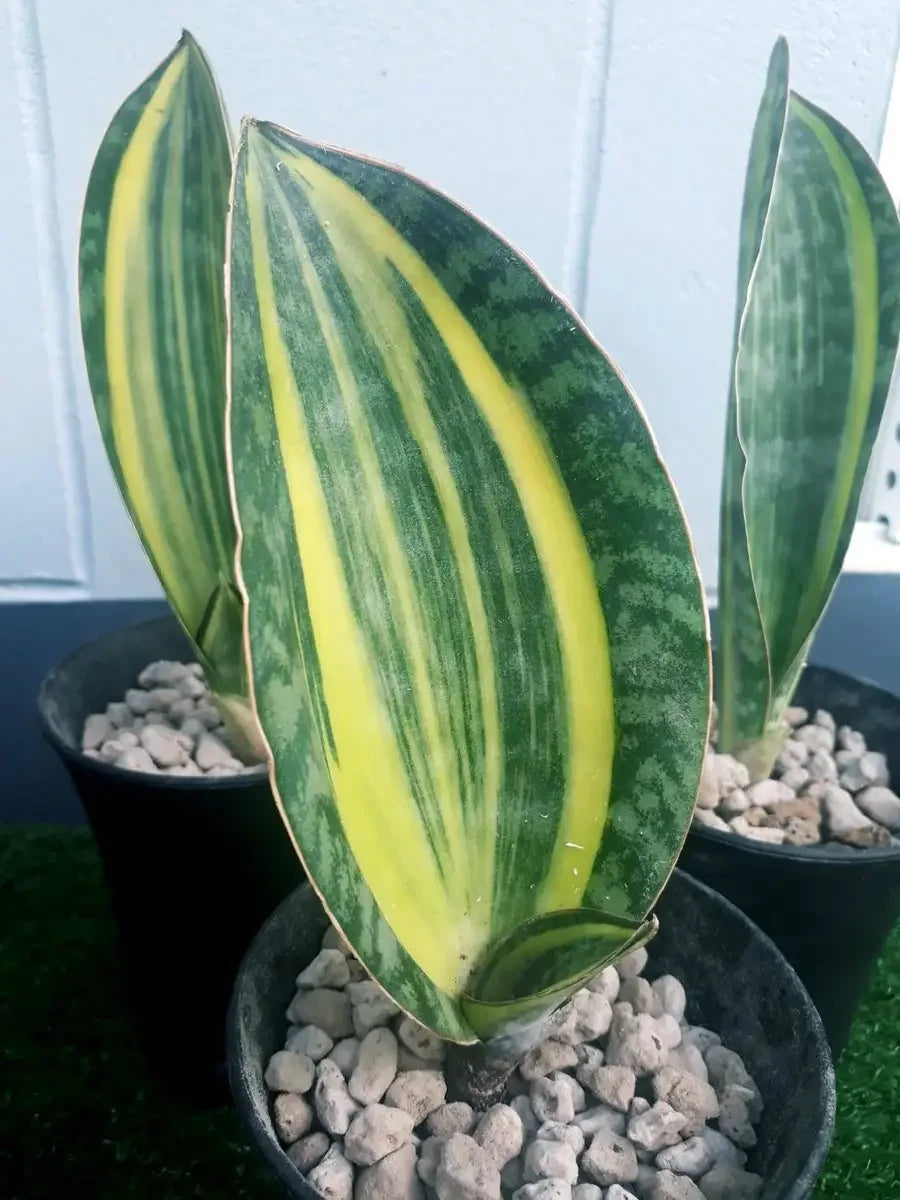
Sansevieria Masoniana Variegated
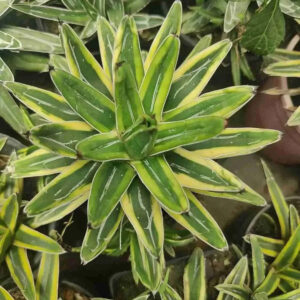
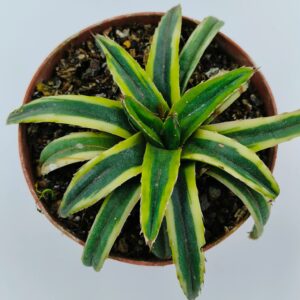
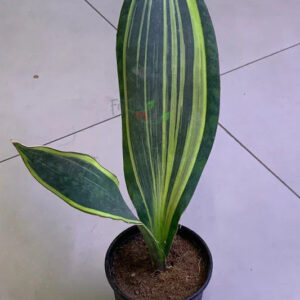
Sansevieria masoniana Variegated (syn. Dracaena masoniana ‘Variegated’), commonly known as the Variegated Whale Fin Snake Plant or Mason’s Congo, is one of the most stunning and highly prized collector succulents in the world. Famous for its massive, paddle-shaped leaves, this variegated form features bold vertical stripes of creamy yellow, white, and pale green contrasting against deep green marbled foliage.
Key Characteristics of Sansevieria Masoniana Variegated
-
Massive “Whale Fin” Leaf: Typically produces only 1 to 3 gigantic, stiff leaves per rosette, which can grow 2 to 4 feet (60–120 cm) tall and over 6 to 10 inches (15–25 cm) wide.
-
Striking Variegation: Features distinct longitudinal bands of bright cream, butter-yellow, or pale white running through the leaf, often outlined with dark red-brown leaf margins.
-
Air Purification: Utilizing Crassulacean Acid Metabolism (CAM), it converts carbon dioxide into oxygen at night, making it an excellent statement plant for bedrooms and living spaces.
Care & Cultivation Guide for Sansevieria Masoniana Variegated
| Care Aspect | Requirement |
| Light | Bright, indirect sunlight. Bright light is essential to preserve the vivid yellow/white variegation. Direct morning sun is tolerated, but harsh afternoon sun may scorch variegated patches. |
| Substrate | Highly porous, coarse, fast-draining succulent mix (60–70% inorganic pumice, coarse sand, and perlite + 30% organic compost). |
| Watering | Very Low. Allow the substrate to dry out 100% between waterings. Due to its massive thick leaf, it stores vast amounts of water. In winter, water only once every 4–6 weeks. |
| Temperature | Prefers warm conditions between 18°C and 30°C (65°F–86°F). Protect strictly from temperatures below 10°C (50°F) to prevent cold rot. |
| Potting | Choose a heavy terracotta pot with ample drainage holes to balance the top-heavy, massive leaf structure. |
Origin & Cultivation History
-
Parent Species Origin: The green wild-type Sansevieria masoniana is native to Central Africa (specifically the Democratic Republic of the Congo). It was originally collected in the 1960s by American botanist Maurice Mason.
-
Variegated Cultivar: The variegated cultivar arose as a spontaneous mutation (variegated sport) in nursery culture. It was stabilized and mass-propagated primarily by specialized succulent breeders in Thailand and Southeast Asia.
Reviews
There are no reviews yet.