
Sansevieria Moose
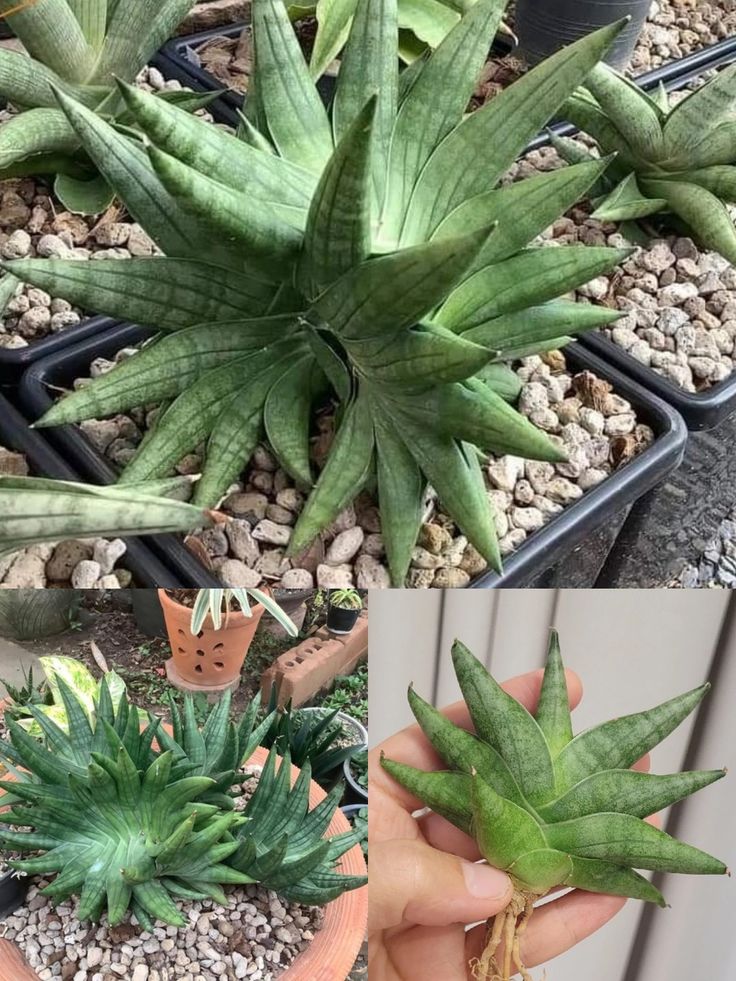
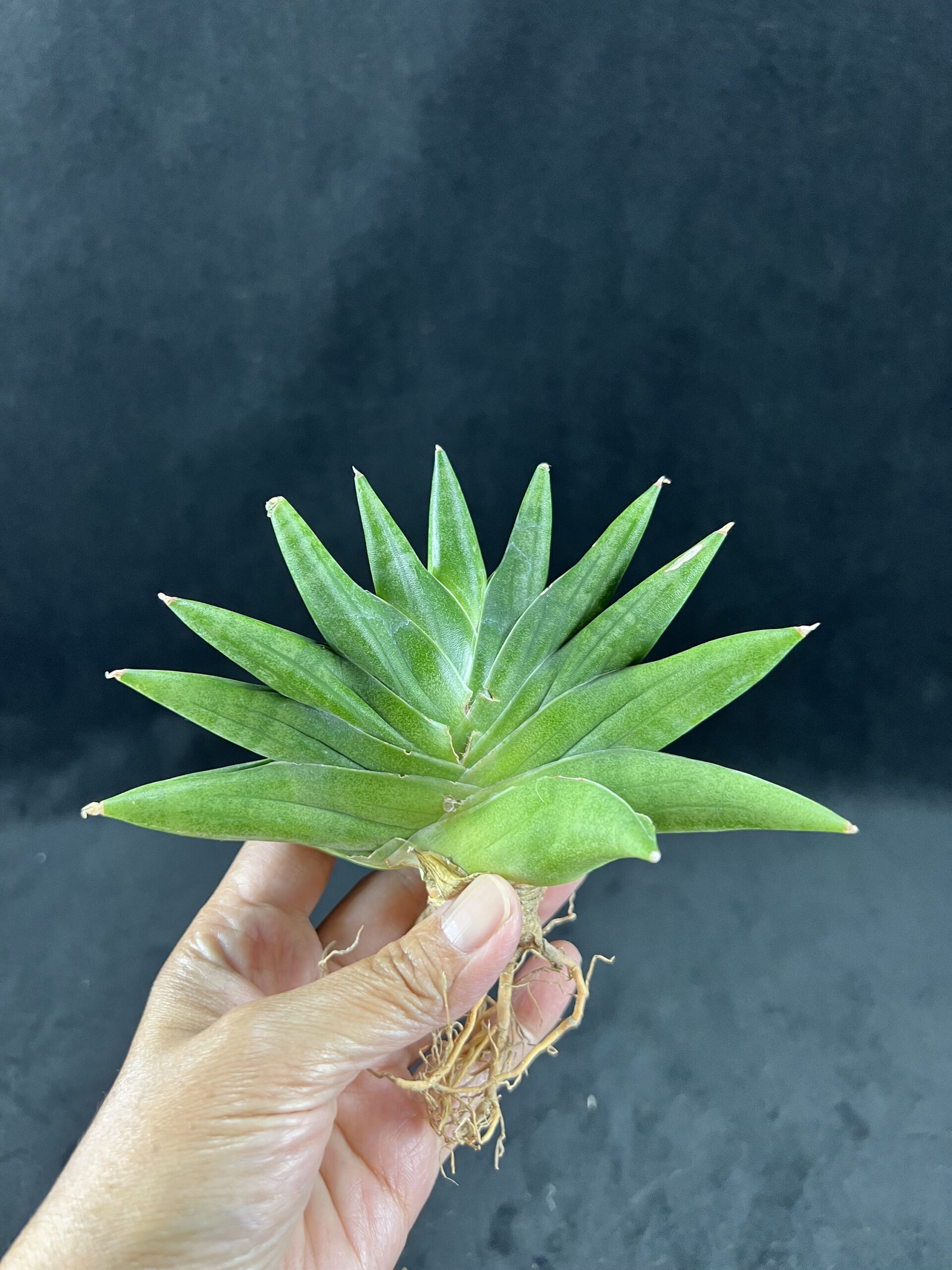
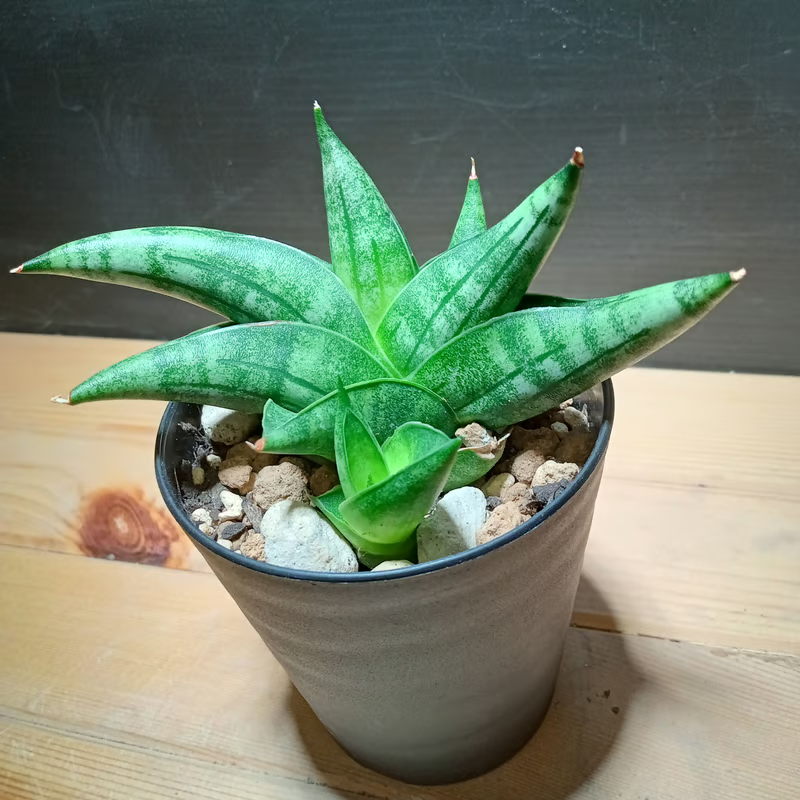
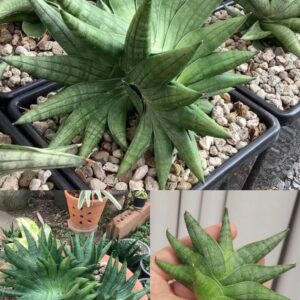
Sansevieria Moose (syn. Dracaena ‘Moose’) is a distinct, compact hybrid cultivar within the Sansevieria family, highly valued by plant collectors for its bold leaf structure and striking pattern.
Key Characteristics of Sansevieria Moose
-
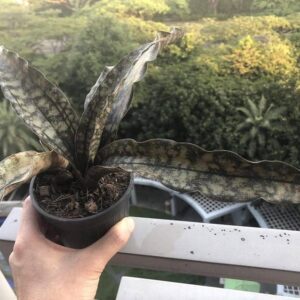
Foliage & Form: Features broad, thick, paddle-like to wide trough-shaped leaves that arch outwards in a compact rosette. The arrangement of the broad leaves gives mature plants an appearance reminiscent of moose antlers.
-
Coloration & Patterning: Displays attractive silver-green to deep green mottled marbling across the broad leaf surface, accented by darker green horizontal bandings and defined leaf margins.
-
Growth Habit: Compact, semi-dwarf growth structure, making it ideal for tabletop displays, plant shelves, or desk collections.
-
Air-Purifying: Like other Sansevieria varieties, it uses Crassulacean Acid Metabolism (CAM) to absorb carbon dioxide and emit oxygen at night, making it well-suited for bedrooms and indoor spaces.
Care & Cultivation Guide for Sansevieria Moose
| Care Aspect | Requirement |
| Light | Thrives best in bright, indirect sunlight, which preserves leaf color contrast and patterns. Easily adapts to medium or low interior lighting. |
| Substrate | Highly porous, coarse succulent/cactus media (60% inorganic pumice/perlite/coarse sand + 40% compost). |
| Watering | Low. Allow the potting medium to dry out completely between waterings. Water sparingly during winter months to prevent root and rhizome rot. |
Sansevieria Moose (syn. Dracaena ‘Moose’) is a cultivated horticultural hybrid and does not exist as a naturally occurring wild species.
Origin Breakdown
-
Cultivation & Nursery Breeding: Developed through specialized plant breeding programs, primarily by exotic succulent hybridizers in Thailand and Southeast Asia, where compact and architectural Sansevieria cultivars are selectively created.
-
Ancestral Lineage: Bred by crossing species native to the arid scrublands, dry rocky slopes, and savanna woodlands of Tropical and Southern Africa.
-
Etymology: Named “Moose” in the horticultural trade due to its wide, arching leaves that mimic the shape and spread of moose antlers.
Reviews
There are no reviews yet.