
Sansevieria Pinguicula Compacta
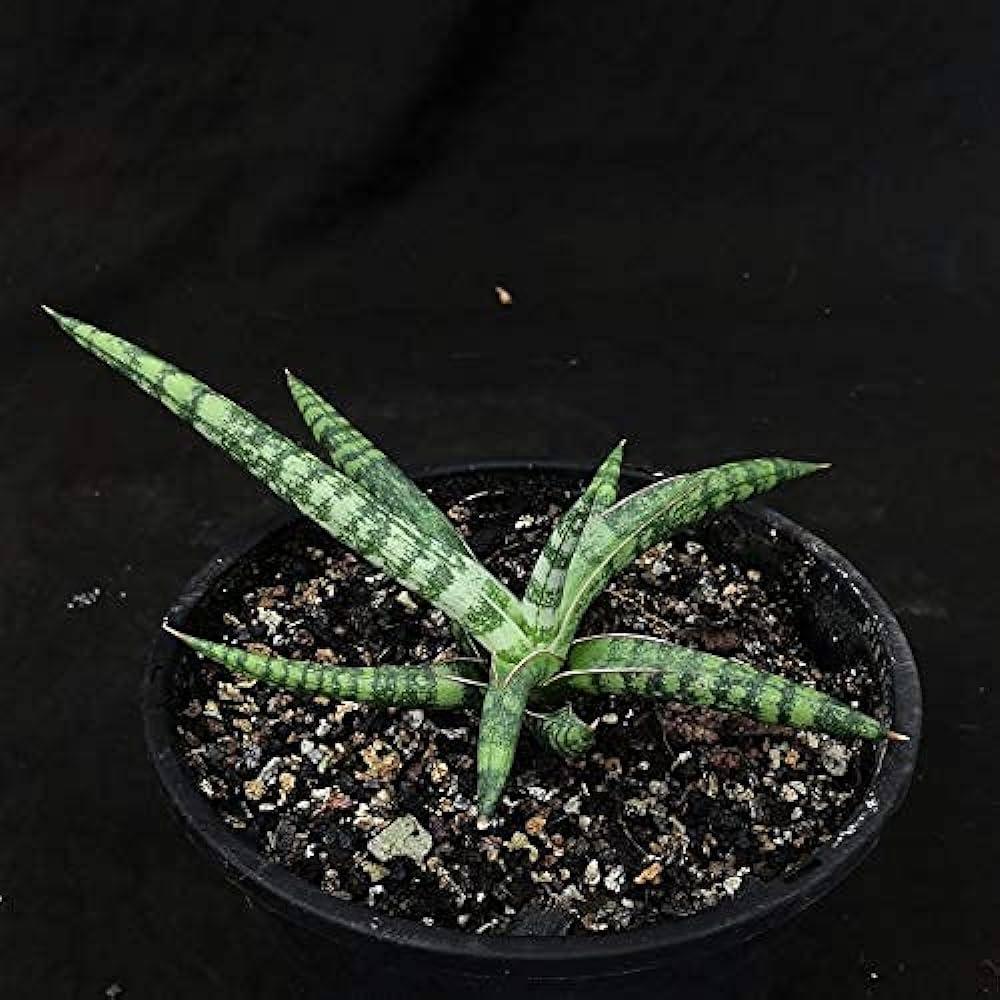
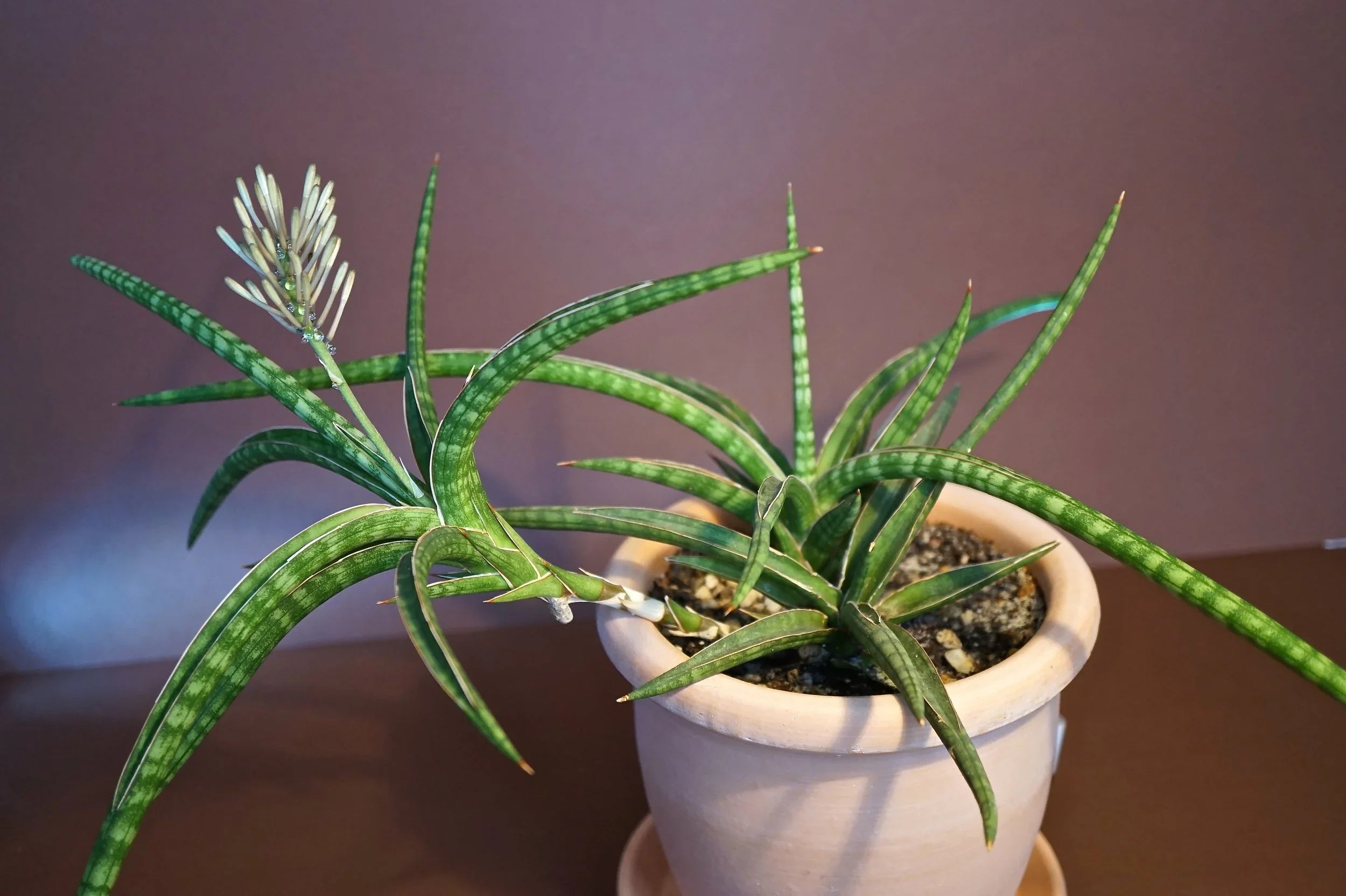
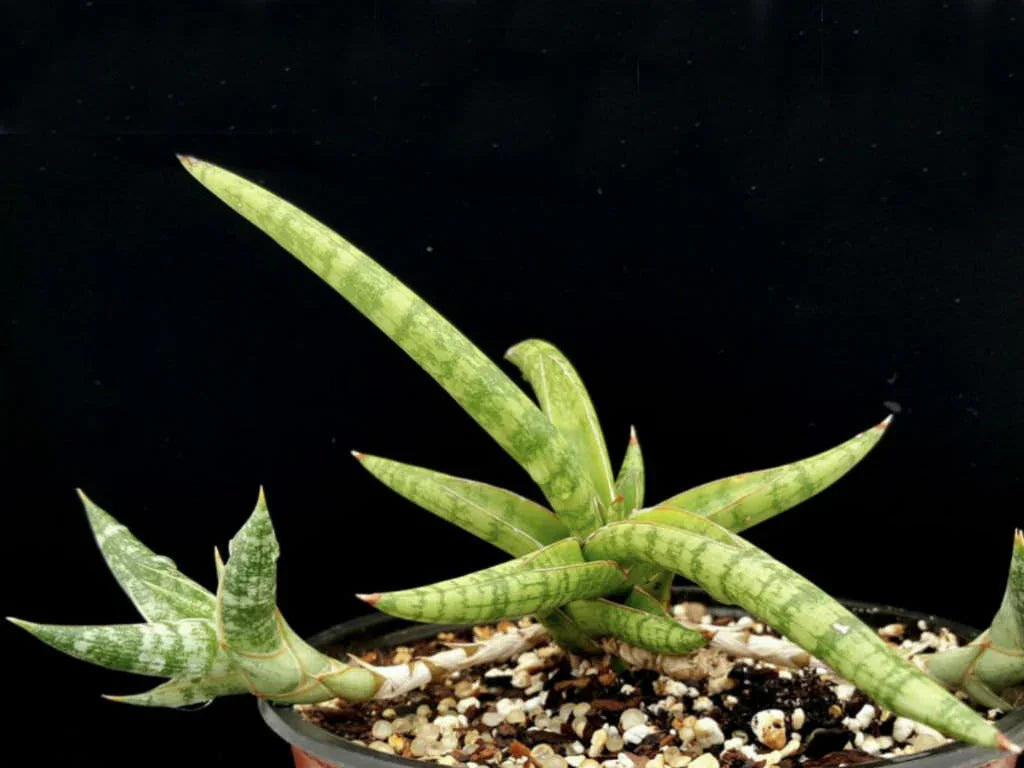
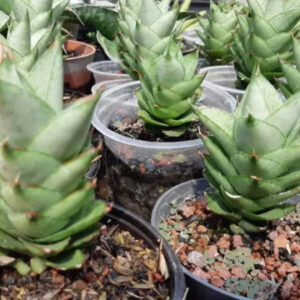
Sansevieria pinguicula Compacta (syn. Dracaena pinguicula ‘Compacta’) is a miniature dwarf selection of the famous “Walking Sansevieria” native to Bura, Kenya. It is one of the most remarkable dwarf succulents in the plant world, highly prized by collectors for its thick, horn-like leaves and unique aerial growth habit.
Key Characteristics of Sansevieria Pinguicula Compacta
-
Dwarf Form: A smaller, more condensed selection of the wild species, rarely exceeding 3–5 inches (8–12 cm) in height and width.
-
“Walking” Growth Habit: Instead of pushing offsets directly through the soil, it produces thick, elevated aerial runners (stolons). These stolons grow outward and down, developing aerial roots at the tip to prop the plant above the ground like stilts—giving it the nickname “Walking Snake Plant.”
-
Foliage: Produces exceptionally thick, rigid, dark blue-green leaves shaped like fat crescents or horns, featuring a deep channel down the center, sharp brown/red terminal spines, and distinct papery white leaf margins.
Care & Cultivation Guide
| Aspect | Care Requirement |
| Light | Bright, indirect light to partial direct sun. Needs strong light to maintain a dense rosette, sharp leaf margins, and thick leaf tips. |
| Substrate | Ultra-porous, gritty mineral mix (75%–80% inorganic media like pumice, lava rock, coarse sand, and akadama). Highly sensitive to wet roots. |
| Watering | Very low. Allow the substrate to dry completely between waterings. In winter dormancy, cut back watering to once a month or less. |
| Temperature | Heat-loving; keep strictly above 15°C (59°F). Protect from cold, damp conditions which cause rapid rhizome rot. |
The parent species, Sansevieria pinguicula, originates from a very restricted geographic range in eastern Kenya (specifically the Bura area near Garissa in the Tana River region).
Origin & Habitat Breakdown
-
Native Environment: In wild Kenya, it thrives on arid, sun-baked sandy plains and rocky outcrops at low altitudes (50–250 meters above sea level). The native habitat experiences severe seasonal droughts, high temperatures, and sparse rainfall.
-
Discovery History: The species was first collected and described in 1943/1964 by Swiss botanist Peter René Oscar Bally. The Latin epithet pinguicula derives from pinguis, meaning “fat” or “chunky,” referring to its thick leaf cross-section.
-
Origin of ‘Compacta’: Sansevieria pinguicula Compacta (sometimes classified alongside dwarf selections like subsp. nana) is a cultivated selection/dwarf cultivar derived from the wild species. Selective propagation in cultivation preserved its ultra-condensed rosette form and shorter leaf length while retaining the signature stilt-like aerial stolon growth habit.
Reviews
There are no reviews yet.