
Beiselia Mexicana
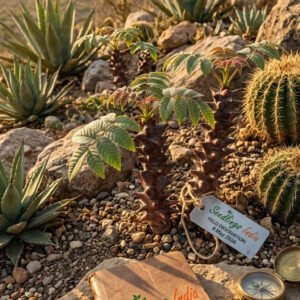
Beiselia mexicana is a rare and fascinating Caudiciform Plant belonging to the Burseraceae family, the same family that includes frankincense and myrrh trees. It is the only species in the genus Beiselia, making it a monotypic genus and particularly interesting to plant collectors and botanists.
Origin and Habitat
- Native to western Mexico, Beiselia mexicana primarily in the states of Jalisco, Colima, and Michoacán.
- Grows in tropical dry forests and rocky hillsides.
- Experiences long dry seasons and seasonal summer rains, which explains its excellent drought tolerance.
Appearance
- Growth form: Small to medium-sized deciduous tree.
- Height in habitat: Usually 4–8 meters (13–26 feet), occasionally taller.
- Bark: Attractive peeling bark that becomes more decorative with age.
- Leaves: Compound, bright green leaves that emerge during the growing season.
- Flowers: Small, greenish-white flowers produced in clusters.
- Fruit: Small, three-lobed capsules containing seeds.
Growth Characteristics
- Deciduous: Often sheds its leaves during the dry or cool season.
- Slow to moderate growth rate.
- Develops an increasingly attractive trunk and branching structure with age.
- Highly suitable for bonsai and container culture due to its response to pruning.
Why Collectors Like It
- Rare in cultivation and seldom available commercially. Caudiciform Plant
- Unique taxonomic position as the sole member of its genus.
- Beautiful exfoliating bark and sculptural form.
- Adaptable to container growing in warm climates.
- The Burseraceae family is famous for producing aromatic resins such as frankincense and myrrh, although Beiselia mexicana is not commercially exploited for resin production.
- Because it is the only species in its genus, it has significant botanical and conservation value.
- Mature specimens develop a rugged, picturesque appearance that makes them highly prized among collectors of unusual trees and caudiciform plants.
Caudex Pattern and Development
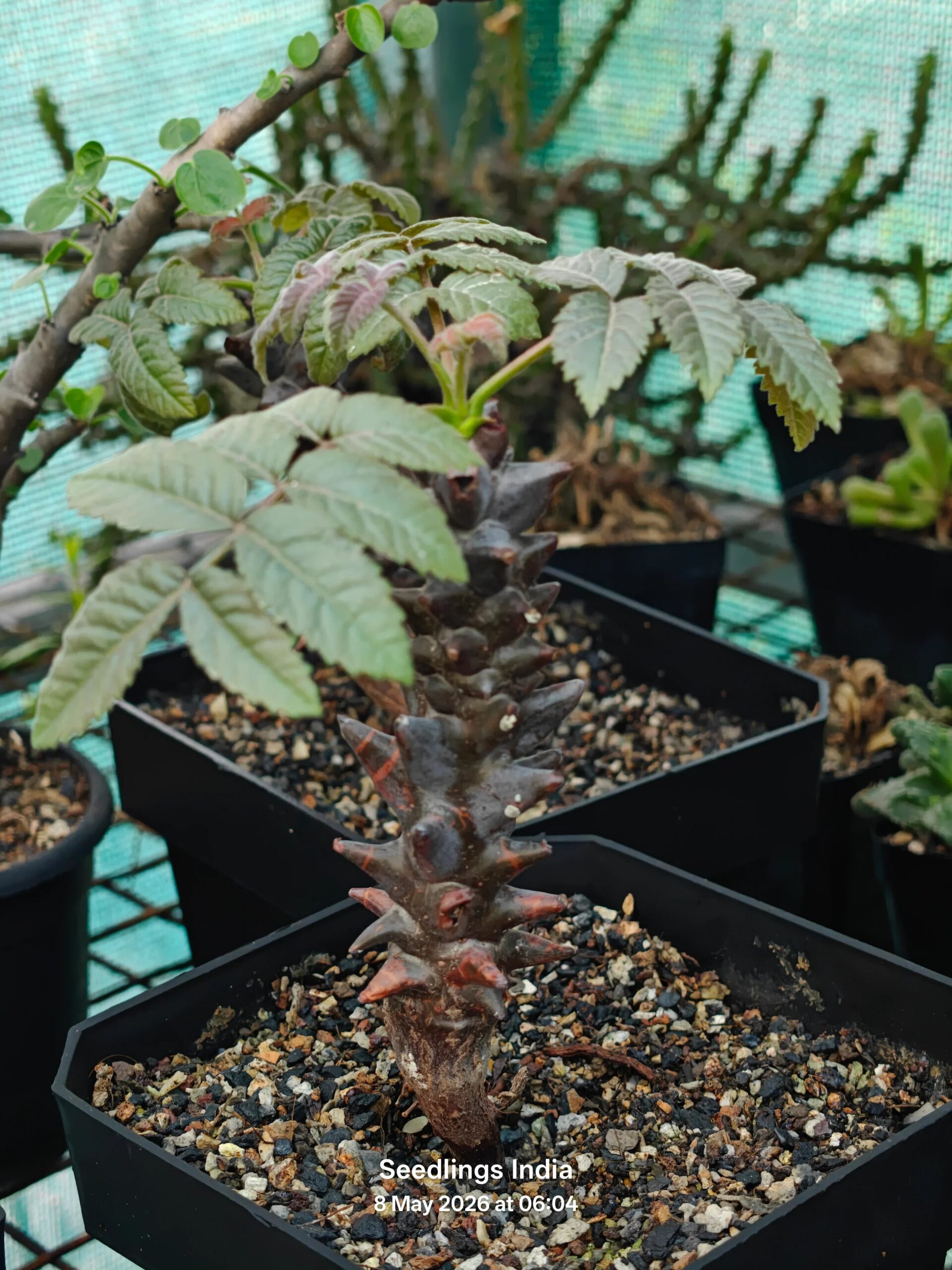
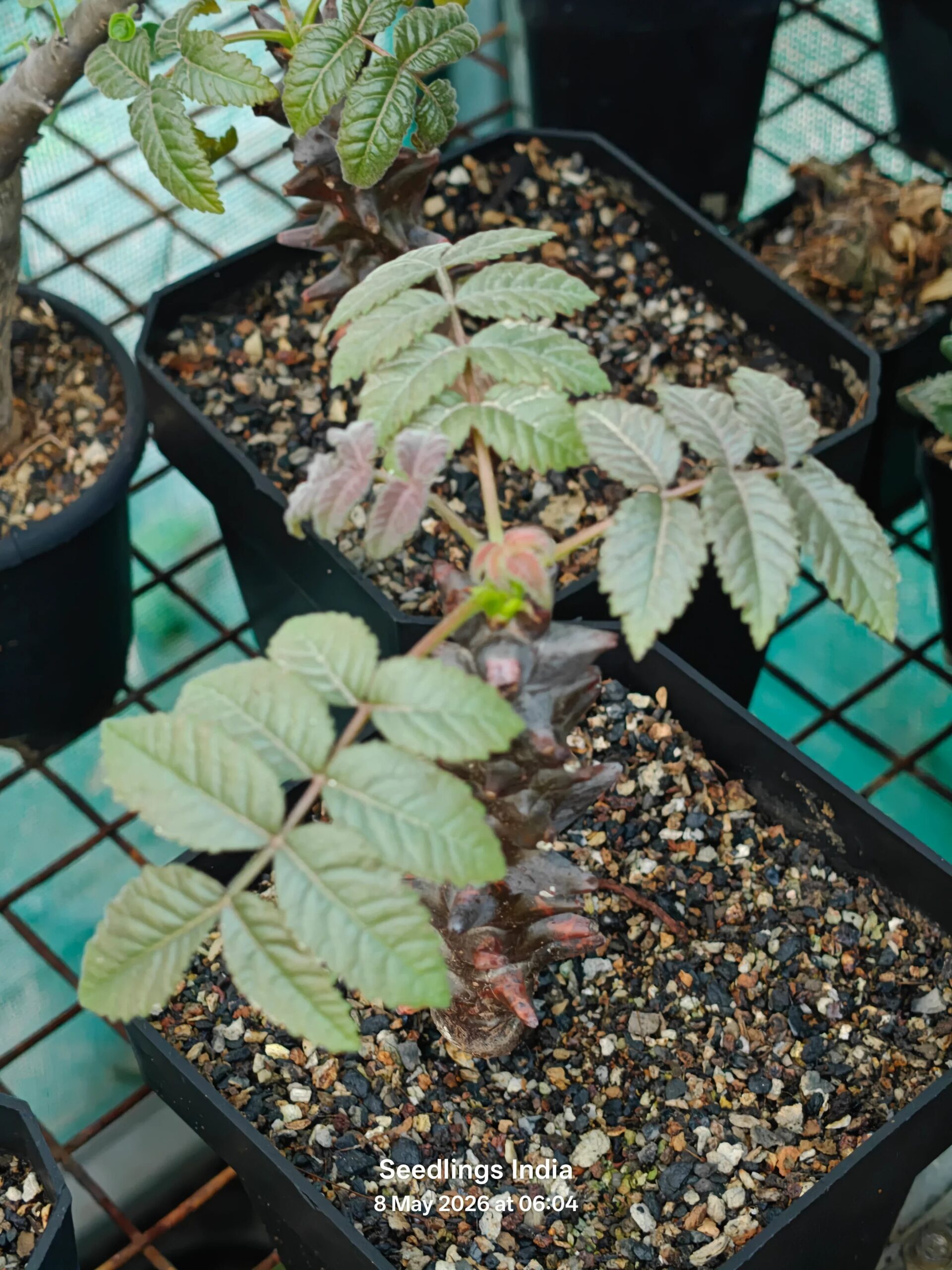
- No pronounced above-ground caudex: Beiselia mexicana does not naturally form a large, exposed, swollen caudex.
- Basal swelling: Young plants may develop a slight thickening at the base of the trunk, which serves as a water-storage organ.
- Tapering trunk: The trunk usually broadens gradually at the base and narrows upward, giving it a natural, tree-like appearance.
- Fissured and peeling bark with age: As the plant matures, the trunk develops attractive exfoliating bark in thin papery layers, often becoming the plant’s main ornamental feature.
- Irregular buttressing: Older specimens can develop subtle buttress-like roots and basal flaring, especially when grown in containers for many years.
Reviews
There are no reviews yet.