
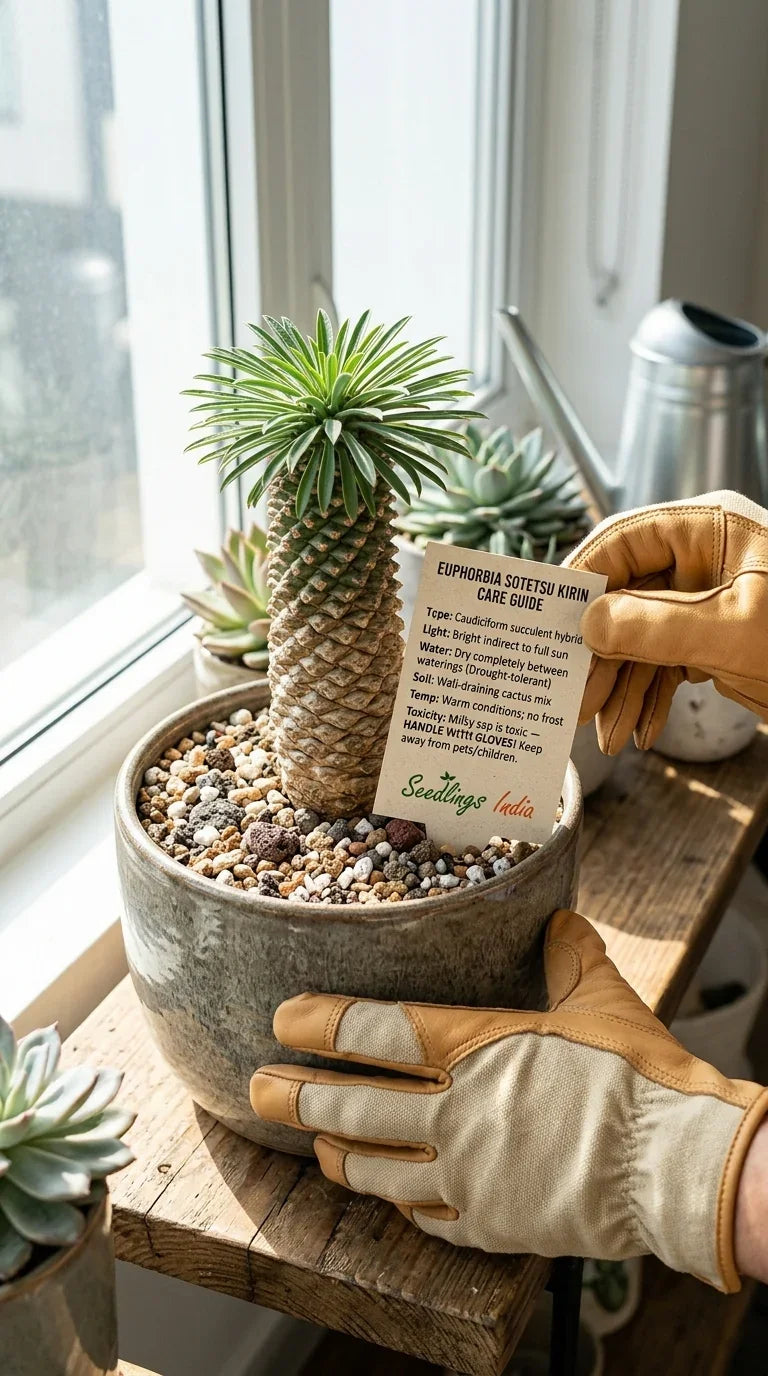
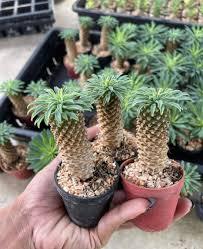
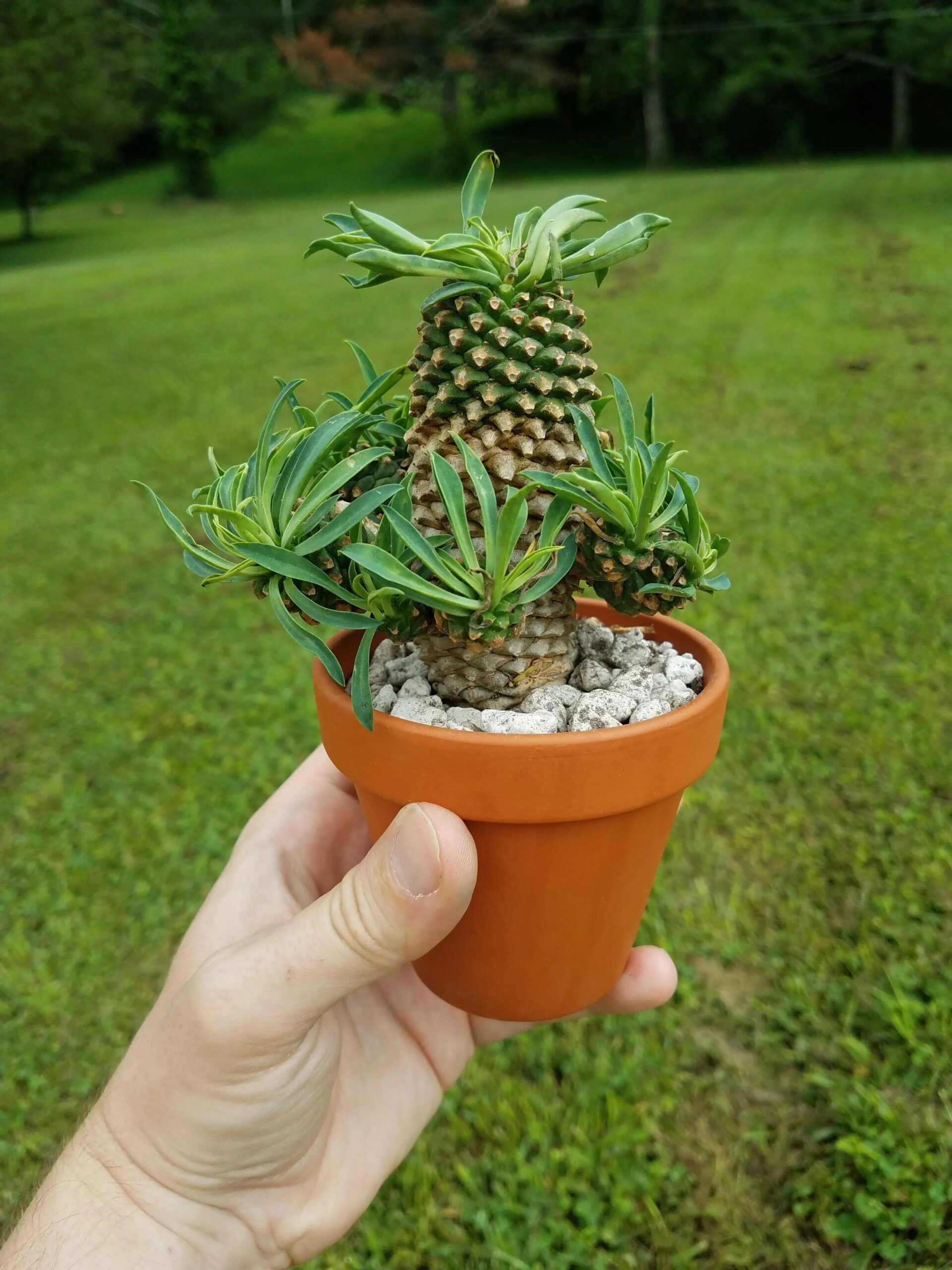
Euphorbia Sotetsu Kirin
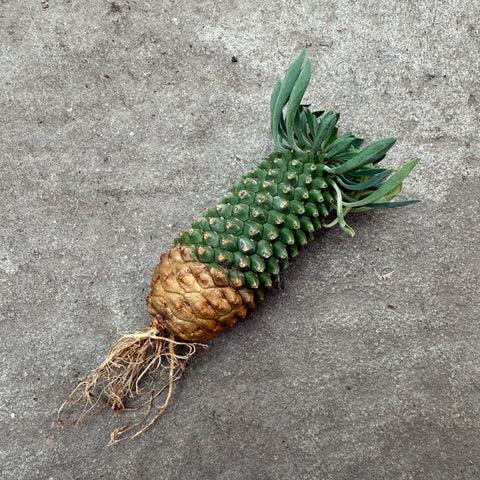
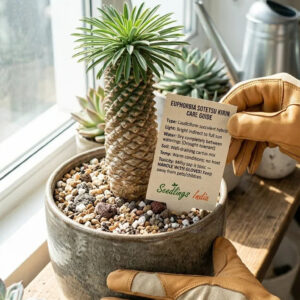
Euphorbia ‘Sotetsu Kirin‘ is a rare and highly sought-after Japanese cultivar prized for its striking architectural form and sculptural beauty. Its name, “Sotetsu Kirin,” roughly translates to “Cycad Giraffe,” referring to its distinctive growth habit that resembles the rugged trunk of a cycad combined with the textured appearance of a giraffe’s skin. This unique Euphorbia is a favorite among collectors of rare succulents and caudiciform plants.
Key Features : Euphorbia Sotetsu Kirin
- Growth Type: Slow-growing succulent
- Stem: Thick, upright, and heavily textured with pronounced tubercles
- Growth Form: Compact, branching habit that becomes increasingly sculptural with age
- Leaves: Small, short-lived green leaves that emerge near the growing tips during active growth
- Flowers: Tiny yellow-green cyathia, typical of Euphorbia species
- Size: Usually reaches 20–60 cm (8–24 inches) in cultivation
Distinctive Characteristics
- Deeply textured, knobby stems with an ancient appearance
- Compact and slow-growing, ideal for collectors
- Develops an increasingly dramatic and sculptural form over time
- Excellent focal point for succulent and caudiciform collections
Growing Conditions for Euphorbia Sotetsu Kirin
Light:
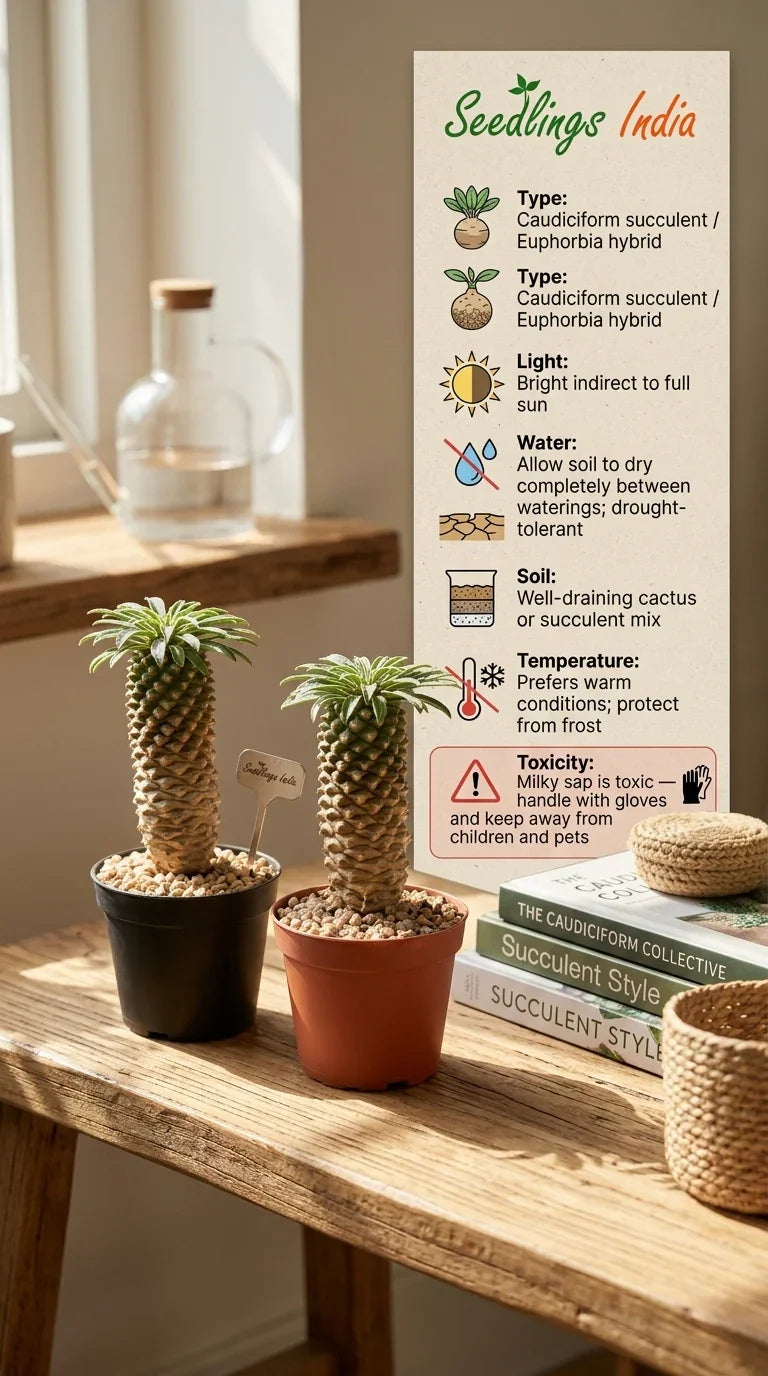
Prefers bright indirect light to full sun. Gradually acclimate the plant to direct sunlight to prevent sunburn.
Soil:
Use a fast-draining succulent mix, such as:
- 50% cactus or succulent soil
- 25% pumice or perlite
- 25% coarse sand or lava rock
Watering:
- Water thoroughly during the active growing season.
- Allow the soil to dry completely between waterings.
- Reduce watering significantly during winter or periods of slow growth.
Temperature:
- Ideal range: 18–32°C
- Protect from temperatures below 10°C and avoid frost.
Growth Cycle
- Spring–Summer: Active growth with new stems and occasional leaves.
- Autumn: Growth slows.
- Winter: Semi-dormant; watering should be kept to a minimum.
Care Tips
- Grow in a clay pot with excellent drainage.
- Avoid excessive moisture, as the roots are susceptible to rot.
- Feed monthly with a diluted cactus fertilizer during the growing season.
- Handle carefully to avoid damaging the textured stems.
Propagation
- Stem cuttings: The most common propagation method.
- Allow cut surfaces to dry and callus completely before planting in a well-draining medium.
Uses
- Premium collector’s succulent
- Feature plant for cactus and Euphorbia collections
- Decorative container specimen
- Architectural accent for indoor and outdoor succulent displays

Reviews
There are no reviews yet.