
Pachypodium Densiflorum
Pachypodium densiflorum is a striking, spiny caudiciform native to the granite outcrops of central Madagascar. Much like the Petopentia you explored, it is a highly prized collector’s specimen, but it brings a much more rugged, arid-desert aesthetic. For the Seedlings India catalog, it serves as a top-tier, high-margin succulent that commands attention for both its bizarre structure and brilliant blooms.
Growth & Characteristics
The name Pachypodium translates literally to “thick foot,” which perfectly describes its growth habit.
-
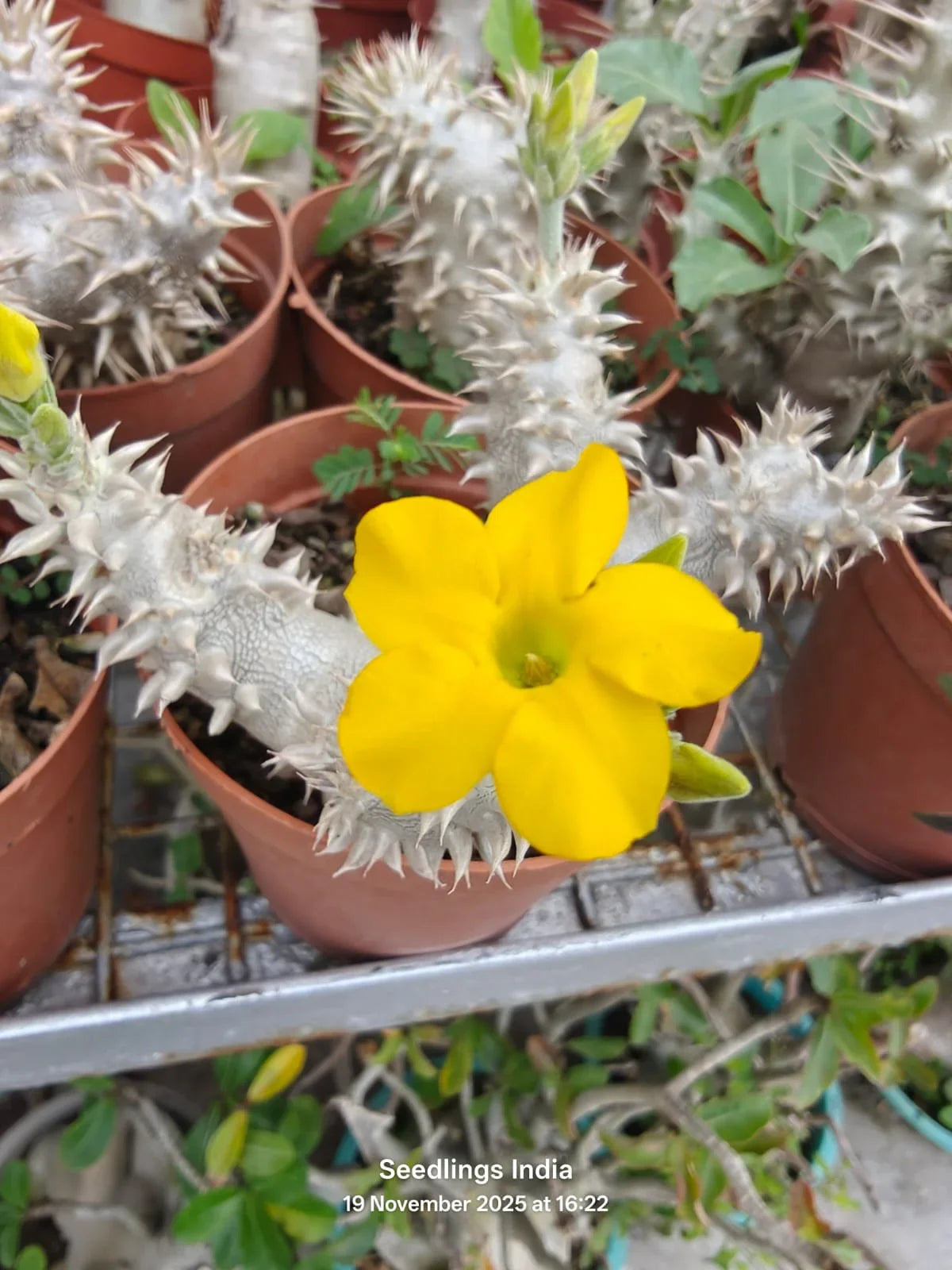
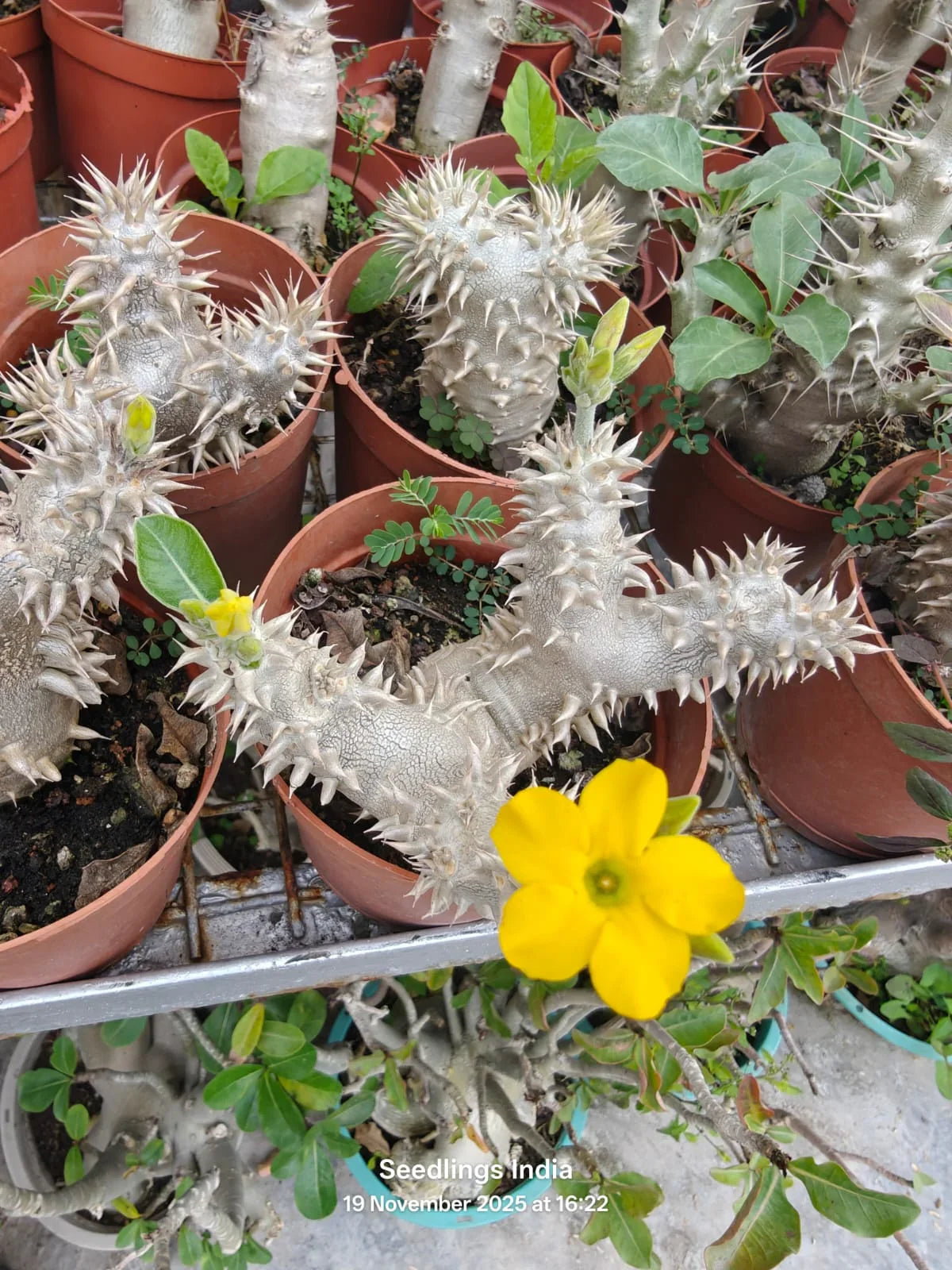
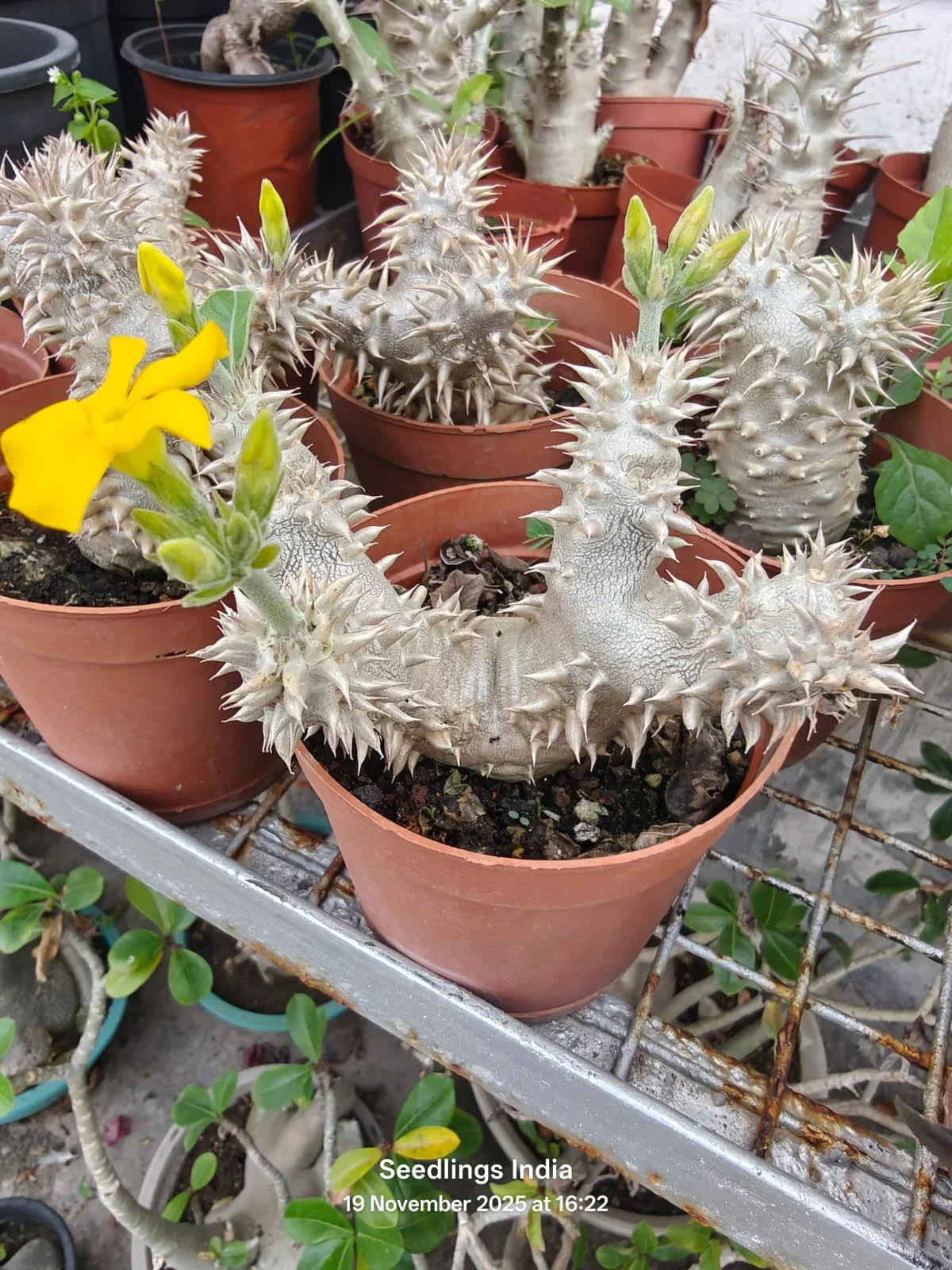
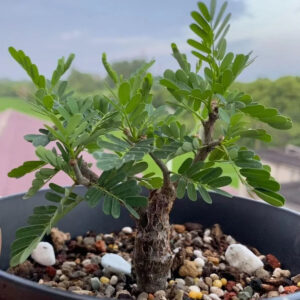
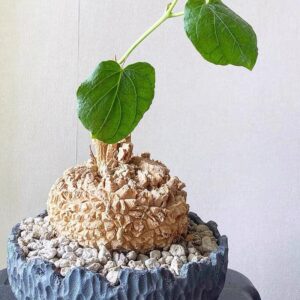
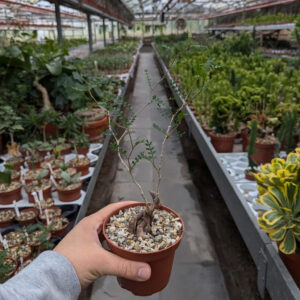
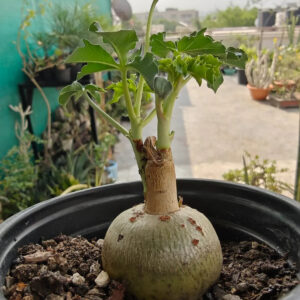
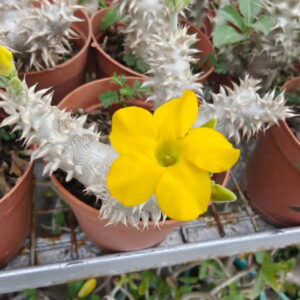
The Caudex and Branches: Pachypodium Densiflorum develops a massive, squat, swollen trunk (the caudex) that acts as a water reservoir. From this base, it branches out into thick, silvery-green or brownish arms heavily armed with conical spines.
-
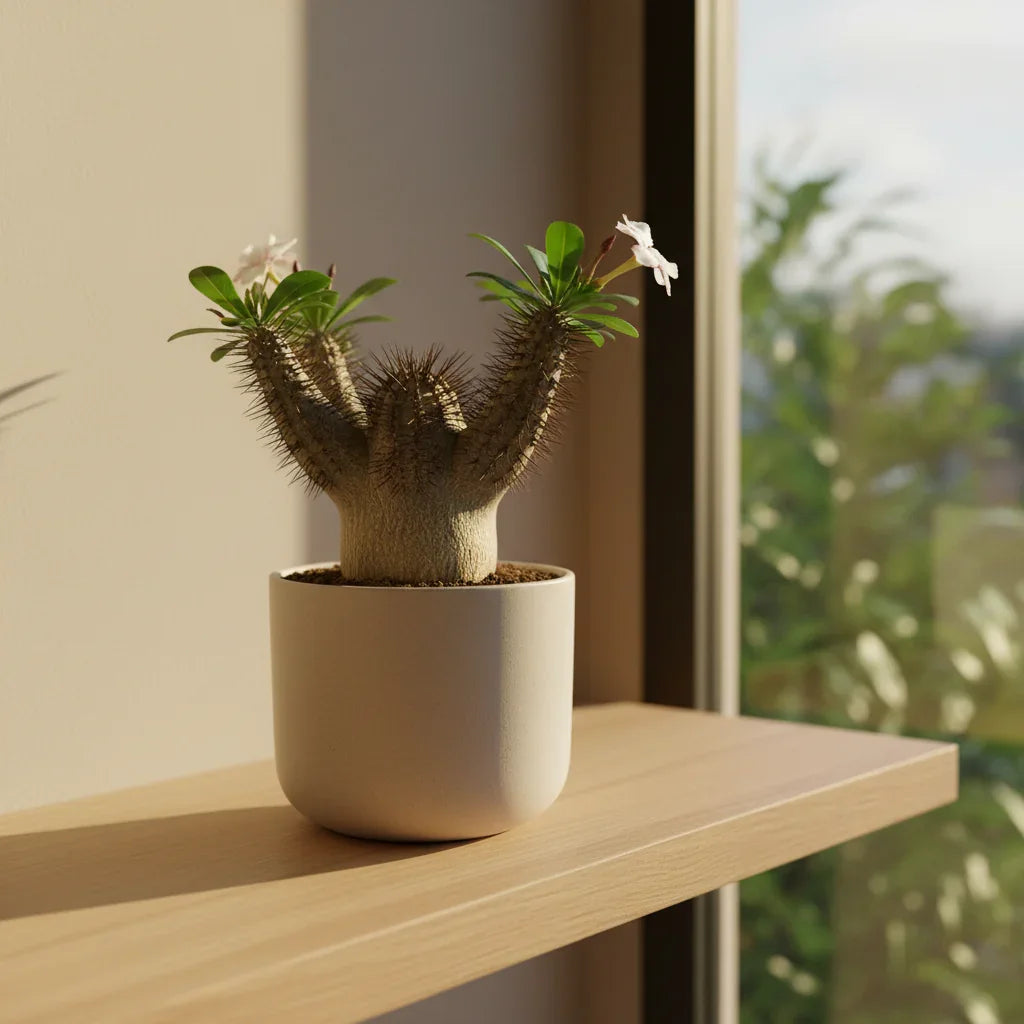
The Foliage: During its active growing season, small, dark green, oval leaves emerge in tight rosettes at the very tips of the spiny branches, creating a lush canopy over the rugged trunk.
-
The Blooms: The specific epithet densiflorum refers to its dense clusters of flowers. In the spring and early summer, it pushes out tall stalks topped with vibrant, trumpet-shaped, bright yellow blossoms that create a spectacular contrast against the spiny branches.
Cultivation and Local Climate Strategy
Unlike the winter-growing Pelargonium, this is a strict summer grower. It is built to withstand extreme heat, making it exceptionally well-suited for the intense local summers, provided its soil and water are managed carefully:
-
Light: It demands full, blazing sun. The more direct sunlight it receives, the fatter and more compact the caudex will grow, and the more profusely it will bloom. If grown in too much shade, the spiny branches will stretch (etiolate) and become thin and weak.
-
Summer & Monsoon Management (Active Growth): While it thrives in scorching heat, the local monsoon season presents a significant challenge. The heavy rains and high humidity can quickly rot the caudex if the roots stay wet. It must be potted in a hyper-porous, mostly mineral mix (heavy on pumice, cinder, and coarse sand) and ideally sheltered from relentless monsoon downpours while still receiving maximum light.
-
Winter Dormancy: As temperatures drop in late autumn, the leaves will naturally turn yellow and drop off, leaving a bare, spiny skeleton. During this winter dormancy period, the plant must be kept completely dry. Watering a leafless Pachypodium Densiflorum in cool weather is a guaranteed recipe for fatal root rot.
Reviews
There are no reviews yet.