Pelargonium appendiculatum is an exquisite, highly specialized collector’s plant. While it technically belongs to the geranium family, it has evolved into a tuberous geophyte (a plant that survives underground during harsh seasons). For a premium catalog, it appeals directly to the same high-end caudex collectors who would purchase a Petopentia, but it brings a radically different set of aesthetics and care rules.
Growth & Characteristics
Native to the arid, winter-rainfall regions of South Africa, this plant is grown for both its architectural base and its incredibly delicate foliage.
-
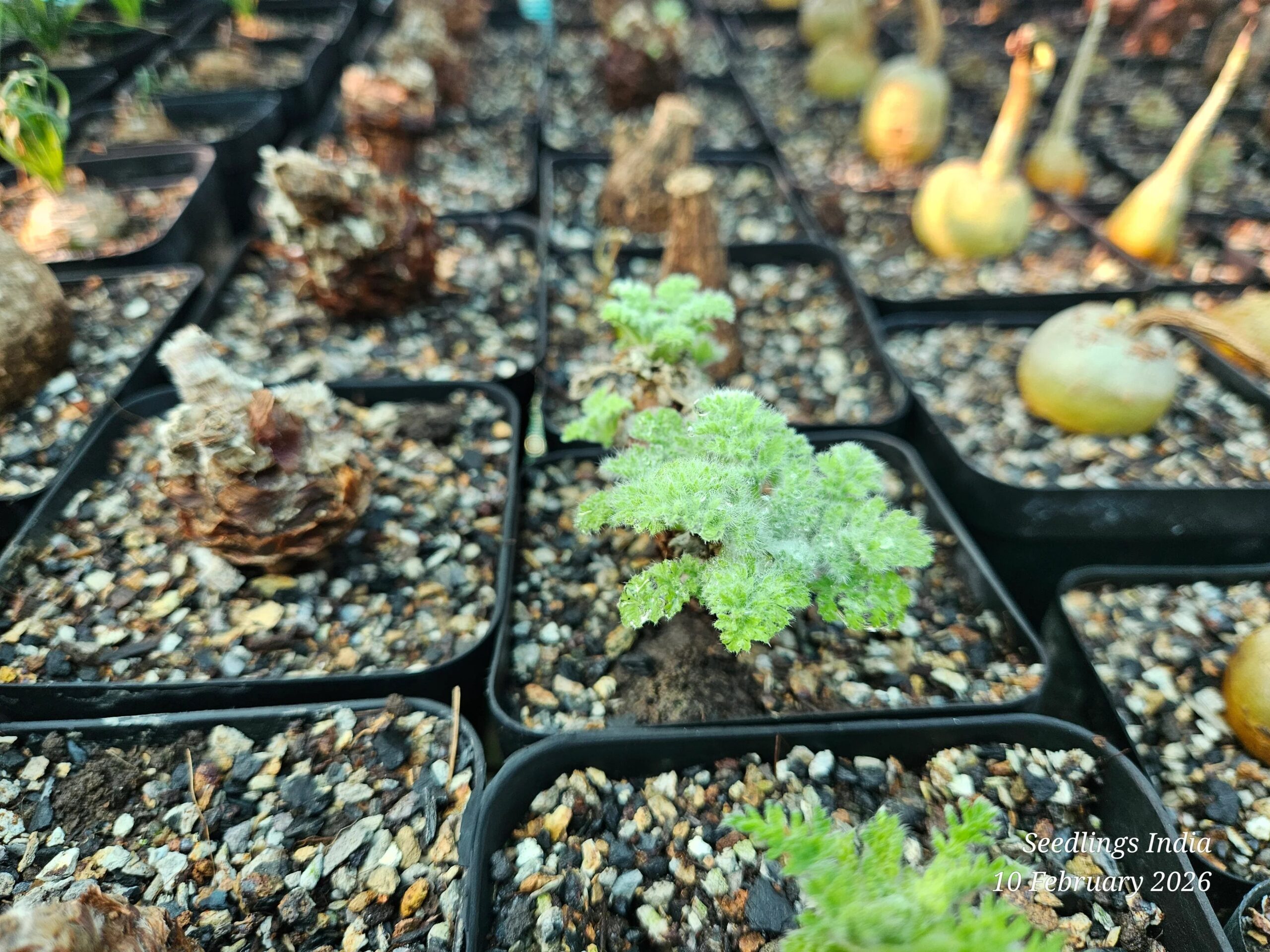
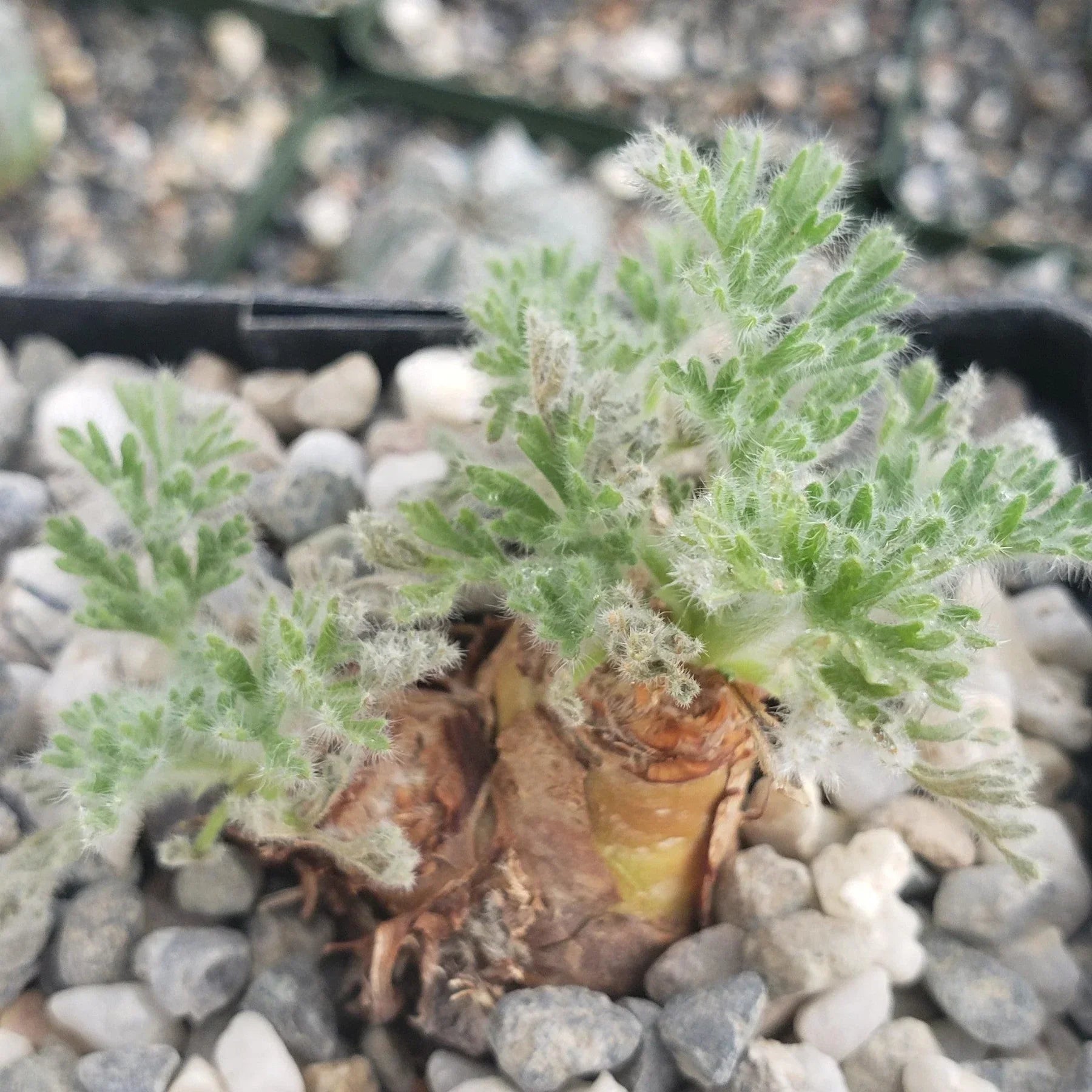
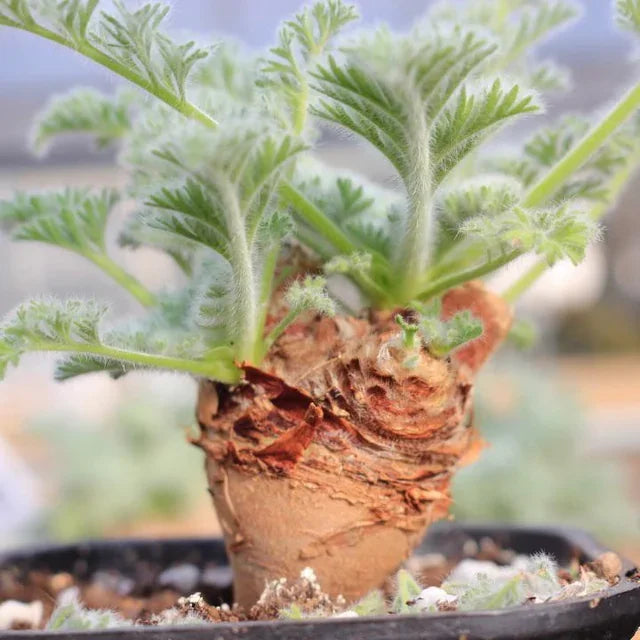
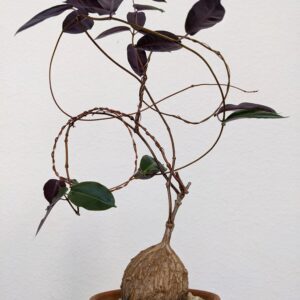
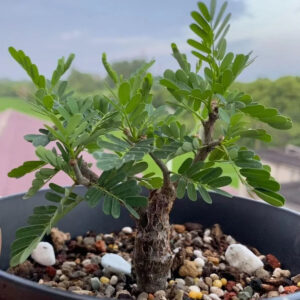
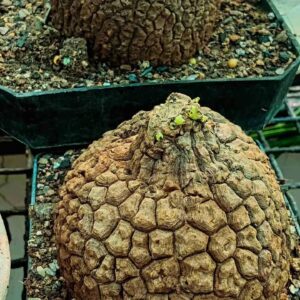
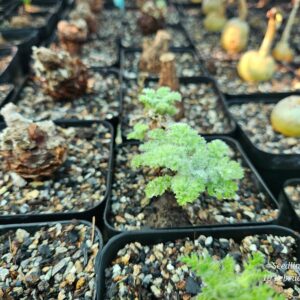
The Tuber: Pelargonium Appendiculatum forms a thick, corky, underground tuber that stores water and nutrients. While it naturally grows entirely buried, succulent collectors almost always pot it with the top portion of the tuber exposed to showcase its rugged, caudiciform appearance.
-
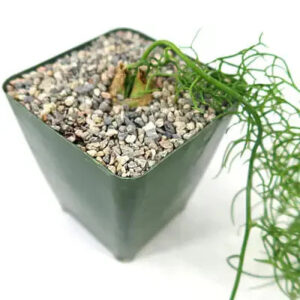
The Foliage: The leaves are the true showstopper. They are deeply dissected, highly feathery, and covered in fine, silky hairs, giving them a frosted, silvery-green look. The foliage resembles a delicate fern or a carrot top, contrasting beautifully with the chunky, woody base.
-
The Blooms: Pelargonium Appendiculatum produces delicate, pale yellow or creamy-white flowers that are heavily streaked with deep burgundy or purple markings on the upper petals.
The Critical Care Shift: A Winter Grower
This is the most important piece of information for managing this plant in inventory. Unlike the Petopentia, Curcuma, and Tuberose you’ve been reviewing—which thrive in the summer and sleep in the winter—Pelargonium appendiculatum is a strict winter grower.
Because it originates from a region with wet winters and bone-dry summers, its biological clock is entirely inverted:
-
Autumn/Winter (Active Growth): As the intense summer heat breaks and temperatures drop in autumn, the plant wakes up and pushes out its feathery leaves. During the cooler winter months, it requires regular watering (allowing the soil to dry halfway between soakings) and bright, direct sunlight.
-
Summer (Dormancy): When temperatures rise in the late spring, the leaves will naturally yellow, crisp, and die back entirely. The plant is not dead. During the scorching summer months, the tuber goes into a deep dormancy.
Soil and Summer Survival
If this plant receives water while it is sleeping in the summer heat, the tuber will turn to mush almost instantly.
To prevent rot during dormancy, a hyper-porous soil mix is absolutely mandatory. It requires an extremely gritty substrate—heavy on pumice, perlite, and coarse sand—with very little organic matter. During the summer, pots should be moved to a shaded, well-ventilated area and kept almost entirely dry until the weather cools down again in autumn.

Reviews
There are no reviews yet.