
Gymnocalycium Baldianum
Origin and Natural Habitat
-
Native Range: Gymnocalycium baldianum (commonly known as the Dwarf Chin Cactus or Ruby Ball Cactus) is native to the Catamarca province of Argentina, specifically found in the Sierra Ancasti mountain ranges.
-
Habitat: Gymnocalycium Baldianum grows at higher altitudes among rocks and in dry, rocky grasslands, often finding partial shade under low shrubs or grass clumps that shield it from the harshest direct elements.
Key Characteristics
-
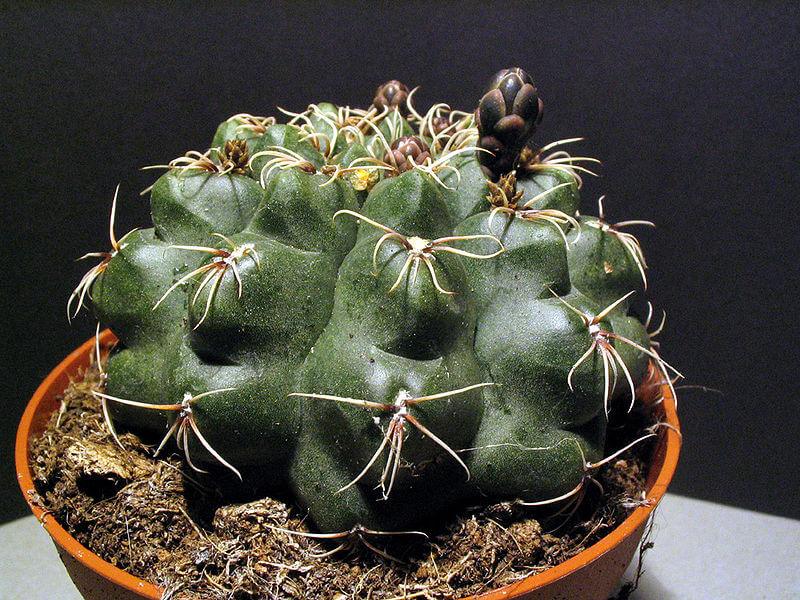
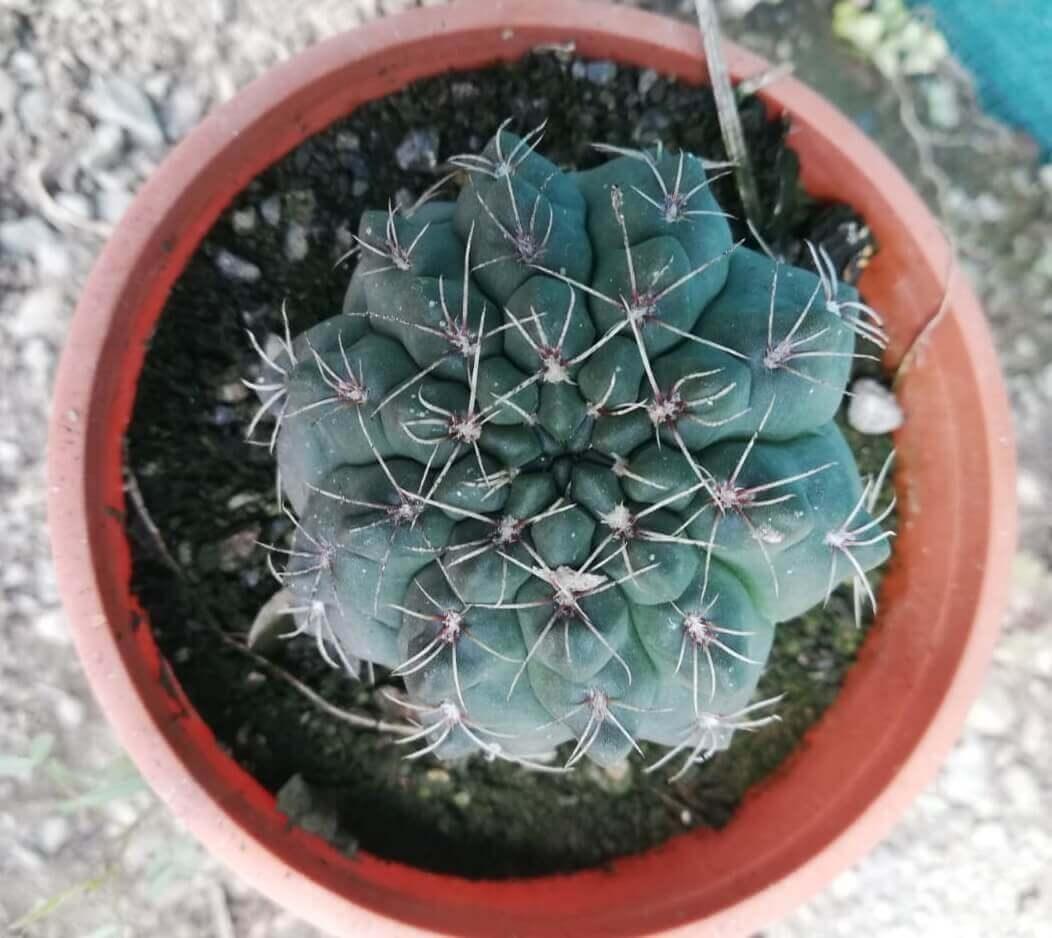
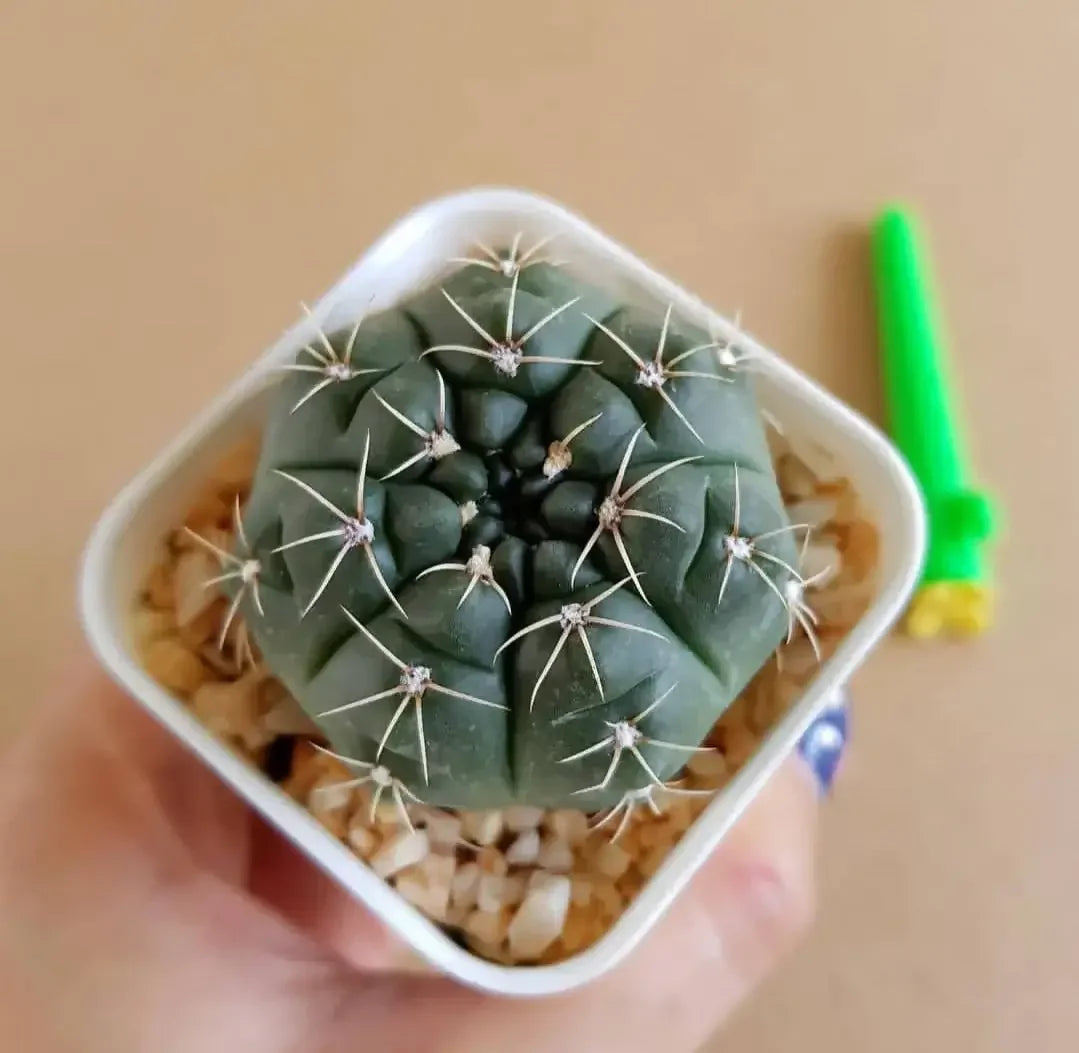
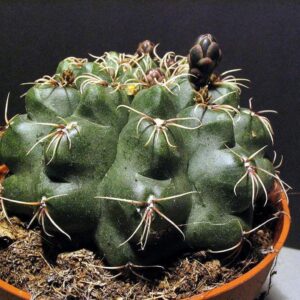
Appearance: A compact, solitary, globular cactus that grows up to 7–10 cm in diameter, featuring distinctive, rounded chin-like bumps (tubercles) on its ribs. Its skin ranges from dull green to a purplish-gray shade.
-
Spines: Features short, grayish-brown to whitish radial spines (usually 3 to 5 per areola) that curve slightly backward against the plant body and lack a central spine, making it less prickly than species like G. ferox.
-
Flowers: Famous for its brilliant, glowing deep red, crimson, or magenta blossoms (though pink and white variants exist), which bloom abundantly and repeatedly from late spring through summer.
-
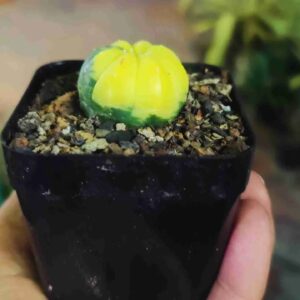
Grafting: Because it is prolific and naturally somewhat small, it is frequently used as the colorful red top in grafted “Moon Cactus” pairings (grafted onto Hylocereus), though it grows wonderfully on its own roots.
Essential Care Guide
-
Light: Requires bright, filtered sunlight or direct morning sun. While strong light enhances flowering and keeps the plant compact, intense scorching afternoon summer sun can burn its epidermis.
-
Soil: Gymnocalycium Baldianum needs a rich yet fast-draining, gritty cactus substrate. A standard mix of potting soil amended heavily with pumice, perlite, or coarse sand ensures excess water escapes quickly.
-
Watering: Follow the “soak and dry” approach. Water thoroughly during the active spring and summer growing season, and let the soil dry out entirely between waterings. Restrict water almost completely in winter.
-
Temperature: Tolerates typical summer warmth easily. For winter dormancy, keep it in a cool, bright, dry location (roughly 8°C to 12°C) to encourage a heavy burst of flowers the following spring. It can handle brief chills if completely dry, but is not frost-hardy.
-
Fertilizing: Apply a diluted, low-nitrogen liquid cactus fertilizer once a month during spring and summer to fuel its heavy blooming cycle. Do not fertilize in winter.
Reviews
There are no reviews yet.