
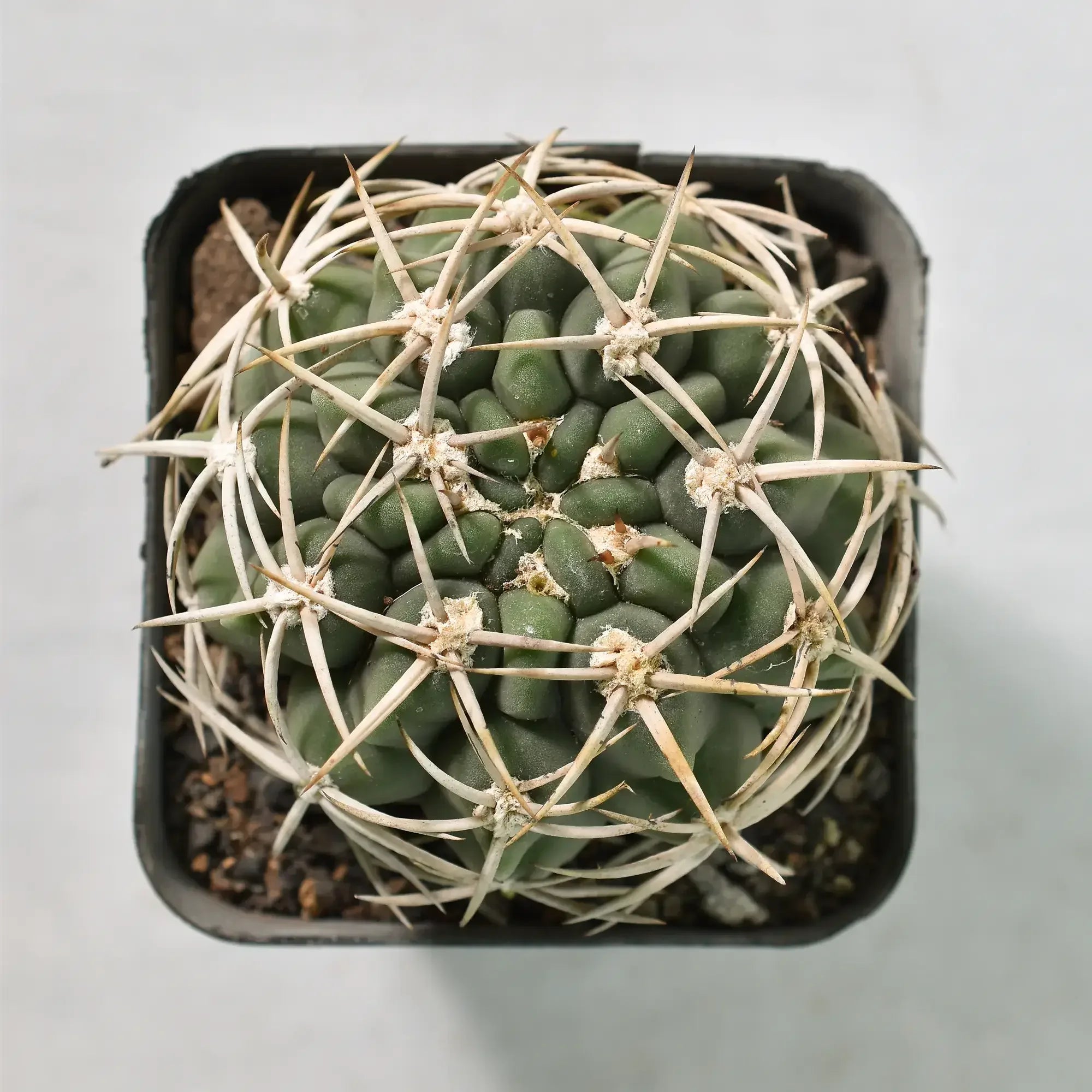
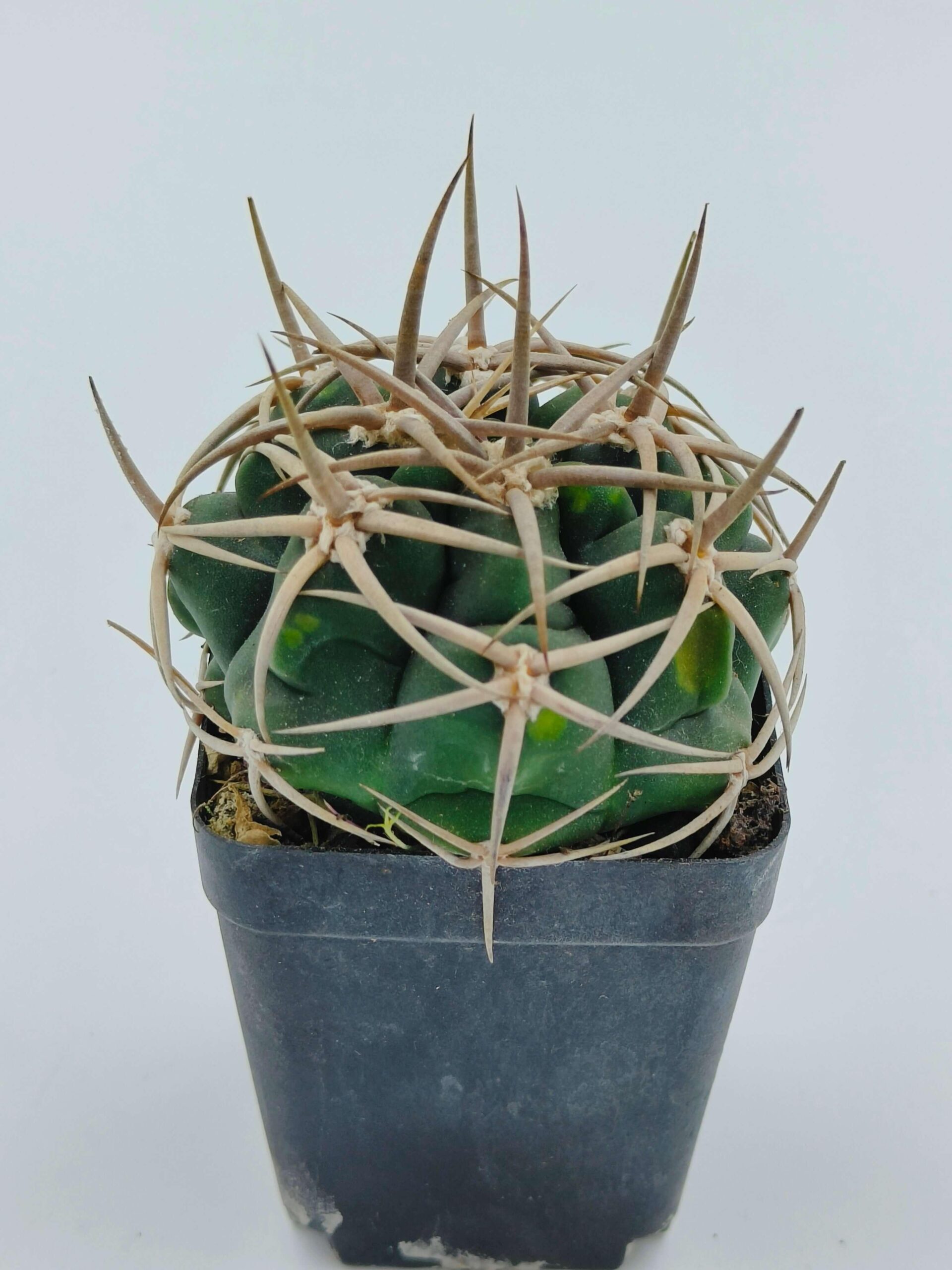
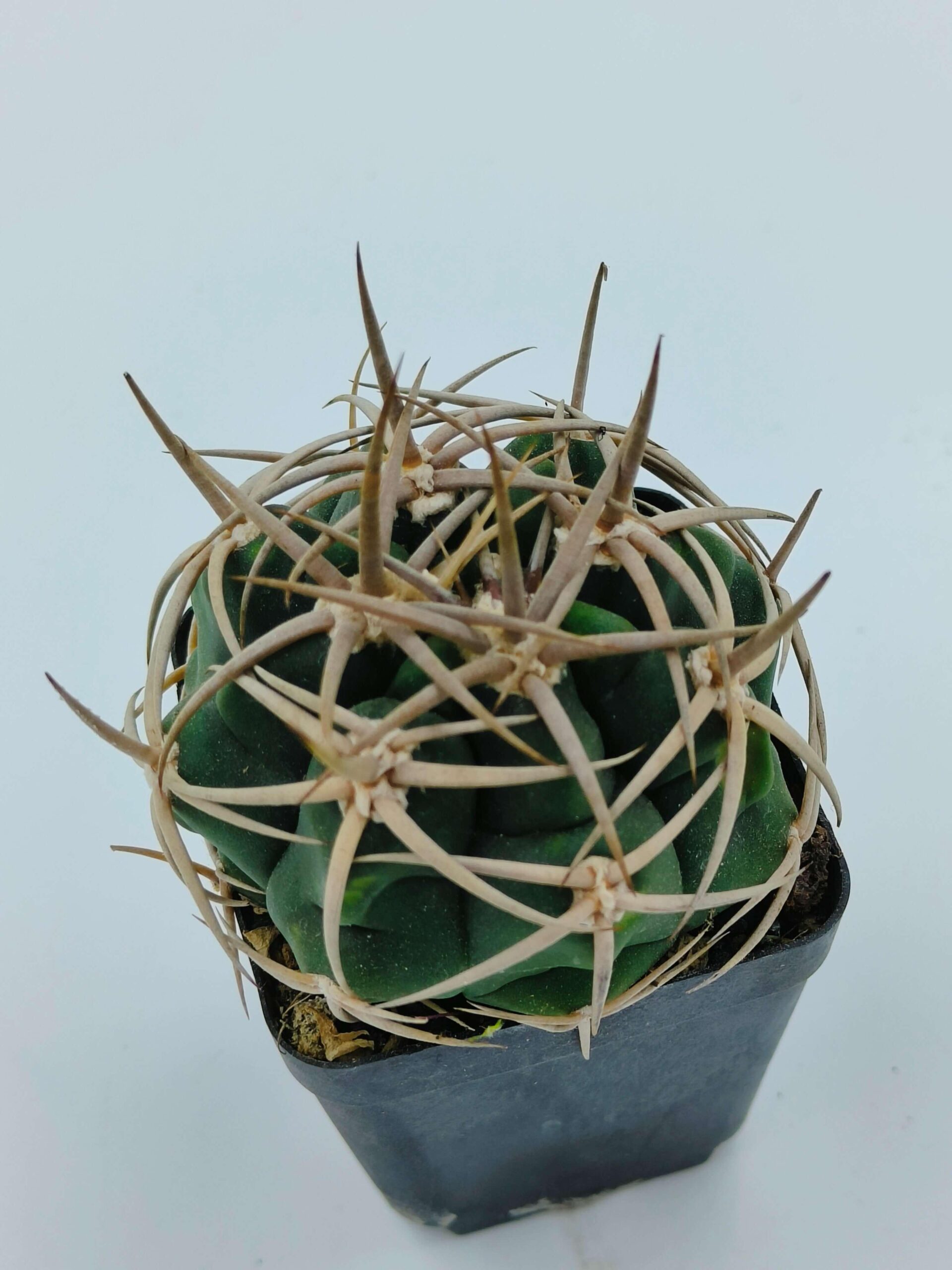
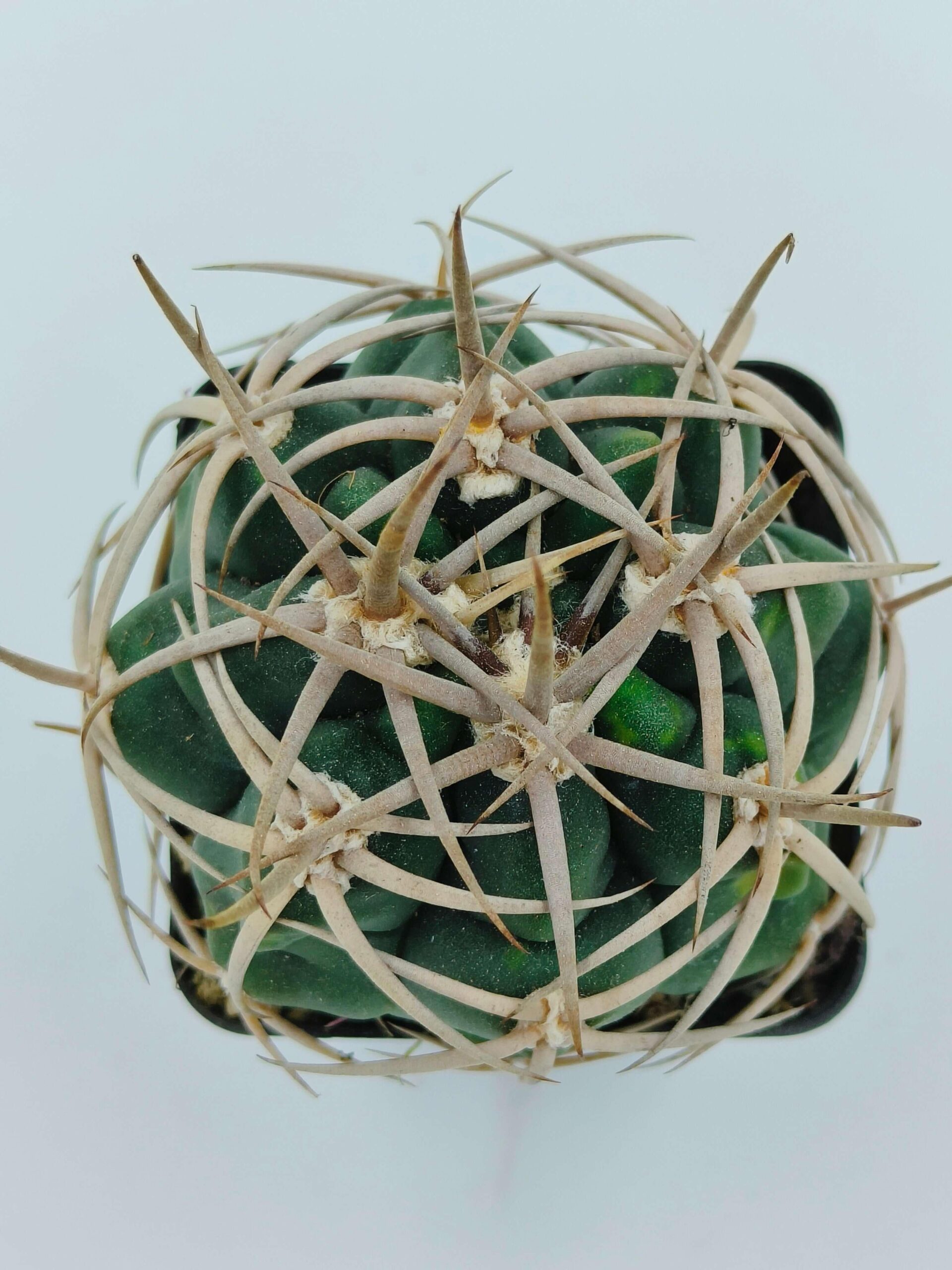
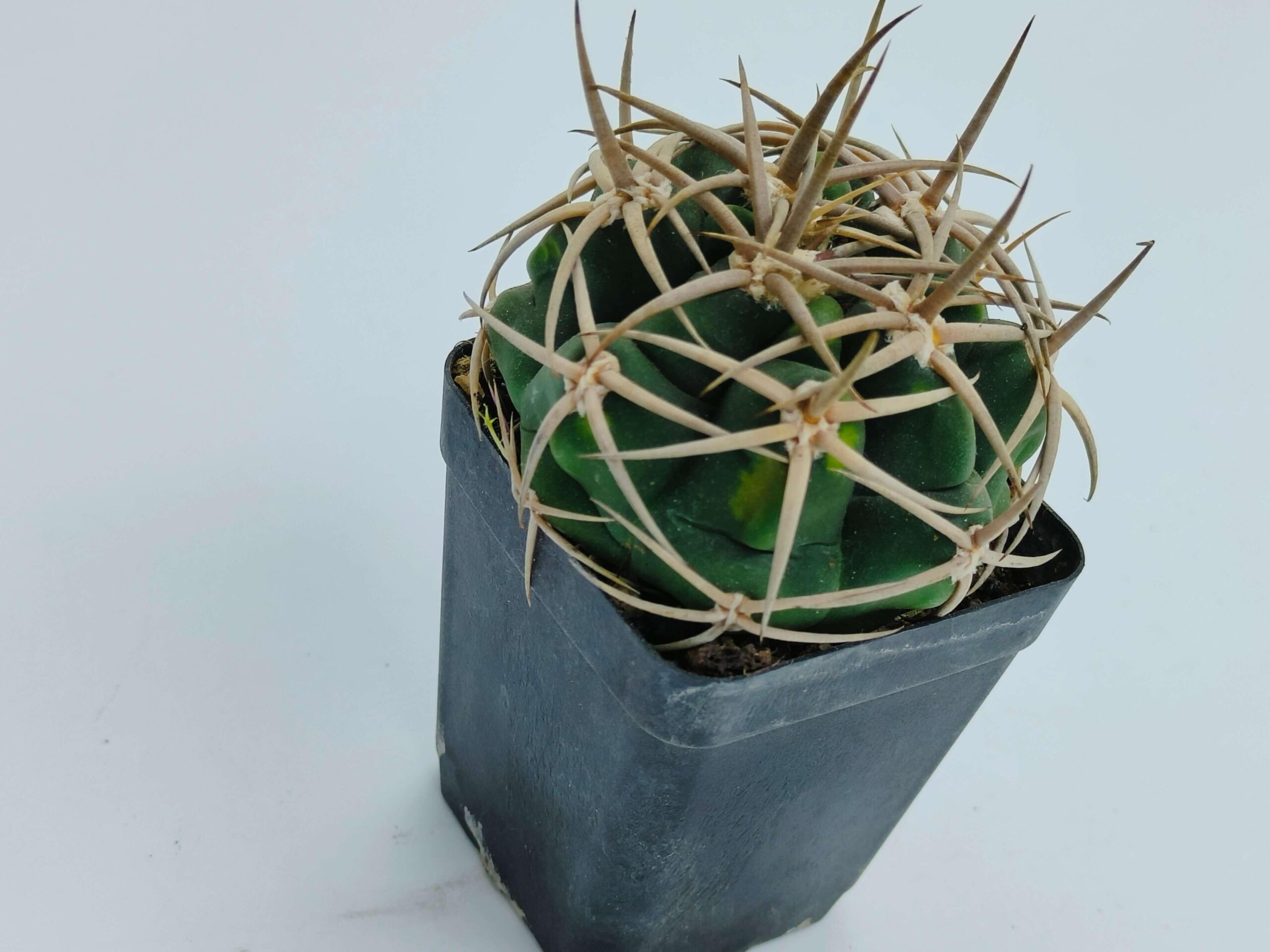
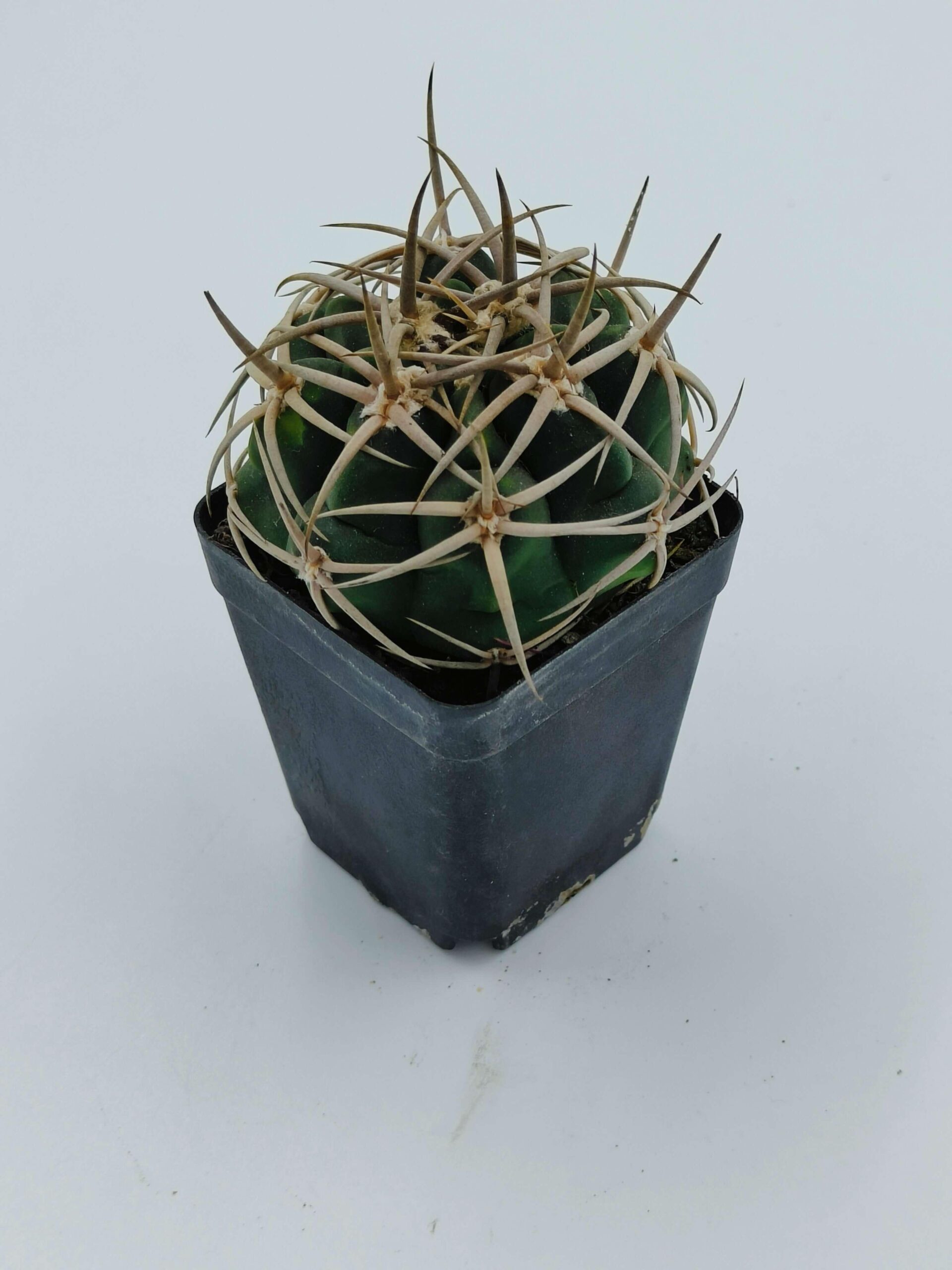
Gymnocalycium Ferox
Origin and Natural Habitat
-
Native Range: Gymnocalycium ferox is native to South America, specifically found in the arid and semi-arid regions of Argentina (primarily provinces like Salta, Catamarca, and La Rioja).
-
Habitat: These cacti thrive in mountainous, rocky areas at high altitudes, usually growing sheltered under shrubs, nurse plants, or rock crevices that protect them from the harsh, scorching midday sun.
Key Characteristics
-
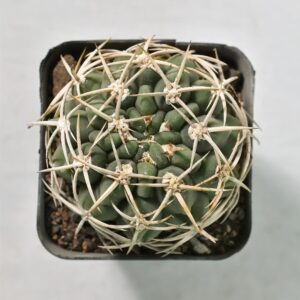
Appearance: A solitary, globular cactus that flattens slightly as it matures. It features heavy, robust, curved, or hooked spines that wrap tightly around the body, giving it a fierce and armored look (hence the species name ferox, meaning fierce).
-
Flowers: Produces large, funnel-shaped flowers, typically white, pale pink, or soft yellowish-white, emerging from the crown during the spring and summer months.
-
Growth Rate: Slow-growing, compact, and ideal for container gardening or indoor windowsills with bright light.
Essential Care Guide
-
Light: Requires bright, indirect to direct sunlight. A south- or west-facing window is ideal. While they need strong light to maintain their compact shape and heavy spine coloration, very intense afternoon sun in peak summer can scorch them, so some light afternoon filtering helps.
-
Soil: Needs a fast-draining, gritty cactus mix. Combine standard potting soil with coarse sand, perlite, and pumice (a 50/50 organic-to-inorganic ratio is recommended) to prevent root rot.
-
Watering: Follow the “soak and dry” method. Water thoroughly until water runs out of the drainage holes, then allow the soil to dry out completely before watering again. Reduce watering drastically in the winter dormancy period.
-
Temperature: Tolerates warm summer temperatures well. In winter, keep them cool and dry (around 10°C to 12°C) to encourage spring blooming, protecting them entirely from frost.
-
Fertilizing: Feed lightly with a balanced, low-nitrogen cactus fertilizer diluted to half strength once a month during the active growing season (spring through summer). Do not fertilize in fall and winter.
Reviews
There are no reviews yet.