
Jatropha Berlandieri
Origin and Background
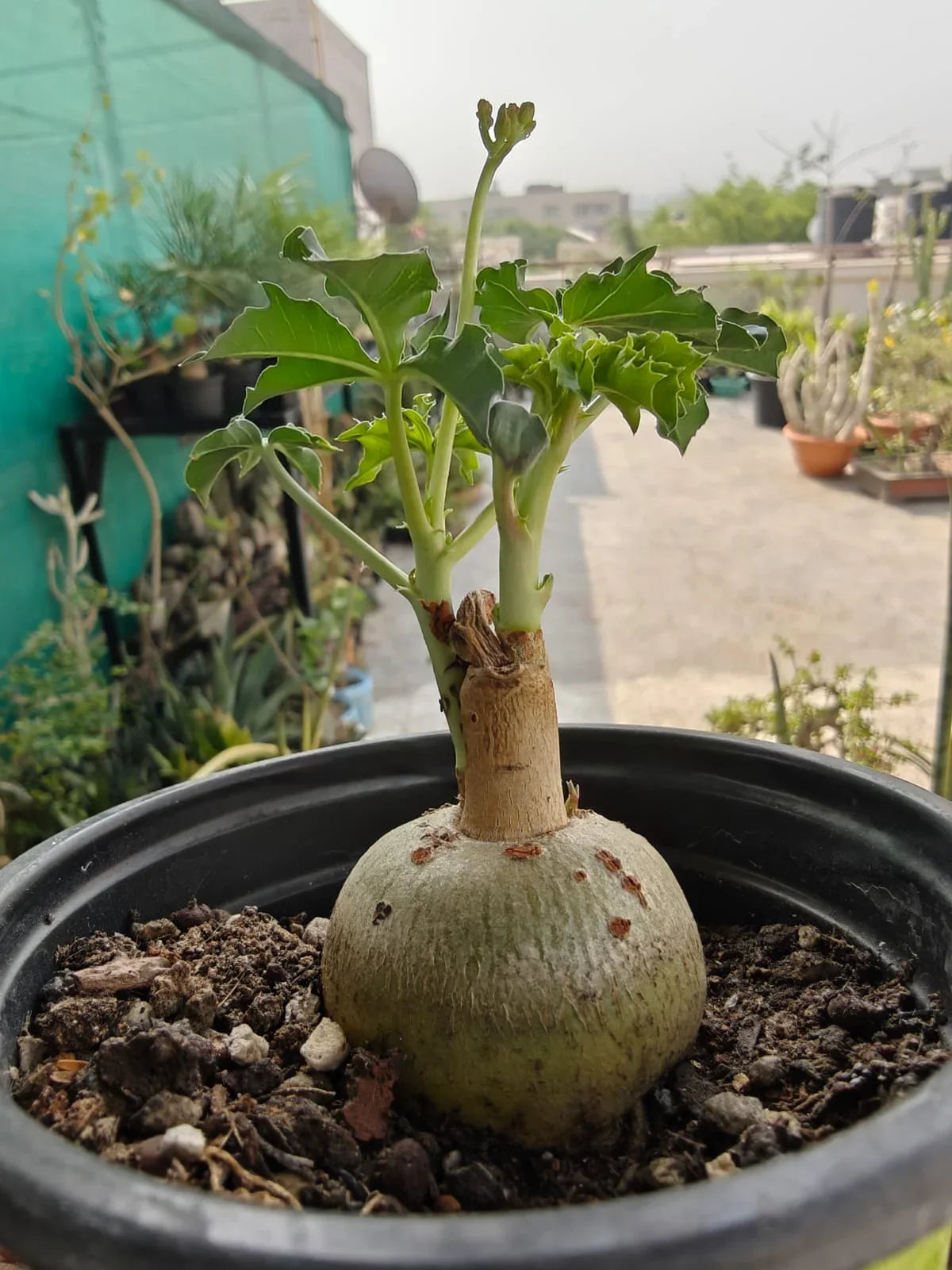
Jatropha berlandieri is a captivating caudiciform succulent native to the arid scrublands of southern Texas and northern Mexico. It belongs to the Euphorbiaceae family, sharing a lineage with poinsettias and crown of thorns.
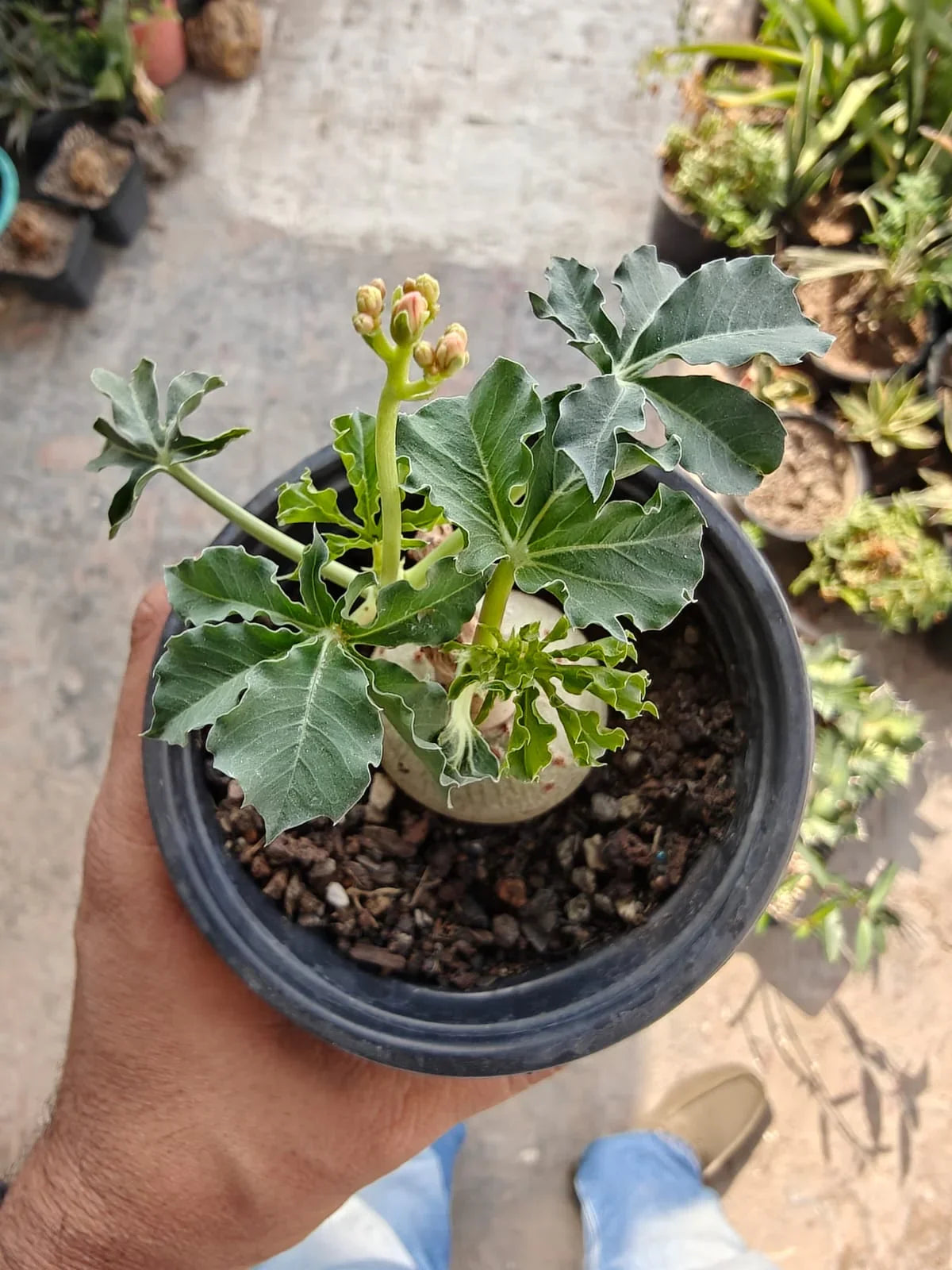
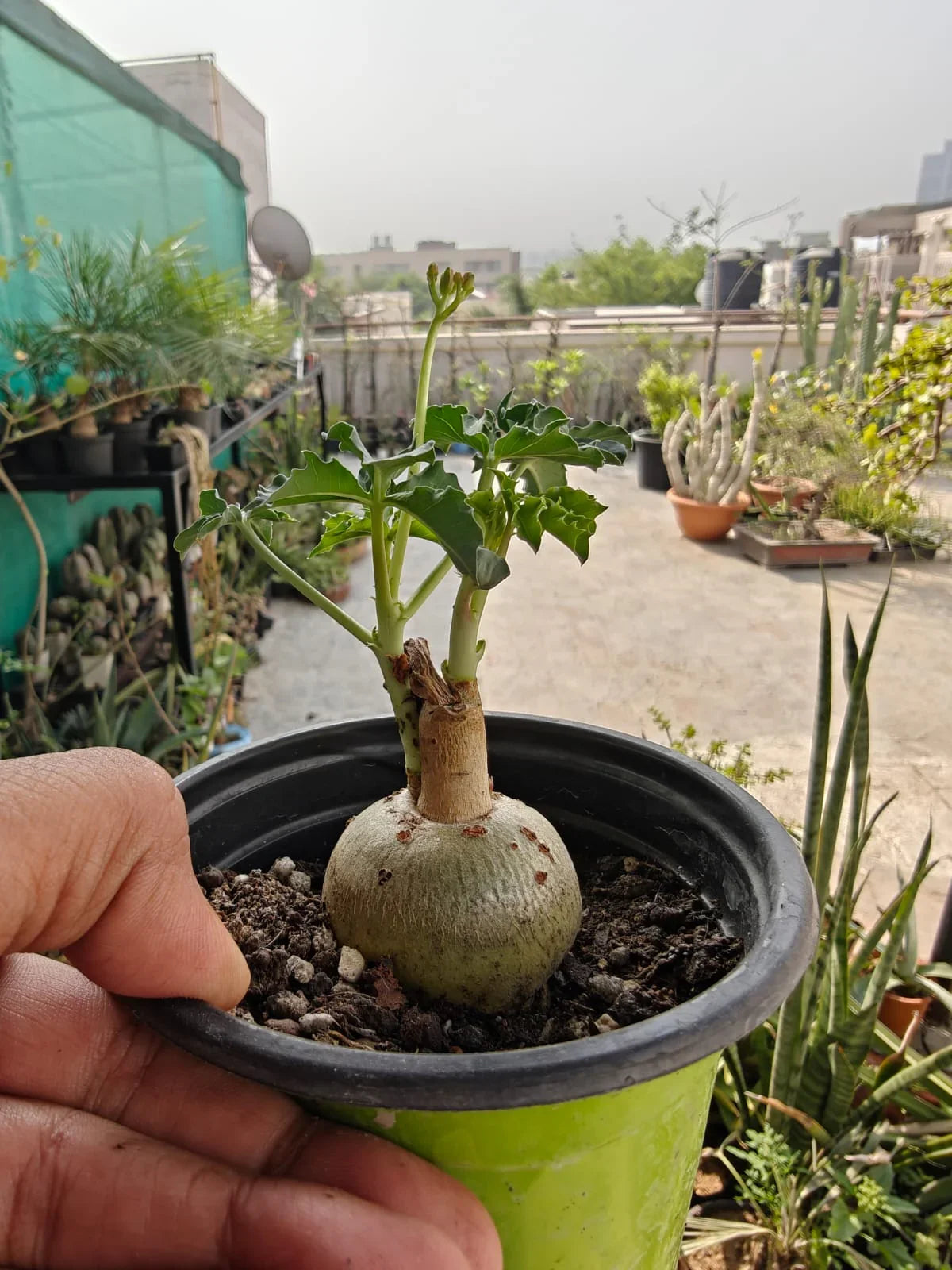
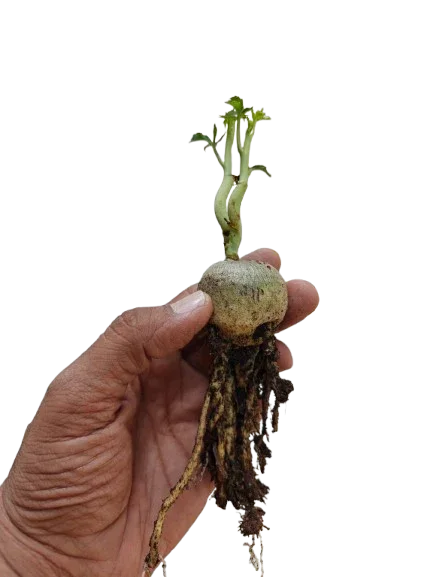
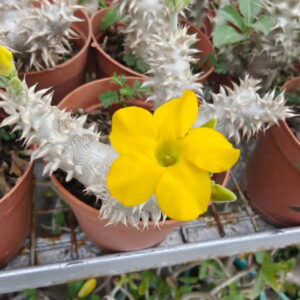
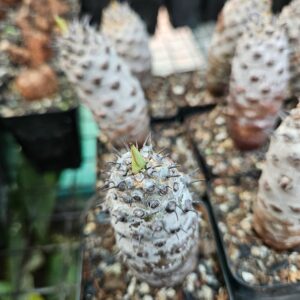
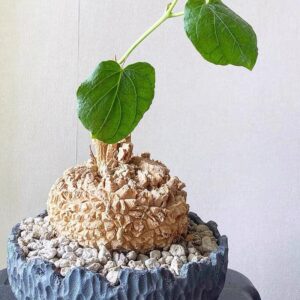
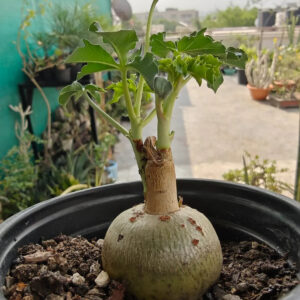
Its most striking feature is its massive, spherical, and woody caudex. In its natural habitat, this swollen stem grows entirely underground to protect itself from extreme heat and herbivores. However, in cultivation, growers typically raise the caudex above the soil line to display its rugged, architectural beauty.
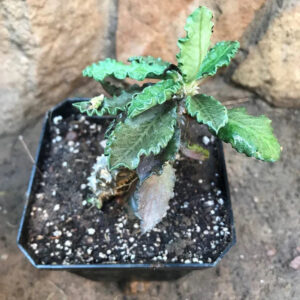
During the active growing season, it sprouts elegant, deeply lobed, bluish-green palmate leaves. It is highly prized for producing vibrant, long-lasting clusters of coral-pink to bright red flowers that contrast beautifully against its foliage and woody base.
Comprehensive Care Guide
Like many caudex-forming plants from this region, it is a summer-growing, winter-dormant succulent.
-
Sunlight: Provide it with bright, indirect light to full sun. Exposing the foliage to plenty of sunlight encourages blooming and keeps the stems compact. If the caudex is exposed above the soil, ensure the base is shielded from harsh, direct afternoon sun to prevent sunburn.
-
Summer Watering: During the warm growing season when it has leaves and flowers, water it deeply and thoroughly. Wait until the top half of the soil is completely dry before watering again.
-
Winter Dormancy: In late autumn, the plant will drop its leaves and go dormant. Stop watering almost entirely during the winter. A few drops every month or two is only necessary if the caudex begins to look severely shriveled.
-
Soil Mixture: Exceptional drainage is non-negotiable, as the thick taproot is highly susceptible to rot. Use a heavily aerated, mineral-rich cactus mix—a blend of 50% pumice or perlite and 50% standard succulent soil works well.
-
Temperature: It loves heat and thrives in temperatures between 25°C and 35°C (77°F to 95°F). It is absolutely not frost-hardy and must be kept dry and above 10°C (50°F) during the winter.
-
Toxicity Warning: Like all Euphorbias, all parts of this plant—especially the seeds and the milky sap—are highly toxic if ingested and can cause skin irritation upon contact.
Reviews
There are no reviews yet.