
Sansevieria Pinguicula
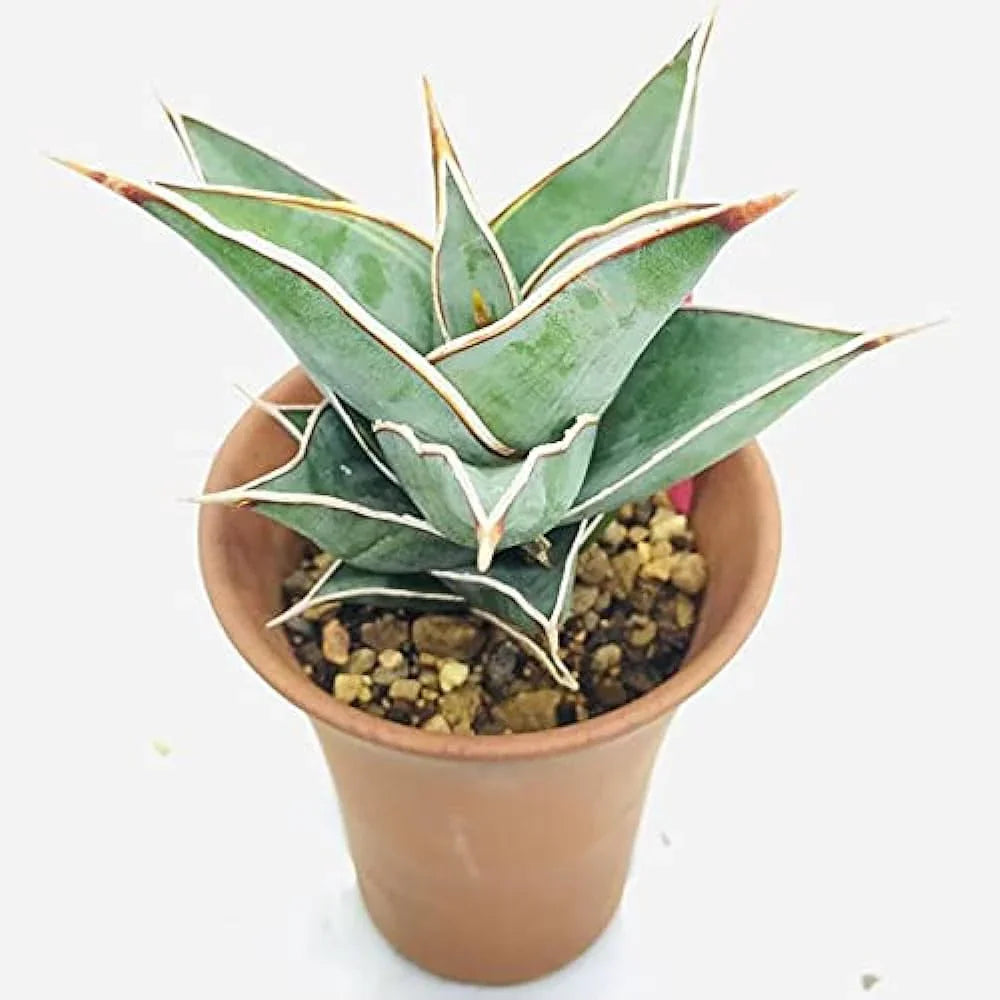
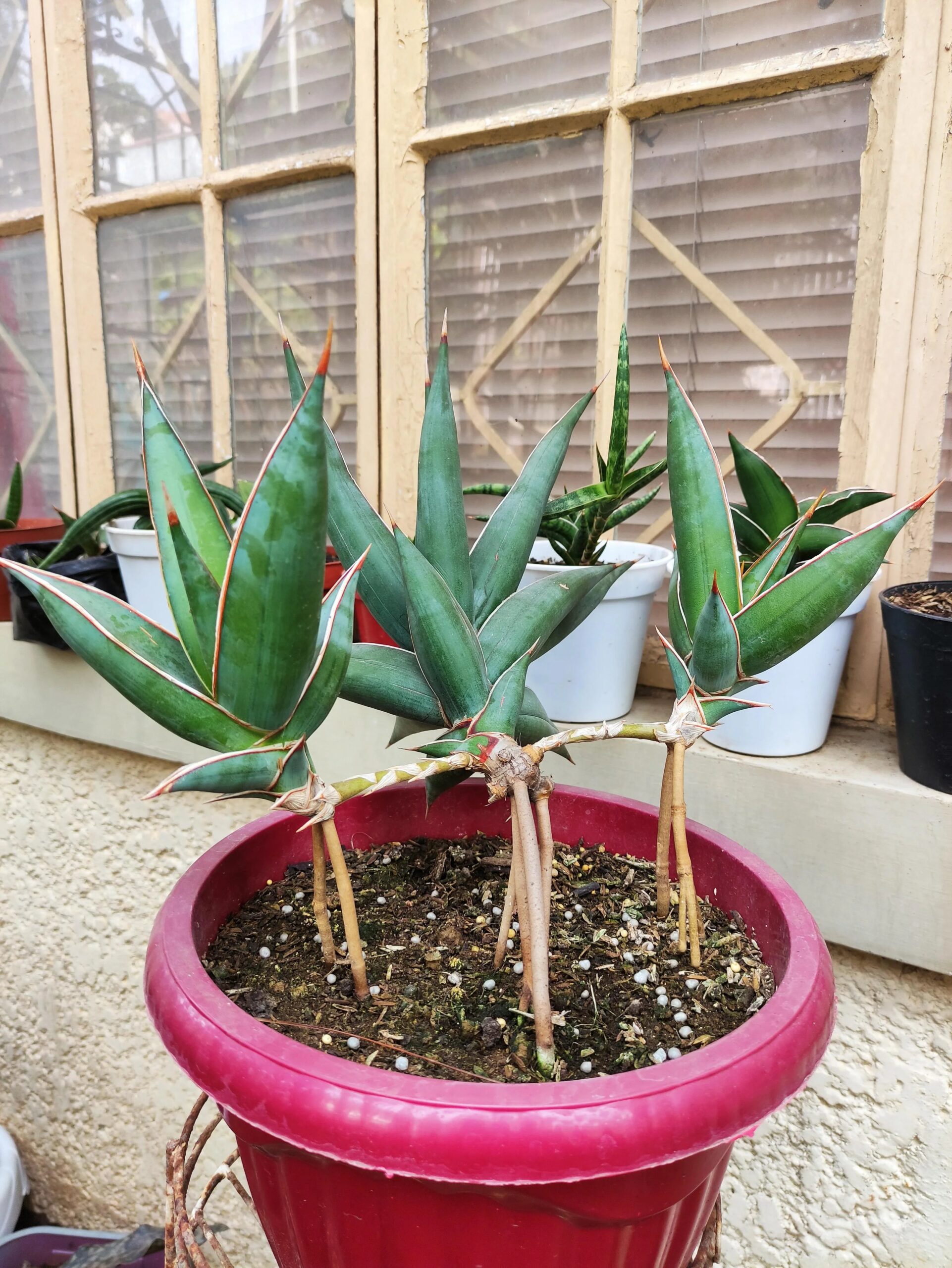
Sansevieria pinguicula (syn. Dracaena pinguicula), famous as the Walking Snake Plant, is a highly coveted, slow-growing succulent species native to the arid Garissa region of eastern Kenya. It earns its nickname from its extraordinary growth habit of producing thick aerial stolons (runners) that prop offsets off the ground on stilt-like roots.
Key Characteristics of Sansevieria Pinguicula
-
Stilt-Walking Offsets: Unlike standard sansevierias that spread via subterranean rhizomes, S. pinguicula extends thick aerial stolons above the soil line. As a pup forms at the stolon tip, it extends strong prop roots downward into the earth, elevating the mother plant and offsets above the ground like stilts.
-
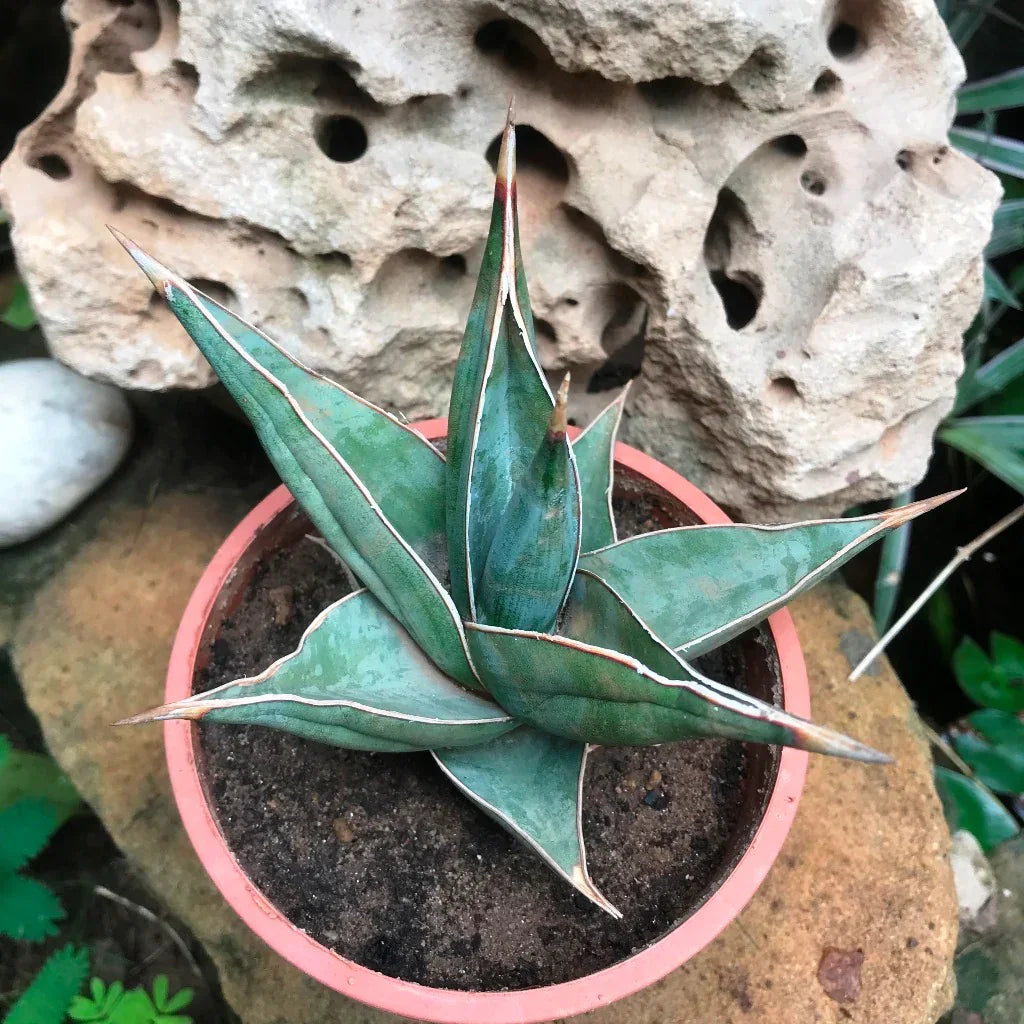
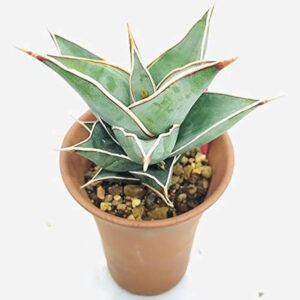
Succulent Crescent Leaves: Leaves are thick, fleshy, dark blue-green, and distinctly concave/trough-shaped on the upper surface. Each leaf is tipped with a sharp brown-to-red spine and outlined with prominent, papery-white leaf margins.
-
Blue-Glaucous Waxy Coating: The foliage is coated with a pale, powdery epicuticular wax (farina) that protects the leaves from intense direct sun and reduces water loss in dry habitats.
Care & Cultivation Highlights for Sansevieria Pinguicula
| Aspect | Care Requirement |
| Light | Bright, indirect sunlight to partial direct sun. Full sun maintains tight rosettes and rich coloration. |
| Substrate | Highly mineral, ultra-porous potting mix (75–80% pumice, perlite, lava rock, coarse sand, akadama). |
| Watering | Extremely drought-tolerant. Allow soil to dry 100% between waterings. Cut back drastically during winter dormancy. |
| Temperature | Strictly warm-growing. Protect from temperatures below 15°C (59°F) and wet-cold conditions to prevent root rot. |
Sansevieria pinguicula is native to a very restricted region in eastern Kenya (specifically the Bura area near Garissa in the Coast/Northern Frontier Province).
Habitat & Discovery Highlights
-
Native Habitat: Thrives in sun-baked, arid sandy plains and dry bushland at low elevations (50 to 250 meters above sea level). It is adapted to prolonged severe droughts, low humidity, and harsh tropical sun.
-
Discovery: First collected and described by Swiss botanist Peter René Oscar Bally in the Tana River region of Kenya.
-
Etymology: Bally assigned the specific epithet pinguicula from the Latin pinguis, meaning “fat” or “plump,” referring to its unusually thick, fleshy, crescent-shaped leaves.
Reviews
There are no reviews yet.