
Sansevieria Rockman
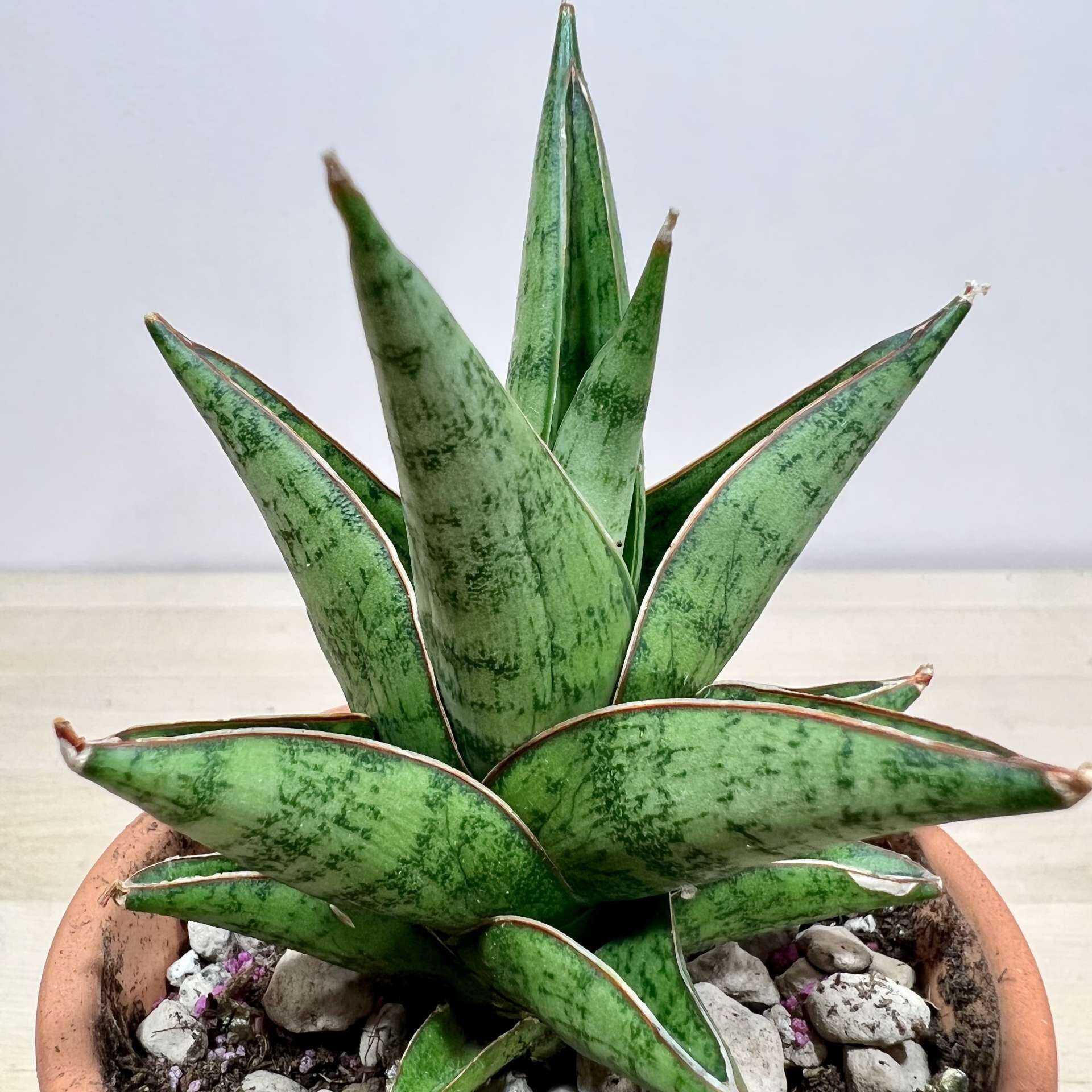
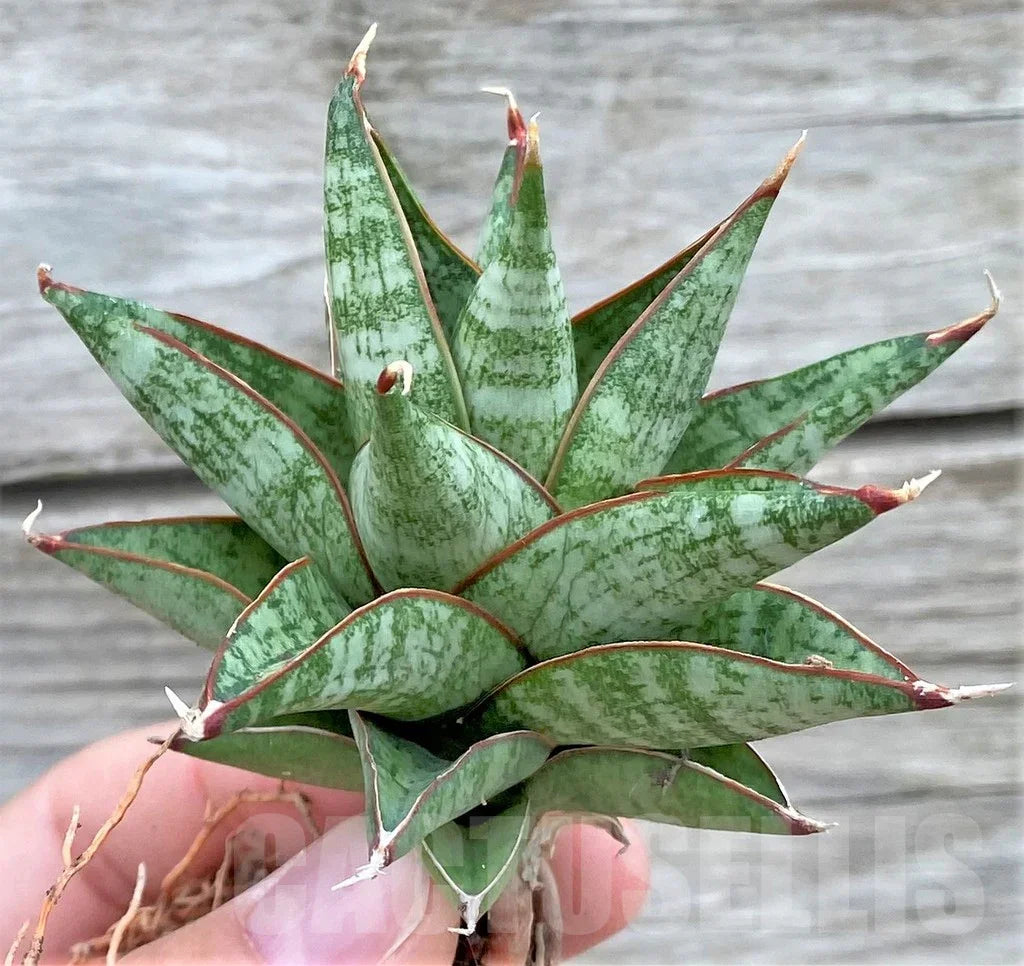
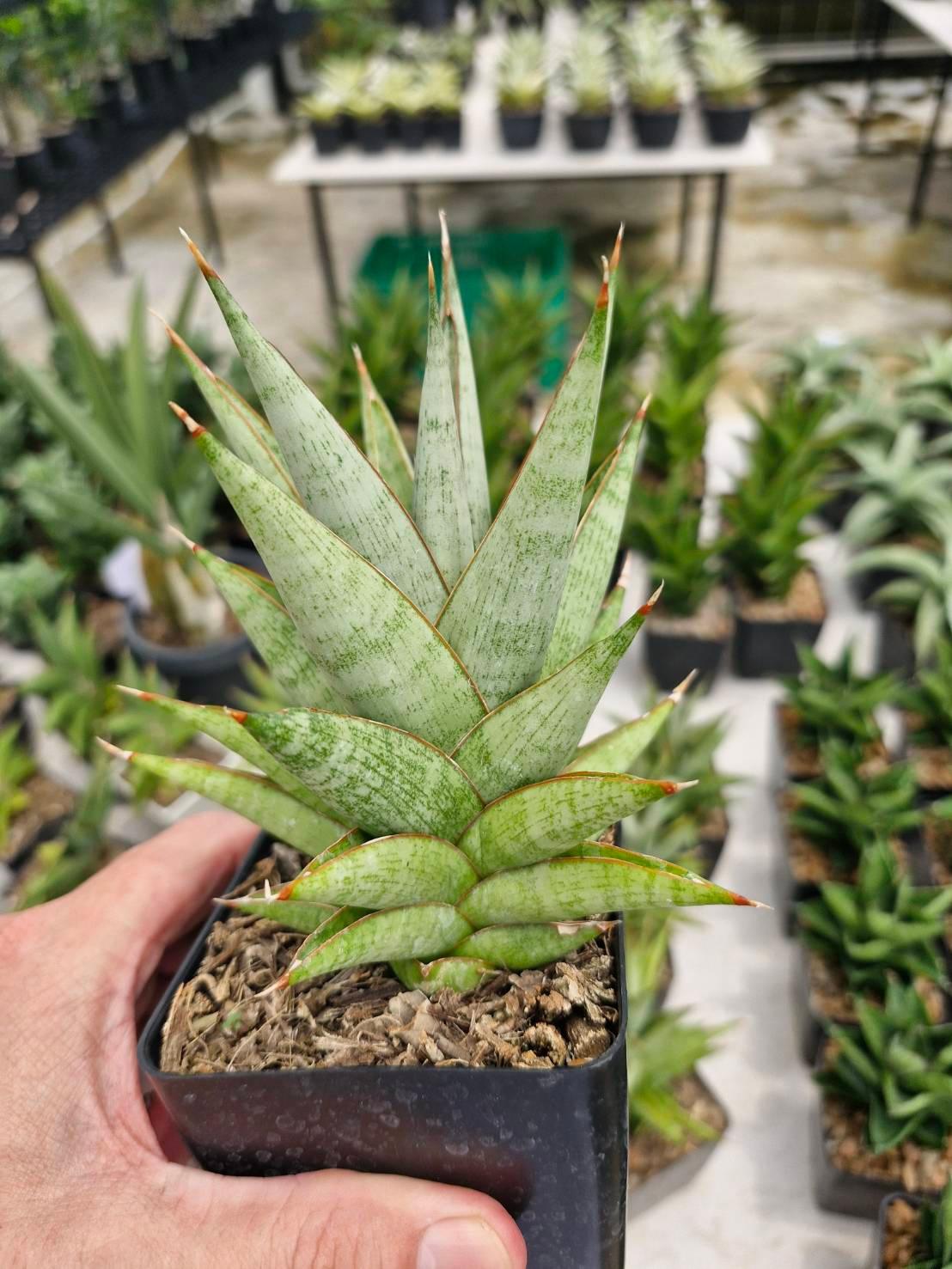
Sansevieria Rockman (syn. Dracaena ‘Rockman’) is a rare, compact hybrid snake plant highly prized by succulent collectors for its sculptural form and striking leaf patterning.
Key Characteristics of Sansevieria Rockman
-
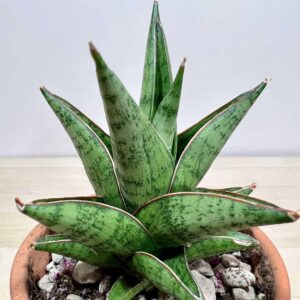
Growth Habit & Form: A semi-dwarf, architectural hybrid that typically grows to a manageable height of 1 to 2 feet (30–60 cm). Its leaves are extremely thick, rigid, and upright, often exhibiting a slightly twisted or ribbed shape.
-
Foliage & Variegation: Features rich dark-green leaves accented by light green, silver-grey, or yellowish cross-banding and subtle variegated margins.
-
Air Purification: Like most snake plants, ‘Rockman’ utilizes Crassulacean Acid Metabolism (CAM), absorbing carbon dioxide and purifying toxins at night while releasing fresh oxygen.
Care & Cultivation Guide
| Aspect | Care Requirement |
| Light | Sansevieria Rockman is adaptable from medium light to bright, indirect sun. Bright light enhances leaf contrast and maintains its tight, upright shape. |
| Substrate | Highly porous, fast-draining succulent/cactus mix (e.g., 60% inorganic pumice/perlite/coarse sand + 40% compost). |
| Watering | Extremely low. Allow the soil to dry out completely between waterings. Water every 2–4 weeks during warm months and scale back significantly in winter. |
| Temperature | Prefers warm conditions between 15°C and 30°C (59°F–86°F). Protect from temperatures below 10°C (50°F) and cold drafts. |
Sansevieria Rockman (syn. Dracaena ‘Rockman’) is a cultivated horticultural hybrid, meaning it was bred selectively in nursery cultivation rather than occurring as a wild species.
Origin & History of Sansevieria Rockman
-
Commercial Breeding: Developed primarily by specialized succulent hybridizers in Thailand and East Asia, regions renowned for creating compact, corrugated, and semi-dwarf Sansevieria varieties.
-
Parent Lineage: Derived from species native to the tropical and arid regions of West and Central Africa (such as Sansevieria trifasciata and related thick-leaved species). The original wild parent species evolved thick, water-storing leaves to survive dry periods in tropical scrub forests and rocky terrains.
-
Etymology: Named “Rockman” in the plant trade to highlight its solid, rigid growth form, tough exterior, and rock-like durability.
Reviews
There are no reviews yet.