
Euphorbia pachypodioides
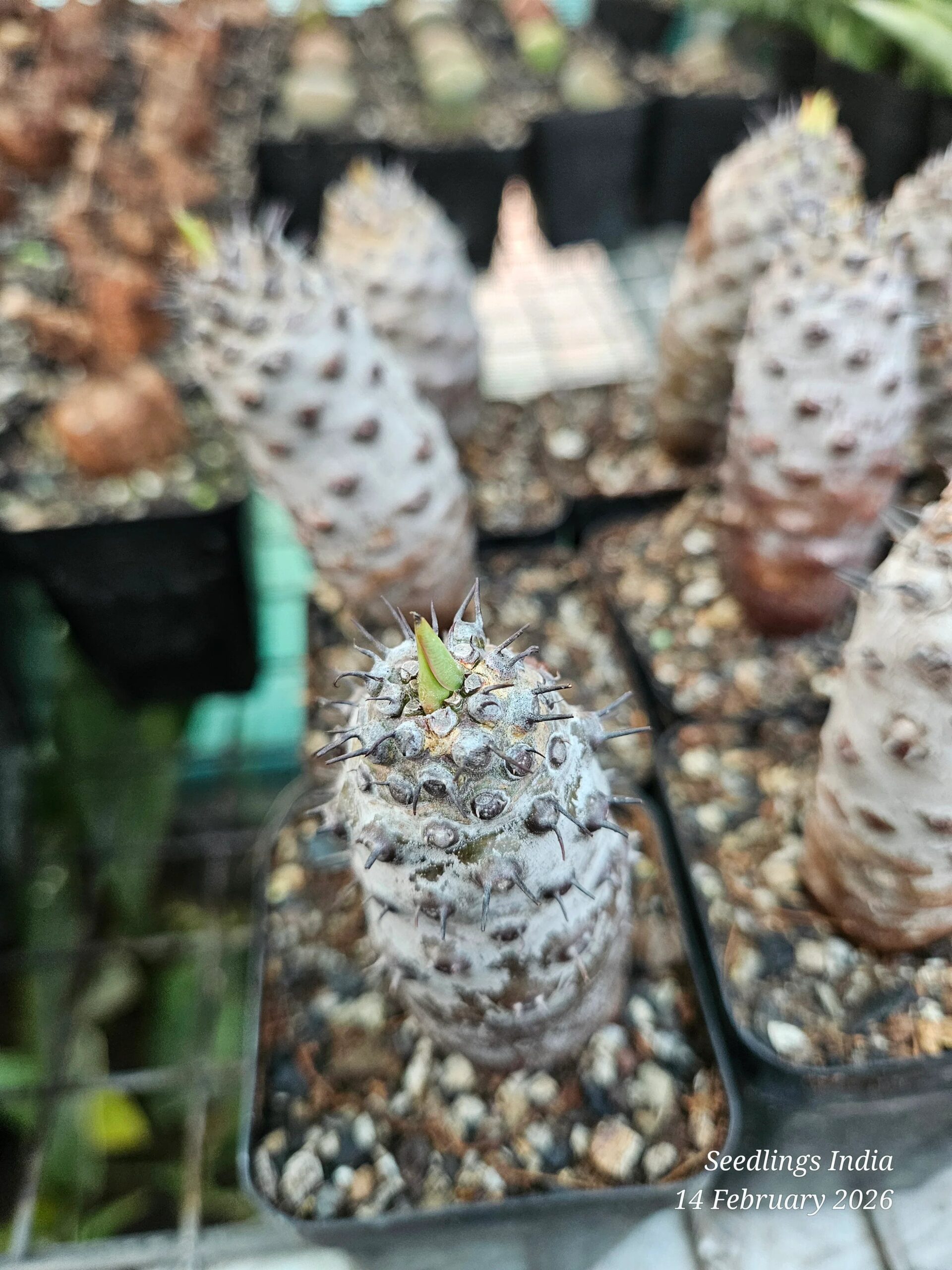
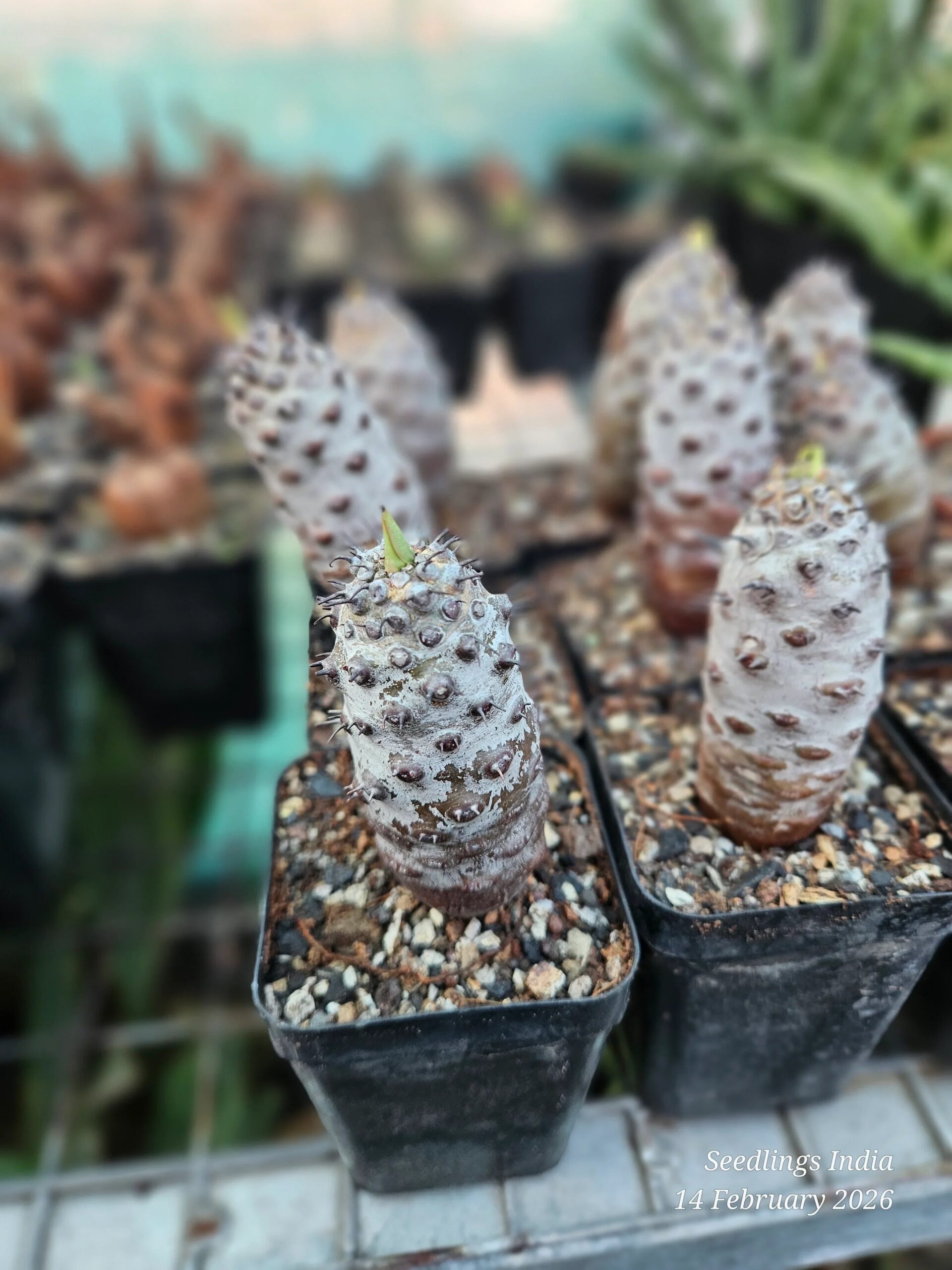
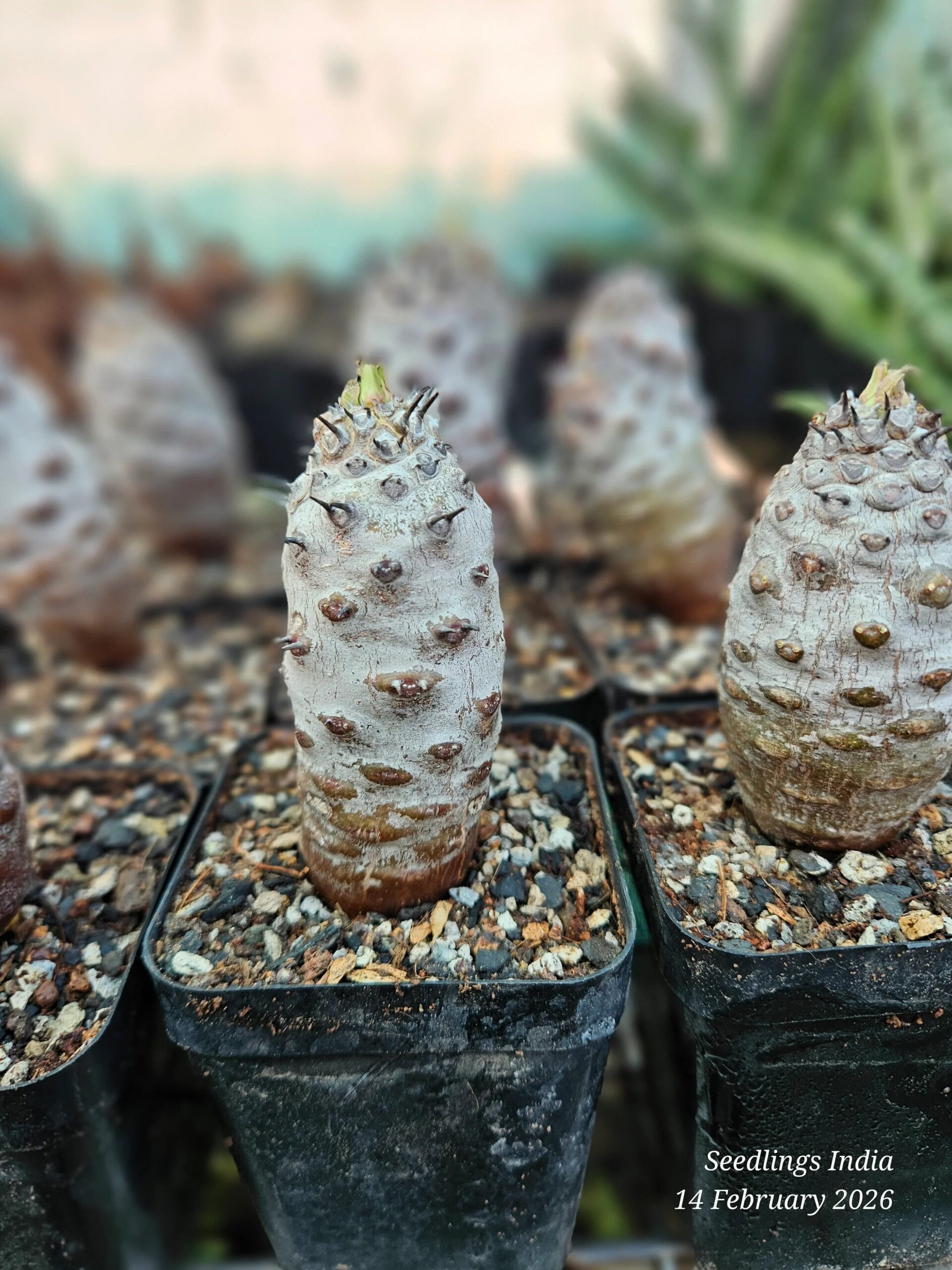
Euphorbia pachypodioides is a rare, highly prized collector’s succulent that famously mimics the look of a miniature Pachypodium (hence its specific epithet, pachypodioides).
Overview & Appearance
-
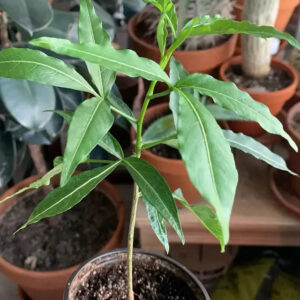
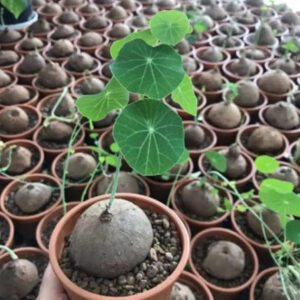
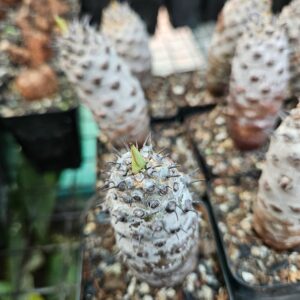
The Look: Euphorbia pachypodioides features a thick, swollen, bottle-like or columnar gray-green stem covered in prominent, spirally arranged leaf scars and small spines. At the very top (apex) of the stem, it flushes a crown of attractive, elongated leaves that are dark green on top with striking deep purple or burgundy undersides.
-
Flowers: In the late dry season or spring, it produces clusters of small, ornamental flowers surrounded by bright red-to-purple bracts.
-
Growth Habit: Euphorbia pachypodioides is very slow-growing, typically reaching about 30 to 50 cm in height.
-
Toxicity: Like all Euphorbia species, it exudes a milky white latex sap when damaged, which is toxic and can cause skin and eye irritation.
Origin & Habitat
-
Native Range: Endemic to Northern/Western Madagascar (specifically restricted to the extreme limestone “tsingy” formations of the Ankarana Massif).
-
Wild Environment: It grows directly in the crevices of limestone rocks, surviving in very thin layers of mineral grit and leaf mold. Its habitat experiences a harsh cycle of a hot, wet summer followed by a long, bone-dry winter, during which the plant goes dormant and drops its leaves. Due to its extremely limited natural range, it is considered endangered in the wild.
Care Requirements
Because of its specialized native habitat, cultivating Euphorbia pachypodioides requires careful attention, particularly regarding moisture.
1. Light
-
Requires full sun to very bright, direct light to maintain its tight, compact shape and rich leaf coloration.
-
If moving a plant from shade to bright sun, introduce it gradually to prevent scorching.
2. Soil & Substrate
-
Needs an extremely porous, mineral-heavy soil mix (70% or more pumice, perlite, or coarse grit mixed with a small amount of cactus soil).
-
Exceptional drainage is non-negotiable.
3. Watering
-
Summer (Growing Season): Water moderately or thoroughly using the “soak and dry” method, allowing the soil to dry out between waterings.
-
Winter (Dormancy): Keep the plant almost completely dry. It drops its leaves and enters dormancy; excess moisture during this period will quickly cause fatal root rot.
4. Temperature & Protection
-
Loves warmth and must be protected from frost. Keep winter temperatures safely above 12°C (54°F) if possible. Ensure good air circulation around the plant to prevent stagnant humidity.
Reviews
There are no reviews yet.