
Jatropha Conzattii
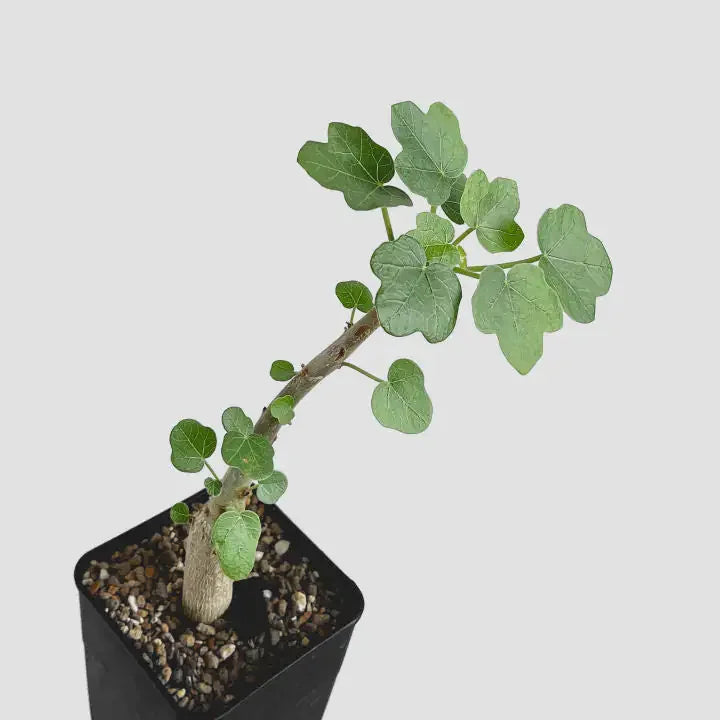
Jatropha conzattii is a rare and attractive caudiciform succulent native to the dry forests of southern Mexico. Highly valued by collectors, it is known for its swollen water-storing trunk, sculptural branching, and seasonal display of delicate flowers. Its compact size and bonsai-like form make it an excellent choice for caudiciform enthusiasts.
Key Features : Jatropha Conzattii
- Growth Type: Deciduous caudiciform shrub.
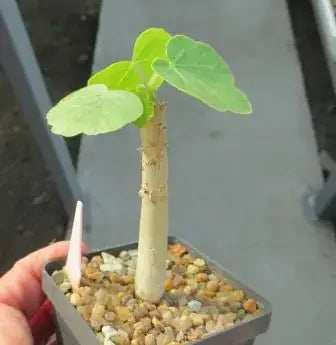
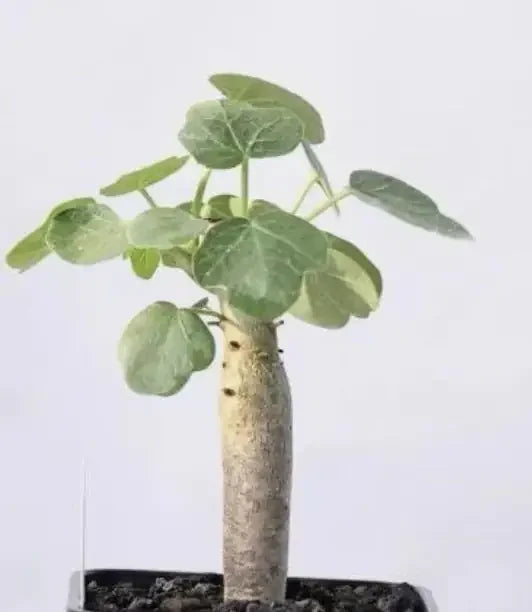
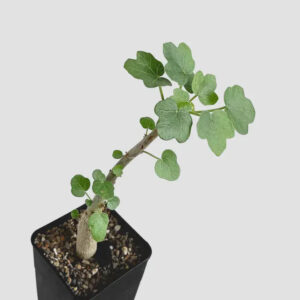
- Caudex: Thick, swollen base that stores water and gradually develops a rugged, textured appearance.
- Branches: Smooth, grey-brown branches that form an attractive, naturally branched canopy.
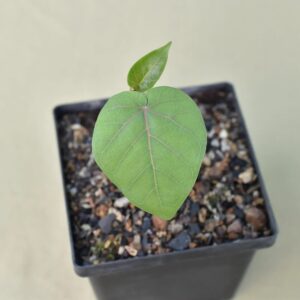
- Leaves: Bright green, heart-shaped to shallowly lobed leaves that appear during the growing season.
- Flowers: Small clusters of creamy white to pale green flowers, sometimes with a yellowish tint, followed by small seed capsules.
- Size: Typically grows 1–2 meters (3–6 feet) tall in cultivation.
Caudex Pattern
Seed-grown plants develop a rounded, smooth caudex that becomes thicker and more textured with age. Mature specimens often display:
- A broad, woody base
- Cracked or fissured bark
- An impressive bonsai-like silhouette
Growing Conditions
Light:
Prefers full sun to bright indirect light. Plenty of sunlight encourages compact growth and a well-developed caudex.
Soil:
Use a fast-draining cactus or succulent mix containing pumice, perlite, or coarse sand to prevent excess moisture.
Watering:
- Water thoroughly during the active growing season (spring and summer).
- Allow the soil to dry completely between waterings.
- Keep almost dry during winter dormancy after leaf drop.
Temperature:
- Ideal range: 20–35°C.
- Protect from temperatures below 10°C, especially in wet conditions.
Flowering
Mature plants produce clusters of small, delicate flowers during the growing season. Flowering is encouraged by:
- Bright sunlight
- A defined winter dormancy
- Consistent warmth during active growth
Care Tips
- Plant in a clay pot with excellent drainage.
- Avoid overwatering, particularly during dormancy.
- Feed monthly during spring and summer with a diluted balanced fertilizer.
- Repot only when necessary to minimize root disturbance.
Propagation
- Seeds: The preferred method, producing plants with the best caudex development.
- Stem cuttings: Possible, but cuttings generally produce less pronounced caudices than seed-grown plants.
Uses
- Ideal for caudiciform and succulent collections.
- Excellent for bonsai-style cultivation.
- A striking specimen for container gardens and sunny indoor spaces.
Reviews
There are no reviews yet.