
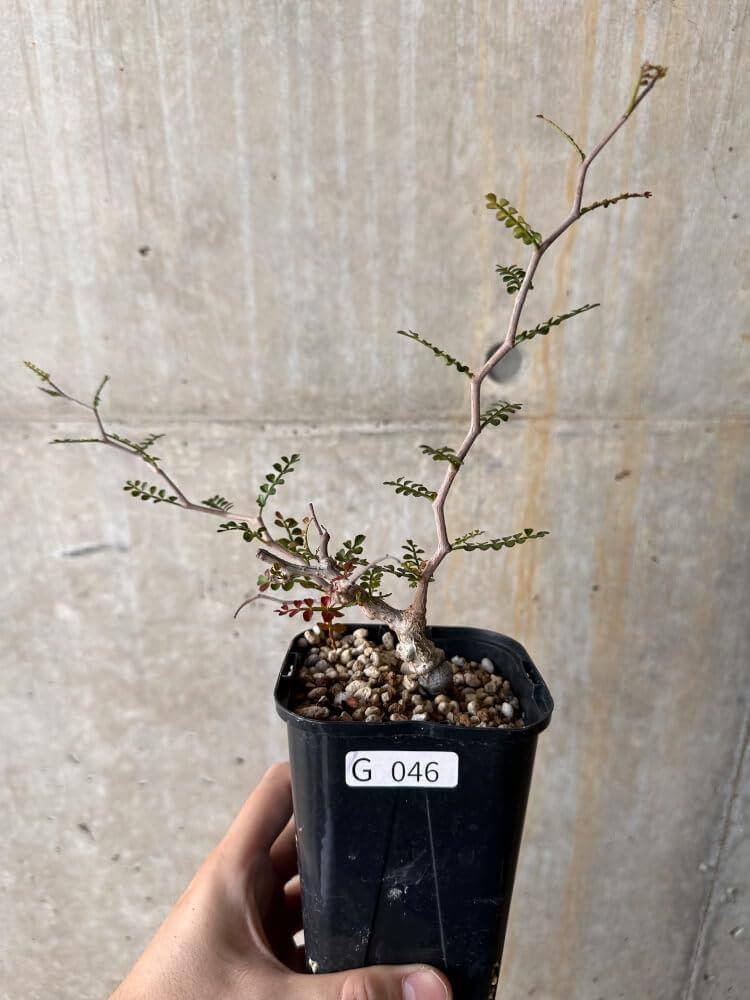
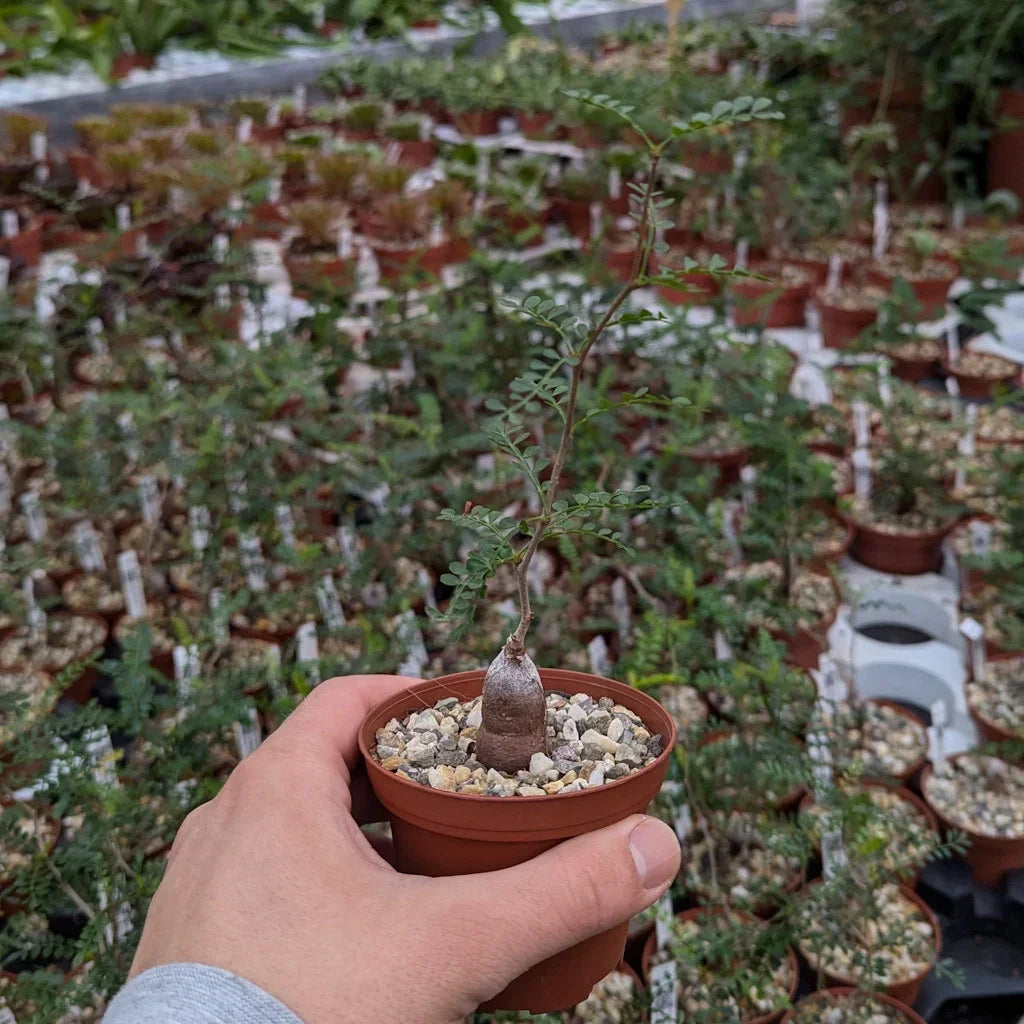
Operculicarya Pachypus Root Cutting
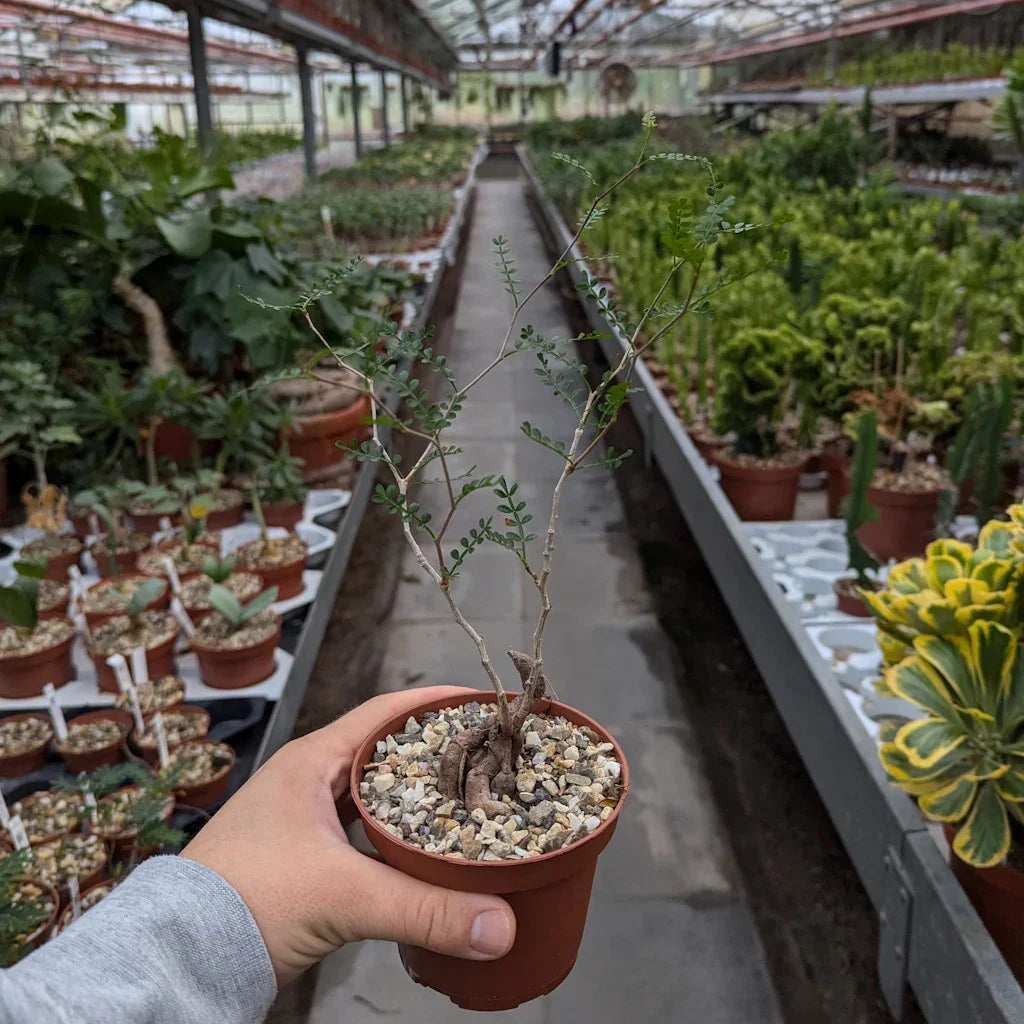
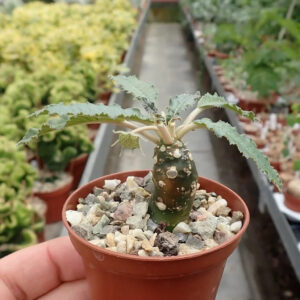
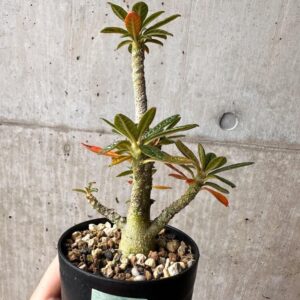
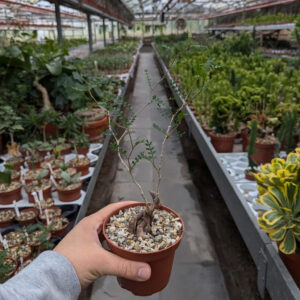
Operculicarya pachypus root cutting (often called the Elephant Tree) is one of the most prized and sculptural caudiciforms in the plant hobby. Propagating or starting one via a root cutting is a popular method among advanced collectors because stem cuttings of this species notoriously fail to root, leaving root propagation (alongside slow seeds) as a primary way to produce true-to-type clones.
Origin and Natural Habitat
-
Native Range: Southwestern Madagascar.
-
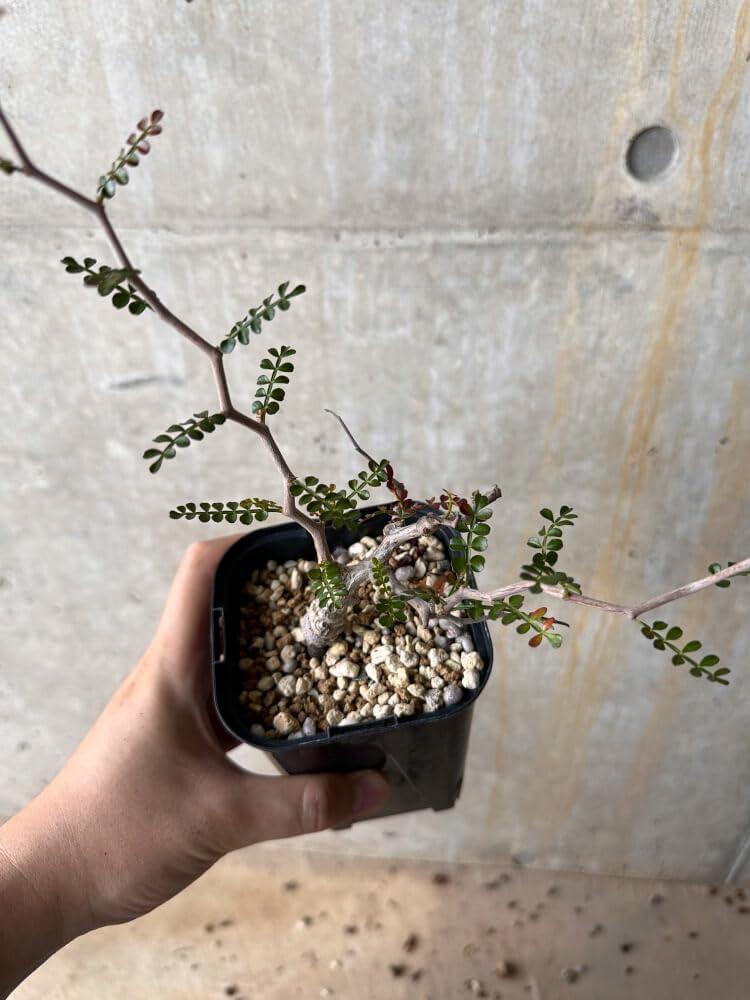
Environment: Operculicarya Pachypus Root Cutting grows natively in harsh, arid, rocky regions, which explains its thick, water-storing woody trunk (caudex) and gnarled, zig-zagging branches.
-
Aesthetics: It belongs to the cashew and mango family (Anacardiaceae) and naturally takes on the appearance of an ancient, miniature tree, making it a holy grail for succulent bonsai enthusiasts.
Understanding the Root Cutting Advantage
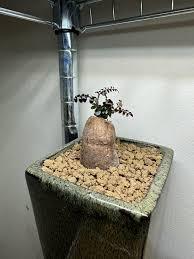
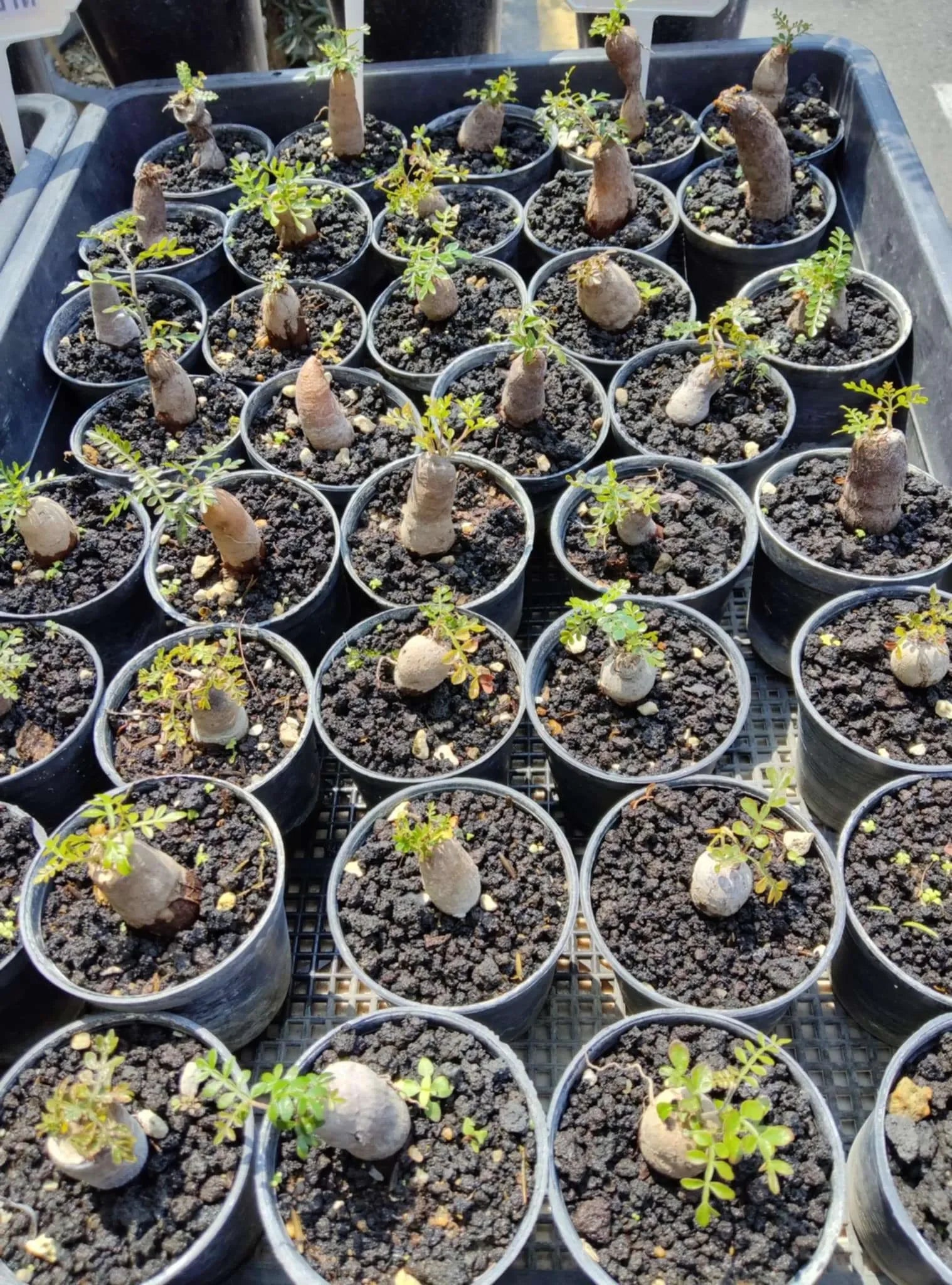
When you acquire an Operculicarya Pachypus Root Cutting started from a root cutting, it typically features a chunky, subterranean tuber or thick root section that has been elevated or potted to showcase its bizarre, twisted architecture.
-
Unlike seedlings (which take many years to develop a thick, character-heavy trunk), root cuttings can form unique, contorted shapes much faster.
-
They already possess specialized storage tissue, making them slightly more resilient than a raw stem cutting, though they still demand careful moisture control.
Care Instructions
1. Light
-
Requirement: Bright, indirect light to full, blazing sun.
-
Best Practice: Place it in a south-facing window or provide strong artificial grow lights. Ample light is necessary to keep the zig-zagging branches compact and prevent the plant from becoming “leggy”.
2. Watering
-
The Rule: Water sparingly using the “soak and dry” method. Allow the soil to dry out 100% between waterings.
-
Seasonal Shift: During the active growing season (spring and summer), they appreciate regular, deep waterings once the soil is completely dry. However, during winter dormancy, water must be drastically reduced or halted entirely to prevent fatal root rot.
3. Soil and Potting
-
Substrate: A hyper-porous, sharply draining cactus and succulent mix is mandatory. Heavy organic potting soils or pure peat will hold moisture too long and rot the root-stock.
-
Amendments: Mix in generous amounts of pumice, perlite, or turface to maximize aeration.
-
Container: Always use a pot with adequate drainage holes. Shallow pots or bonsai bowls work exceptionally well for managing root space and showcasing the caudex.
4. Temperature & Climate
-
Warmth: It thrives in warm environments (ideal temperatures ranging from 20°C to 35°C / 68°F to 95°F).
-
Frost Warning: It is strictly not cold-hardy and must be protected from freezing temperatures and frost.
-
Monsoon/Humidity Care: If kept in areas prone to heavy humid monsoons, protect the plant from relentless torrential downpours so the soil doesn’t stay waterlogged for days on end.
5. Dormancy
-
Operculicarya Pachypus Root Cutting is deciduous. As temperatures drop or daylight shortens, it is completely normal for the plant to drop its tiny, fern-like leaves. When it is bare and sleeping, keep it in a warm, bright spot with minimal-to-no water until it naturally pushes out new foliage in the spring.
Reviews
There are no reviews yet.