
Baobab Plants for Sale in India
Adansonia digitata and the rare Adansonia grandidieri: how they differ, what they cost, and how to keep them healthy in Indian conditions.
Last updated 16 November 2026 · Prepared by the Seedlings India team, New Delhi nursery
Baobab plants available at Seedlings India
A baobab is one of the few trees people grow mainly for its trunk. The swollen, water-storing base is what collectors look for, and in a container it develops slowly over years. This guide helps you choose between the two baobabs we stock, understand what drives the price, and keep the plant healthy through an Indian summer, monsoon and winter.
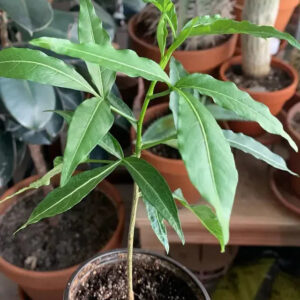

Adansonia digitata vs Adansonia grandidieri
Both belong to the same genus, but they differ in origin, rarity and temperament. This table compares the two plants we sell.
| Feature | Adansonia digitata | Adansonia grandidieri |
|---|---|---|
| Common names | African baobab, tree of life, monkey bread tree; Kalpvriksha and Gorakh Imli in India | Grandidier’s baobab, ‘Queen of Baobabs’ |
| Native to | Mainland Africa (sub-Saharan regions) | Western Madagascar |
| Growth type | Deciduous tree with a swollen trunk | Deciduous tree with a swollen trunk |
| Size in its habitat | A very large tree with a massive trunk | Can reach roughly 20–30 m (65–100 ft) |
| Trunk shape | Thick, swollen trunk | Tall, massive cylindrical trunk |
| In a pot | The easier one to start with | Slower and fussier; a long-term collector plant |
| Our price | ₹850 | ₹1,499 |
| Best for | First baobab, gifts, bonsai-style practice | Collectors who want the rarer species |
Which baobab should you buy?
| If you… | Choose | Why |
|---|---|---|
| Want a first baobab or a gift | Adansonia digitata | Lower price and the more forgiving plant while you learn the watering rhythm |
| Collect rare caudex plants | Adansonia grandidieri | The rarer species, prized for its tall cylindrical trunk |
| Have a sunny balcony or terrace | Either | Both need strong light; protect from cold nights in winter |
| Have only a bright windowsill with little direct sun | Neither is ideal | Baobabs stay thin and stretched in low light. A lower-light caudex such as Stephania erecta may suit you better |
| Want to try bonsai-style training | Adansonia digitata first | Learn how the plant behaves before spending more on a rarer one |
What affects baobab plant price in India?
Searches for “baobab plant price in India” return a wide range of numbers. The gap is rarely random. When you compare sellers, look at these factors.
| Factor | What to look for | Why it matters |
|---|---|---|
| Species | A. digitata or A. grandidieri | The rarer, slower species is priced higher |
| Size and age | Trunk thickness at the base, pot size, height | A thicker base takes years to grow. Ask for a photo with a coin or ruler for scale |
| Live plant or seeds | An established plant or a packet of seeds | Seeds cost less but need patience, and first-year losses are common |
| Root and trunk health | Firm trunk, no soft spots | A cheap plant with rot ends up costing more |
| Packing and delivery | How the plant is packed and how long the courier takes | Poorly packed baobabs arrive stressed and may drop leaves |
| Seller support | A way to ask care questions after you buy | Early watering mistakes are the usual cause of loss |
How to care for a baobab in India
A baobab follows a yearly cycle: active growth in the warm months, then a rest when it drops its leaves. Most plants are lost by watering during the rest. This table is a starting point for North Indian conditions such as Delhi. Adjust it for your climate, pot size and how much sun the plant gets.
| Season | Typical months | What the plant is doing | Watering and care |
|---|---|---|---|
| Spring | March–April | New leaves appear as temperatures rise | Resume watering gradually once leaves show; increase sun slowly |
| Summer | May–June | Active growth | Soak thoroughly, then let the mix dry out completely before the next watering; shade a newly arrived plant from harsh afternoon sun |
| Monsoon | July–September | Growth continues in humid, wet weather | Keep out of continuous rain; water only when the mix is dry; check drainage |
| Autumn | October–November | Growth slows and leaves may yellow | Taper off watering and stop feeding |
| Winter | December–February | Leafless rest | Water very sparingly or not at all; keep above about 10°C and away from frost |
Light
Give a baobab at least 5–6 hours of direct sun. In low light the trunk stays thin instead of swelling, and the plant stretches towards the window.
Soil and pot
- Use a gritty, fast-draining mix: roughly 2 parts coarse sand, perlite or pumice to 1 part garden soil or a cocopeat-based potting mix.
- Choose a pot with a large drainage hole. Terracotta dries faster than plastic and forgives overwatering.
- Repot in spring, and only one size up. A big pot holds water around the trunk.
Watering rule of thumb
Water thoroughly until it runs out of the drainage hole, then wait until the mix is dry right through. Push a wooden skewer to the bottom of the pot: if it comes out damp, wait a few more days.
Feeding
Give a balanced fertiliser at half strength once or twice during active growth. Do not feed a leafless plant.
Temperature
Baobabs like heat. Where winter nights fall to single digits, move the pot to a bright, sheltered spot or cover it on cold nights.
Common baobab problems and fixes
| Symptom | Likely cause | What to do |
|---|---|---|
| Leaves yellow and drop in autumn or winter | Natural dormancy | Cut back watering and leave the plant alone |
| Leaves drop soon after delivery | Stress from transit and a change of light | Place in bright light, hold off watering until the mix is dry, and wait for new growth in the warm season |
| Trunk soft or mushy | Rot from overwatering or poor drainage | Stop watering. If the soft area spreads, unpot, cut back to firm tissue, let it dry for several days and repot in gritty mix. Message us early |
| Thin, stretched growth | Not enough light | Move to full sun gradually over one to two weeks |
| Wrinkled trunk while leafless | Normal water loss during rest | Check that it is still firm. It plumps up again with spring watering |
| No leaves in spring | Still cool, or roots not yet active | Wait for steady warm weather before watering more |
| Brown, scorched patches on leaves | Sudden move into harsh sun | Acclimatise over one to two weeks |
What to expect when your baobab arrives
Plants are packed by hand and dispatched from our nursery in New Delhi to pin codes served by our courier partners. Read the Shipping Policy for details and the Returns Policy if something goes wrong.
- Unpack the same day. Check the trunk is firm and the roots are intact.
- Do not water straight away. If the mix is damp, wait until it dries.
- Give bright shade for a few days, then increase the sun over one to two weeks.
- Photograph any damage and message us promptly with your order number.