
Caudiciform Plants in India
A buyer guide to caudex plants: what they are, which species to start with, how to water through dormancy and how to choose a healthy plant.
Last updated 16 November 2026 · Prepared by the Seedlings India team, New Delhi nursery
What is a caudiciform plant?
The shape is the attraction: knobby bottles, potato-like domes and corky trunks. A caudex grows slowly, so a larger plant represents years of growth. That is why prices vary so much between species and sizes. Seedlings India lists more than 40 caudiciform and thick-trunked plants, from beginner-friendly vines to collector pieces.
| Term | Meaning | Examples in our range |
|---|---|---|
| Caudiciform | A plant with a swollen, water-storing base (the caudex) at or just below ground level | Stephania erecta, Dorstenia foetida, Fockea edulis |
| Pachycaul | A plant with a thick, swollen trunk above ground | Baobab, Pachypodium, Operculicarya |
| Bulb-type | A plant that grows from a water-storing bulb | Bowiea volubilis |
In collector circles these terms overlap, and most people simply say “caudiciform” for all of them. We do the same on this page.
Best caudiciform plants to start with
The level column is our general guide, not a guarantee. Your light, climate and watering habits matter more than the species name.
| Plant | Origin | Growth cycle | Light | Level | Price |
|---|---|---|---|---|---|
| Stephania erecta | Thailand and Southeast Asia | Deciduous climbing vine; rests in cool months | Bright, indirect | Beginner | ₹799 |
| Alluaudia procera (Madagascar ocotillo) | Southern Madagascar | Deciduous succulent tree | Full sun | Beginner | ₹549 |
| Dorstenia foetida | East Africa and the Arabian Peninsula | Seasonal leaves; rests when dry or cool | Bright light | Beginner | ₹599 |
| Bowiea volubilis (climbing onion) | South Africa | Seasonal; climbing stems from an exposed bulb | Bright light | Intermediate | ₹750 |
| Operculicarya pachypus (elephant tree) | Southern Madagascar | Slow-growing thick trunk with fine leaves | Full sun | Intermediate | ₹899 |
| Pachypodium saundersii (kudu lily) | South Africa, Eswatini, southern Mozambique | Deciduous caudiciform | Full sun | Intermediate | ₹1,099 |
| Fockea edulis (Hottentot bread) | South Africa and Namibia | Climbing caudiciform | Bright light | Intermediate | ₹2,800 |
| Pachypodium densiflorum | Central Madagascar | Spiny caudiciform | Full sun | Collector | ₹2,800 |
| Operculicarya decaryi | Madagascar | Thick-stemmed succulent tree | Full sun | Collector | ₹2,599 |
-
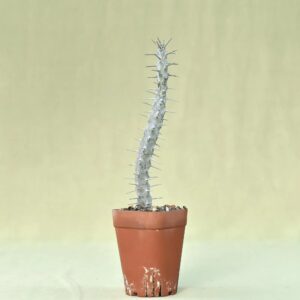
-
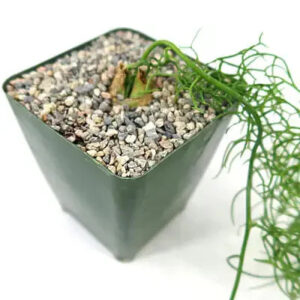
-
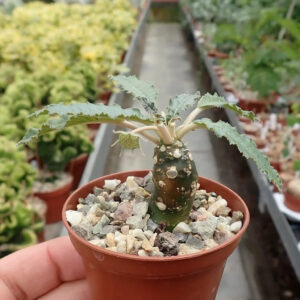
-
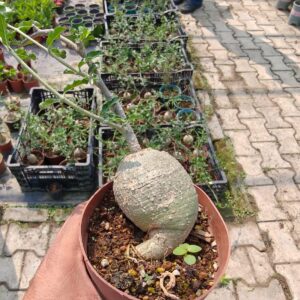
-
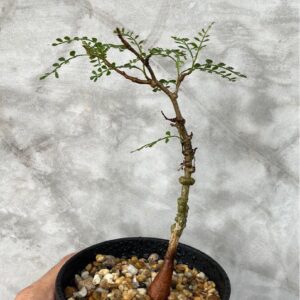 Best Sellers
Operculicarya Pachypus Madagascar Caudiciform
₹899.00 – ₹7,599.00Price range: ₹899.00 through ₹7,599.00 Select options This product has multiple variants. The options may be chosen on the product page -
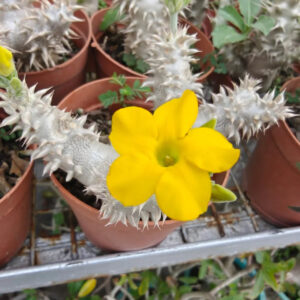
-
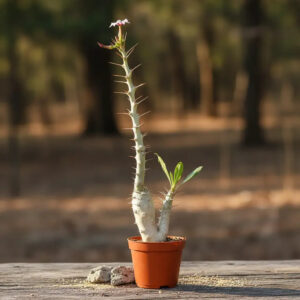
-
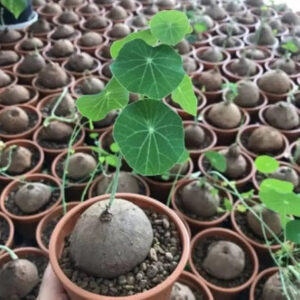
Caudiciform plants by budget
Small plants and root cuttings cost less. Established plants with a thick caudex cost more because they took longer to grow. This table summarises what is in stock today (checked 16 November 2026).
| Price band | Plants in stock | Examples |
|---|---|---|
| Under ₹1,000 | 13 | Alluaudia humbertii, Alluaudia procera, Baobab Adansonia Digitata, Bowiea volubilis |
| ₹1,000 to ₹2,499 | 16 | Adansonia grandidieri, Alluaudia comosa, Alluaudia montagnacii, Cycas Revoluta Dwarf |
| ₹2,500 and above | 12 | Beiselia Mexicana, Cyphostemma Elephantopus, Fockea Edulis, Giant Dioon Cycad Dioon Spinulosum |
Not sure whether to buy a seed-grown plant or a root cutting? Read our guide to caudex vs root cutting, which uses the elephant tree as its example.
The yearly rhythm: when to water and when to stop
Most of the plants above grow in the warm months and rest in the cooler ones. Knowing which phase your plant is in matters more than any fixed watering schedule. This table is a starting point for North Indian conditions such as Delhi.
| Period | What the plant is doing | What you do |
|---|---|---|
| March–April | Waking up; buds or first leaves appear | Water lightly once growth shows and move to brighter light gradually |
| May–June | Active growth in intense heat | Water deeply when the mix is dry; give a new or young plant afternoon shade |
| July–September (monsoon) | Active growth in high humidity | Water only when dry, keep out of continuous rain and keep air moving |
| October–November | Slowing down; leaves yellow | Taper off watering and stop feeding |
| December–February | Dormant; may be leafless or fully dried back | Little or no water; keep warm and above about 10°C; do not throw away a bare caudex |
The watering rule that works for most species
Soak the pot until water runs from the drainage hole, then wait until the mix has dried right through. Check by lifting the pot (dry mix is much lighter) or pushing a wooden skewer to the bottom. Never leave water standing in the saucer.
Soil, pots and light
| Factor | Recommendation | Why |
|---|---|---|
| Soil mix | About 60–70% mineral grit (pumice, perlite, coarse sand, crushed brick) and 30–40% potting soil or cocopeat mix | Roots dry quickly and the caudex does not sit in wet soil |
| Pot | Any pot with a large drainage hole, only slightly larger than the root ball | Extra soil stays wet and invites rot |
| Light | Bright light; many species want some direct sun. Acclimatise new plants over one to two weeks | Low light gives thin, stretched growth |
| Temperature | Warm; protect from cold below about 10°C | Cold plus wet soil is the quickest way to rot a caudex |
| Feeding | Half-strength balanced fertiliser once or twice in active growth only | Over-feeding gives soft, weak growth |
| Airflow | An open balcony or a ventilated sill | Reduces rot and pests |
How to choose a healthy caudex
| What to check | Good sign | Red flag |
|---|---|---|
| Caudex | Firm like a ripe fruit with even colour | Soft, mushy or sour-smelling patches |
| Roots | Firm, light-coloured roots; the plant sits steady in its pot | Black, mushy roots, or a dried-out husk |
| Growth | Fresh buds, leaves or vines in the growing season | A shrivelled caudex with no buds in the growing season. It may be dormant, so ask |
| Origin | The seller can tell you how it was raised (seed, cutting or division) | Vague answers about origin, or protected species sold without explanation |
| Support | Care advice and a way to reach the seller after the sale | No contact route once the order is paid |
Common caudiciform problems
| Symptom | Likely cause | What to do |
|---|---|---|
| Soft or mushy caudex | Rot from wet soil, often during dormancy | Stop watering, unpot, cut back to firm tissue, dry for several days and repot in gritty mix |
| No growth in spring | Still dormant or too cool | Wait for warm weather and keep dry until you see buds, then water lightly |
| Leaves yellow and drop | Natural rest, or overwatering | Check the season. In the growing season, let a wet mix dry out |
| Thin, stretched stems | Too little light | Move to a brighter spot gradually |
| Wrinkled caudex | Dehydration or damaged roots | Check the roots. If they are healthy, water thoroughly then wait |
| Scorched marks | Sudden exposure to full sun | Acclimatise over one to two weeks |
| Cottony white spots or sticky residue | Mealybugs or scale | Wipe with cotton dipped in diluted isopropyl alcohol and repeat after a week |
Buying caudiciform plants from Seedlings India
Seedlings India began as a collector’s hobby: Ashish collected rare plants from around the world and learned to multiply them through cuttings, root cuttings and air layering. Orders are packed by hand and dispatched from our nursery in New Delhi. See the Shipping Policy and Returns Policy before you order, and use the Contact page or WhatsApp if you want to ask about a specific plant.