
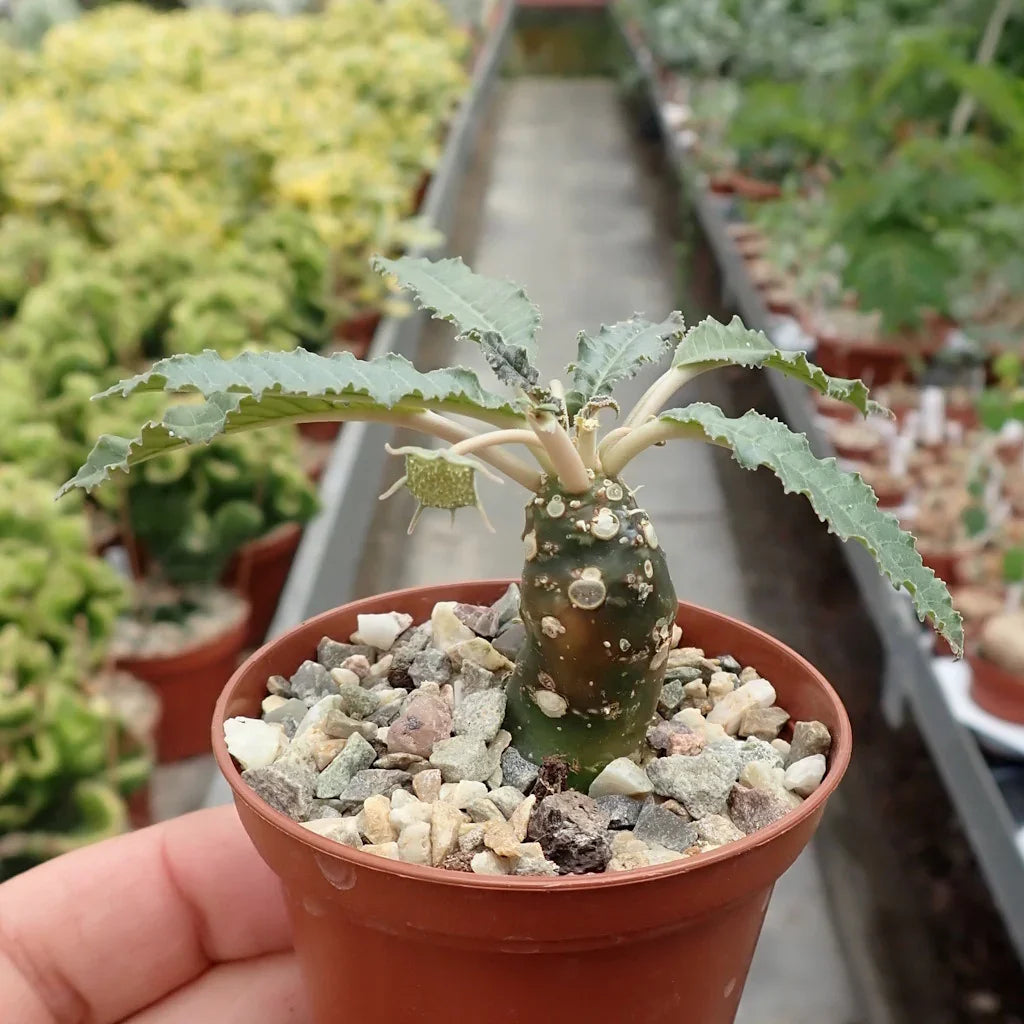
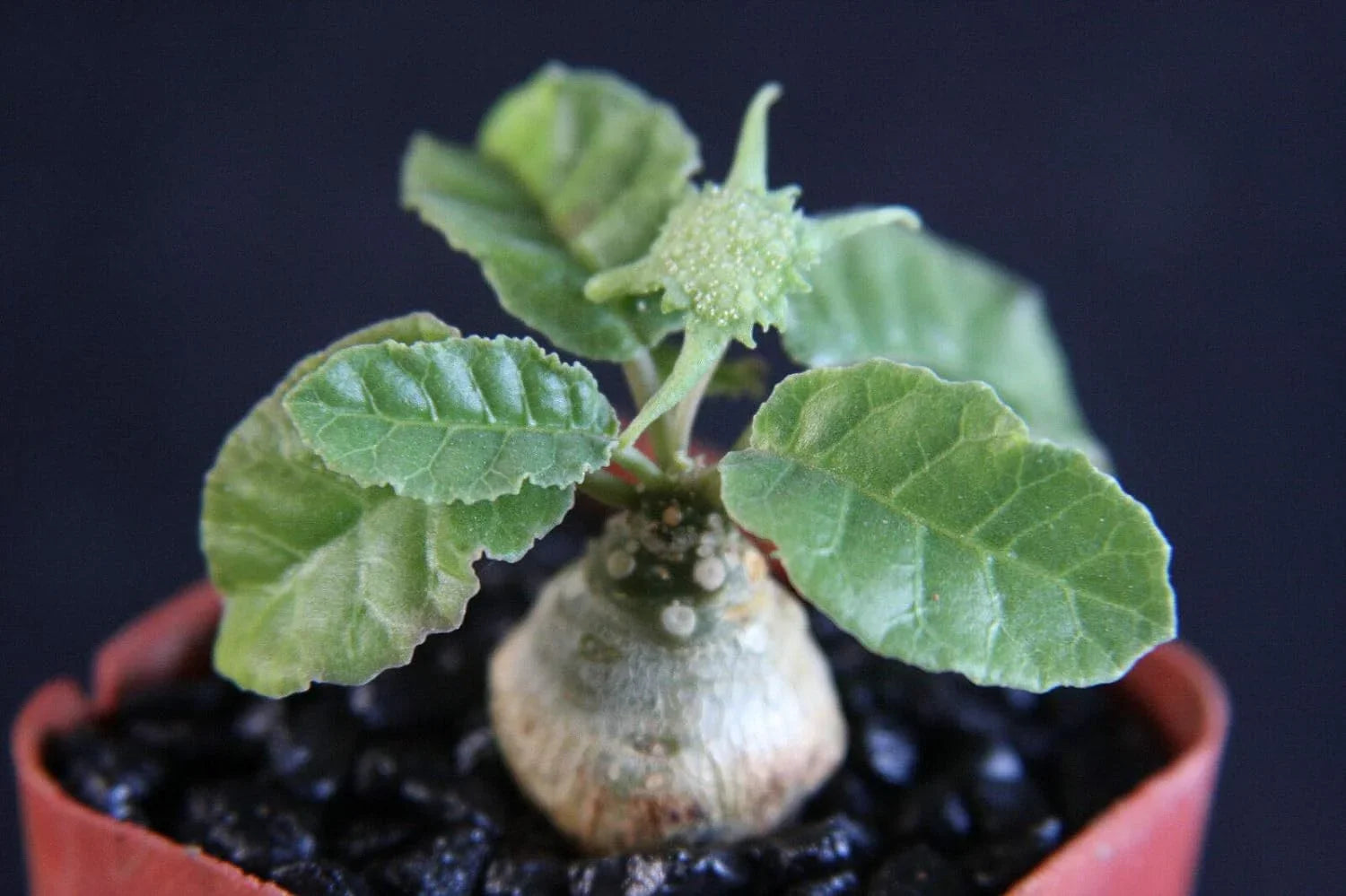
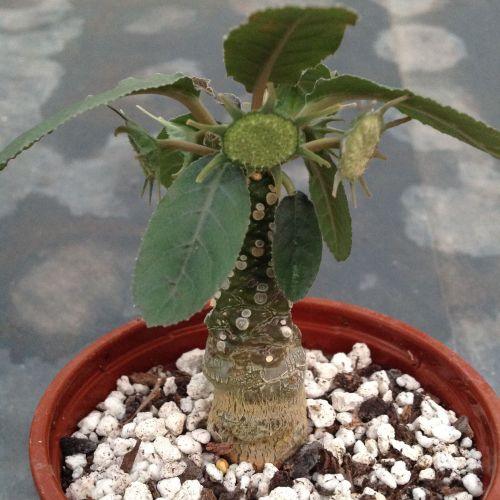
Dorstenia Foetida
Origin and Natural Background
-
Geographic Roots: Dorstenia foetida is a fascinating caudiciform succulent native to East Africa (including countries like Kenya, Tanzania, and Ethiopia) as well as the Arabian Peninsula (such as Yemen and Saudi Arabia).
-
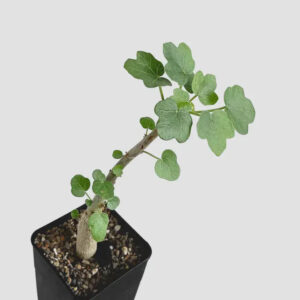
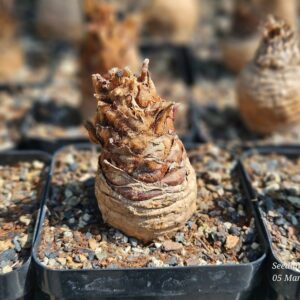
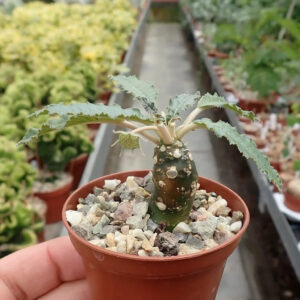
The Caudex and Unique Flowers: It belongs to the mulberry family (Moraceae) and features a thick, swollen, often bizarrely shaped woody stem (caudex) that stores water against severe droughts. It is also famous for its quirky, alien-like flowers called hypanthia—flat, disc-like or star-shaped receptacles surrounded by tiny tentacle-like bracts that eventually launch ripe seeds several feet away when touched.
Essential Care Guidelines
Because of its wild origins in rocky, arid African and Arabian landscapes, Dorstenia foetida thrives when its environment mimics those conditions:
-
Light: Provide bright, indirect light to partial sun. While it enjoys good light, scorching afternoon sun can burn its leaves and cause the caudex to shrivel or stress. A spot with gentle morning sun or bright indoor filtered light is ideal.
-
Soil: Use an extremely well-draining cactus and succulent mix. Heavy soils hold too much moisture and will quickly cause root rot. Mix standard succulent soil generously with inorganic amendments like perlite, pumice, or akadama.
-
Watering: Water thoroughly during the active growing spring and summer months, but let the soil dry out completely between waterings. Unlike strict desert cacti, Dorstenia foetida prefers not to stay bone-dry for excessively long periods during its growing season, but it hates soggy feet. In winter, reduce watering significantly, especially if it drops its leaves and goes semi-dormant.
-
Temperature: Keep it in a warm environment, ideally between 18°C and 30°C. It is sensitive to frost and cold, damp drafts, which can cause rapid tissue damage.
Reviews
There are no reviews yet.