
Cyphostemma Elephantopus
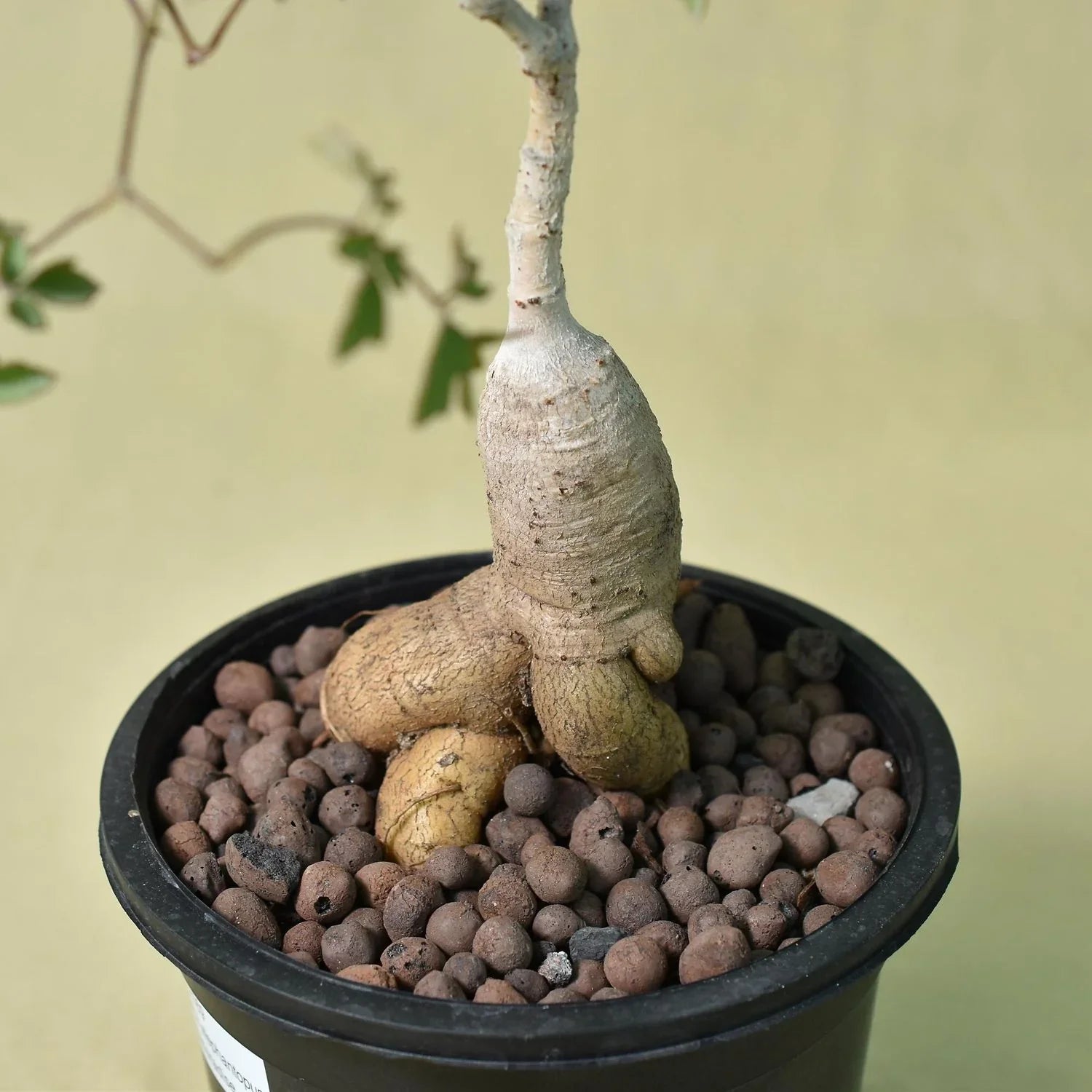
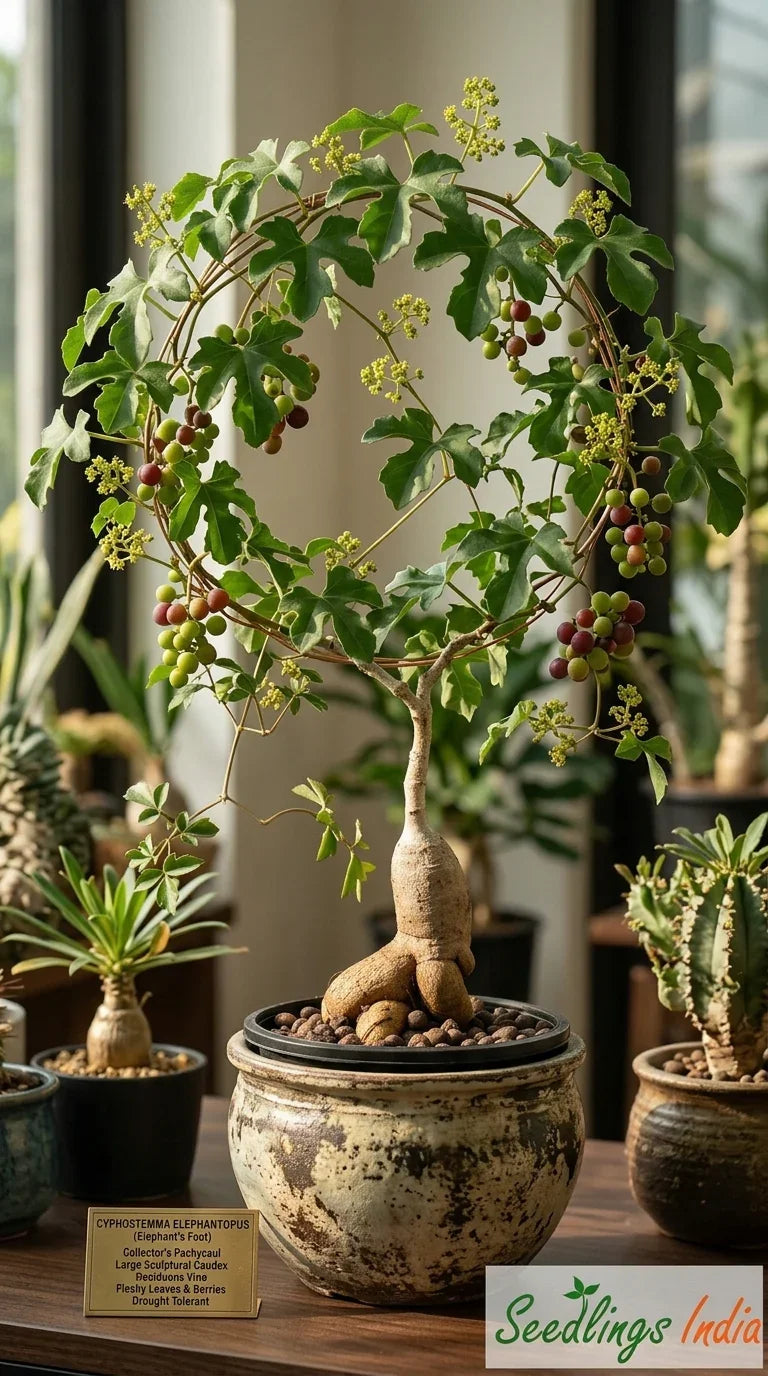
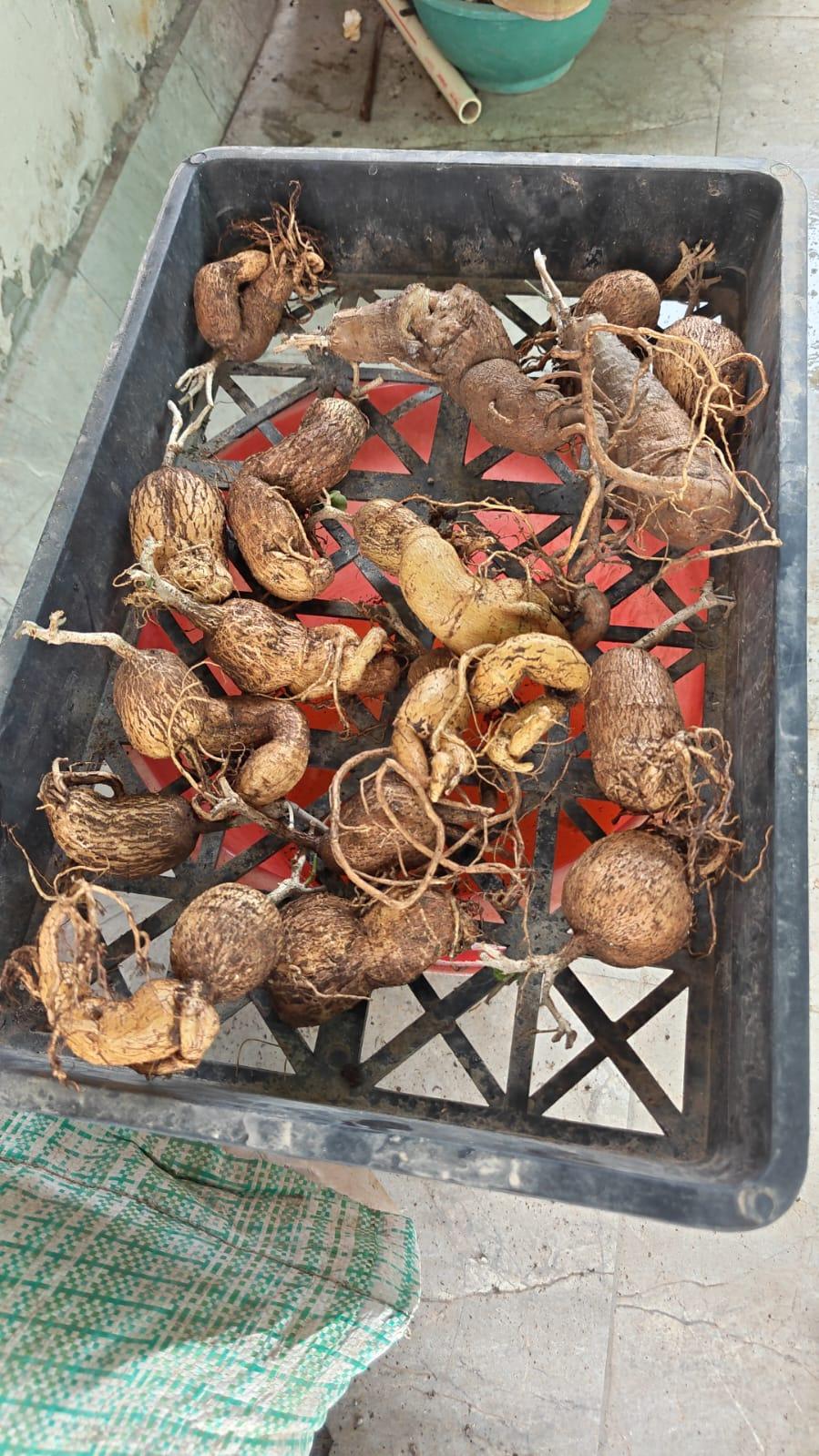
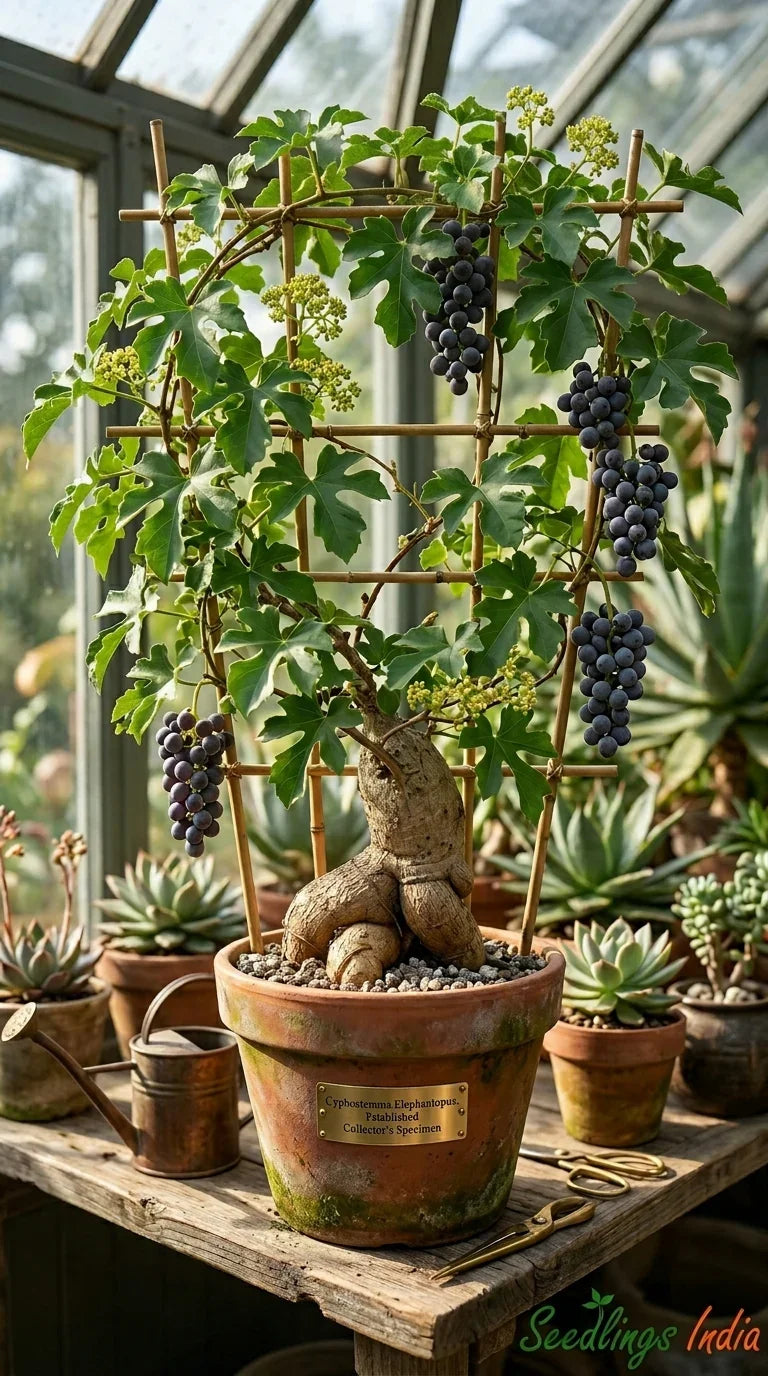
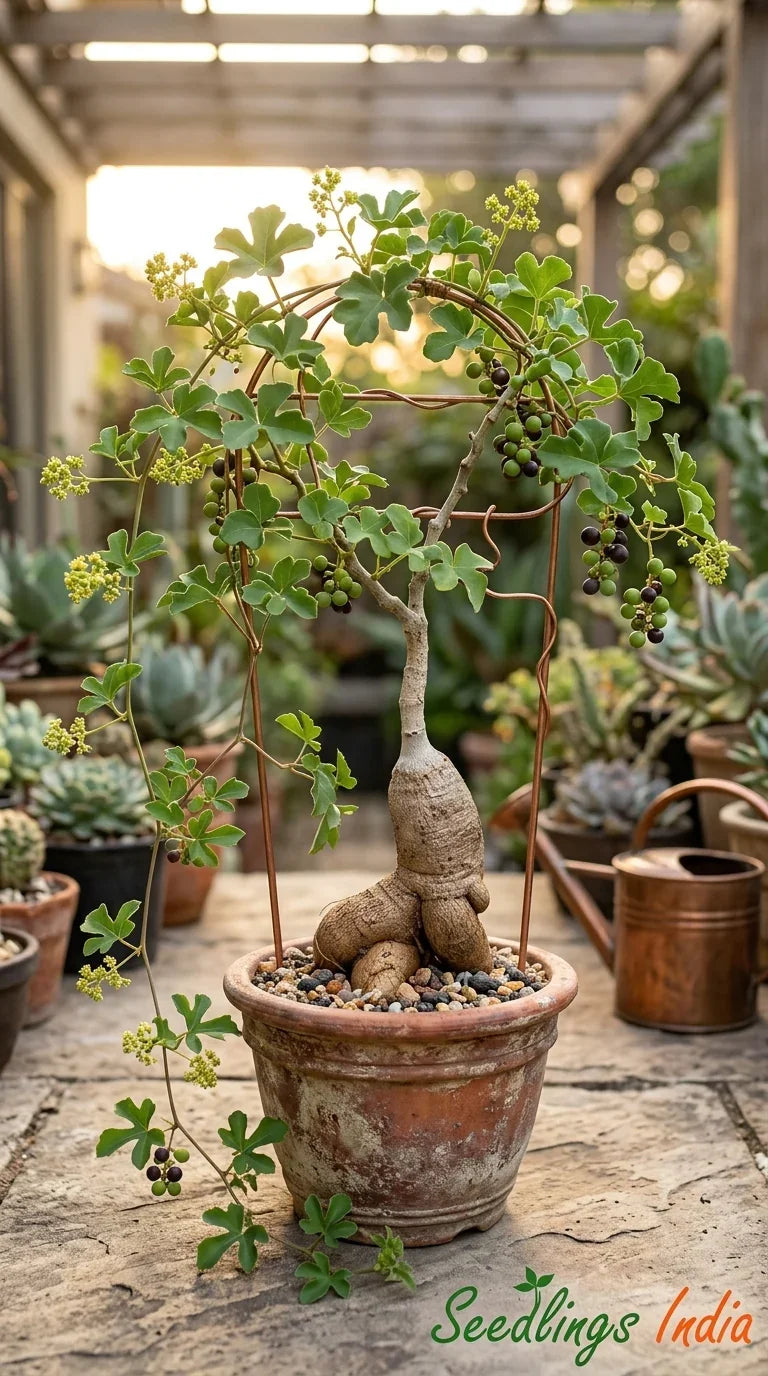
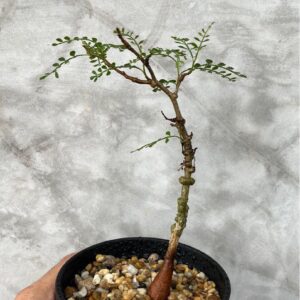
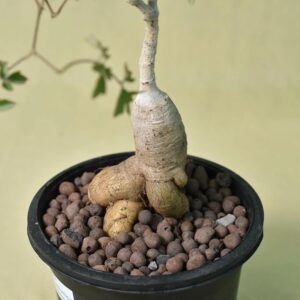
Cyphostemma elephantopus is an extremely rare, sought-after pachycaul succulent in the grape family (Vitaceae). Endemic to southern Madagascar, it gets its species name elephantopus (“elephant’s foot”) from its massive, subterranean-to-exposed, tuberous caudex that resembles a wrinkled elephant foot.
Key Characteristics
-
Elephant-Foot Caudex: Forms a swollen, flattened, or turnip-shaped subterranean base that can be raised in pots to reveal a thick, yellowish-brown, peeling trunk.
-
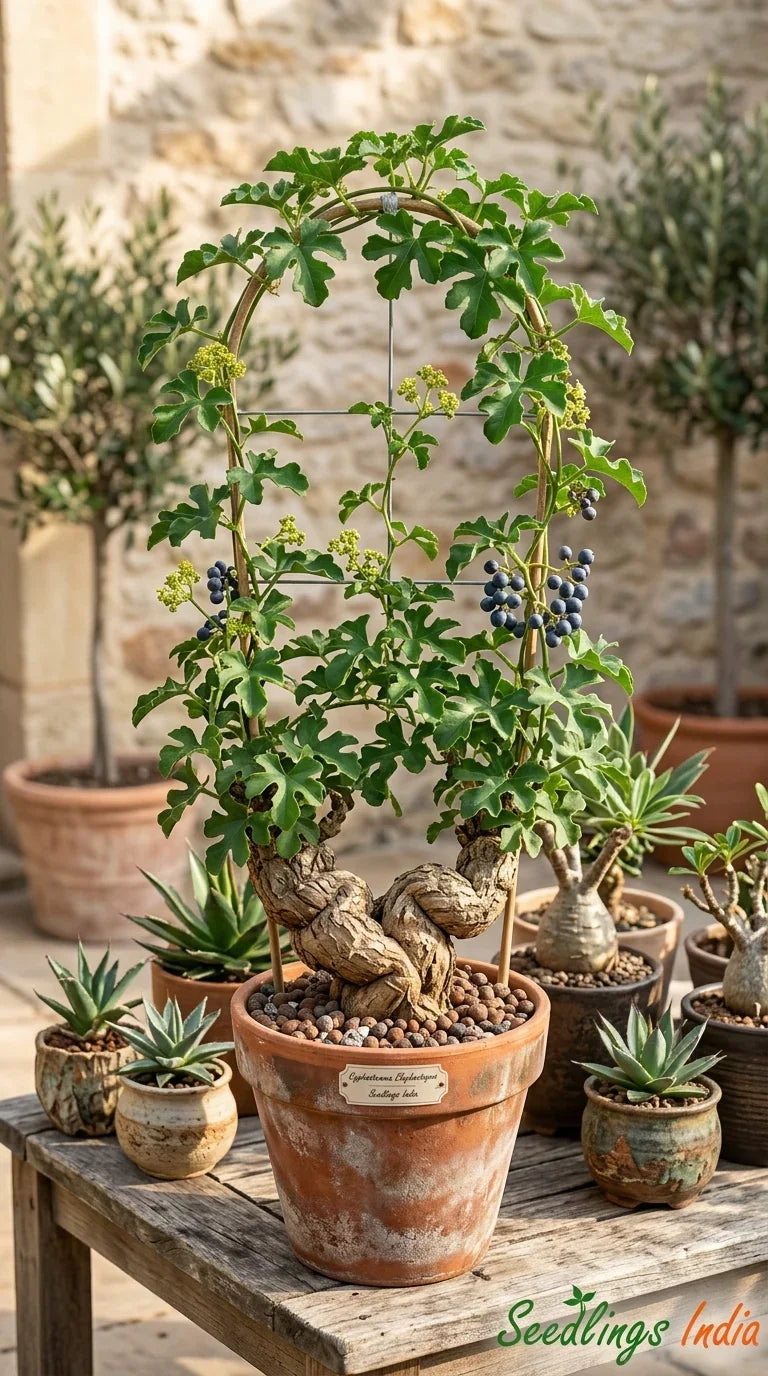
Foliage & Vine Growth: During the summer growing season, it produces vine-like branches with thick, fleshy, compound leaves covered in fine hairs or glaucous bloom.
-
Deciduous Dormancy: Drops its foliage completely in winter, leaving a stark, sculptural caudex.
-
Inflorescence: Produces small, yellowish-green flowers followed by red, grape-like berries (which are non-edible).
Care & Cultivation Overview for Cyphostemma Elephantopus
| Aspect | Care Requirement |
| Light | Full direct sunlight to high bright indirect light. Intense light keeps growth compact and caudex firm. |
| Substrate | Ultra-porous, gritty mineral substrate (75%–80% pumice, lava rock, perlite, and coarse sand). Highly susceptible to root rot in organic-heavy soil. |
| Watering |
Summer: Water deeply once the soil dries completely out between waterings. Winter: Keep nearly 100% dry while dormant to prevent rot. |
| Temperature | Strictly heat-loving. Protect from temperatures below 12°C–15°C (54°F–59°F). |
Origin & Habitat of Cyphostemma Elephantopus
-
Native Range: Found exclusively in the dry spiny thickets and rocky limestone/granite formations of Southern Madagascar.
-
Adaptation: Evolved its massive water-storing rootstock to withstand prolonged, extreme droughts in its native arid habitat.

Reviews
There are no reviews yet.