
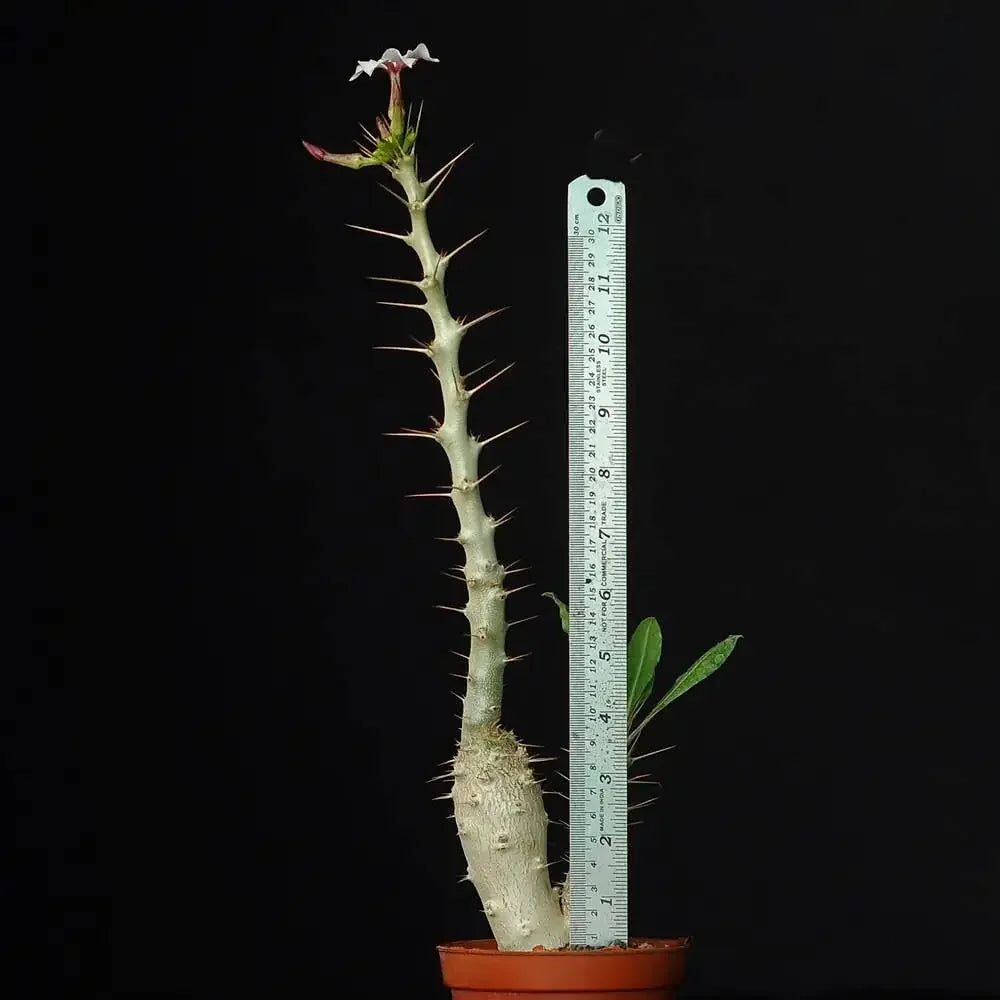
Pachypodium Saundersii
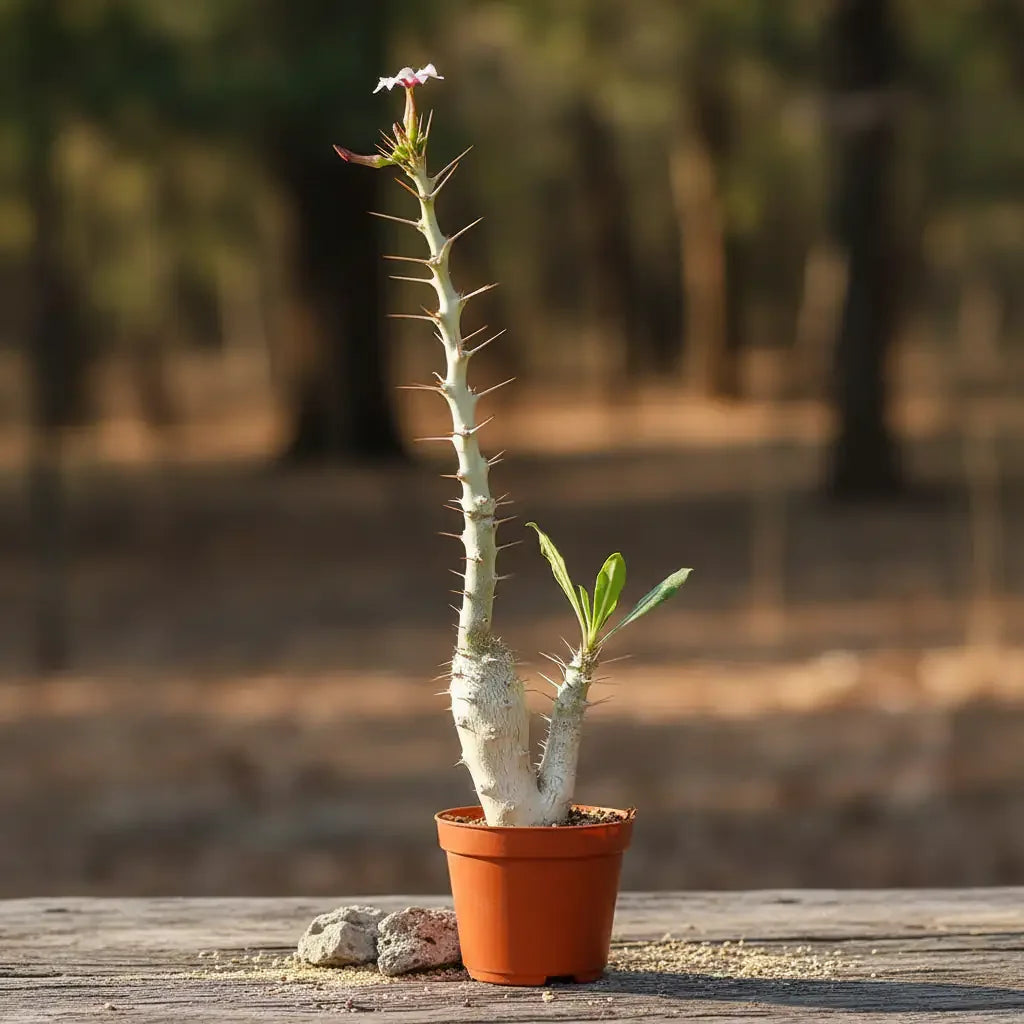
Pachypodium saundersii, commonly known as the Kudu Lily, is a beautiful caudiciform succulent native to South Africa, Eswatini (Swaziland), and southern Mozambique. It is prized by collectors for its swollen silver-grey trunk, thorny branches, and stunning white flowers.
Key Features
- Growth Type: Deciduous caudiciform succulent.
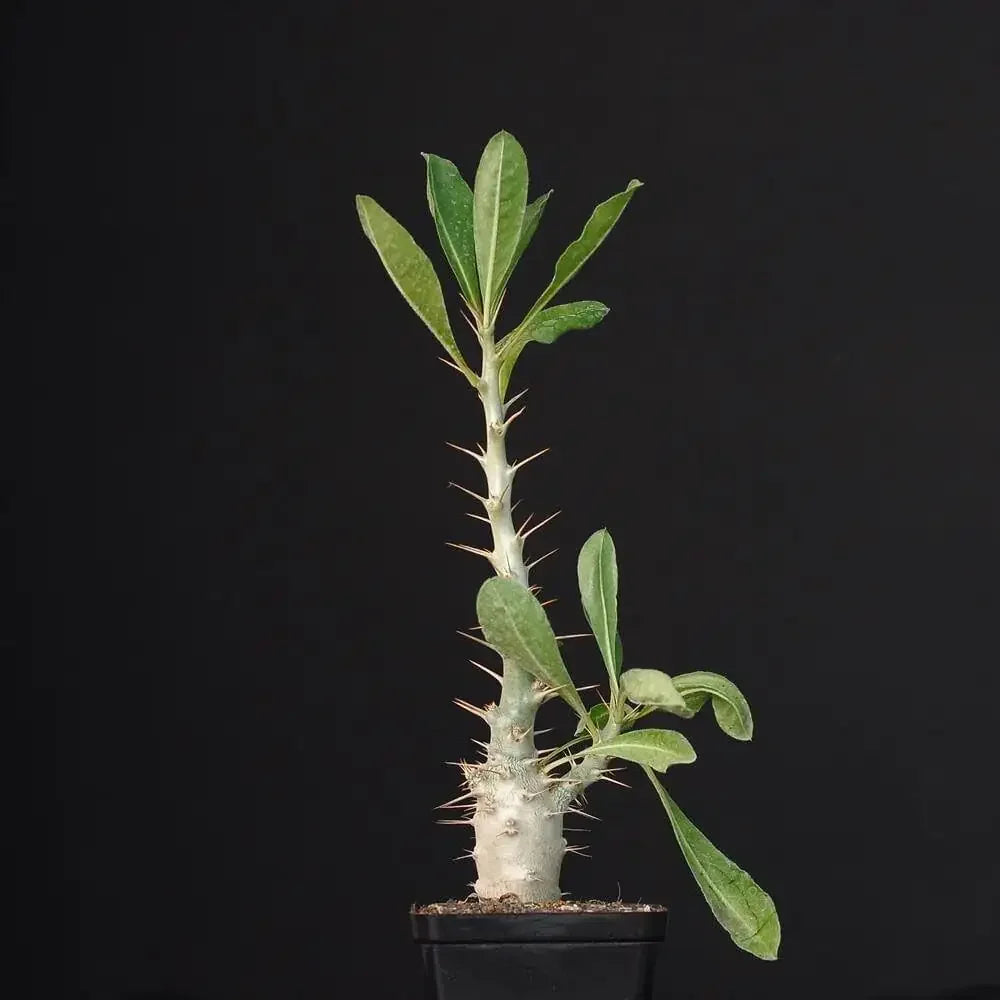
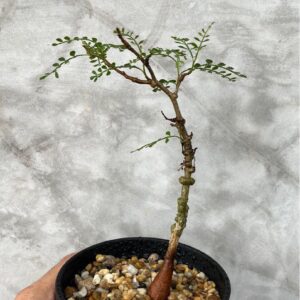
- Caudex: Thick, swollen, bottle-shaped trunk used for water storage.
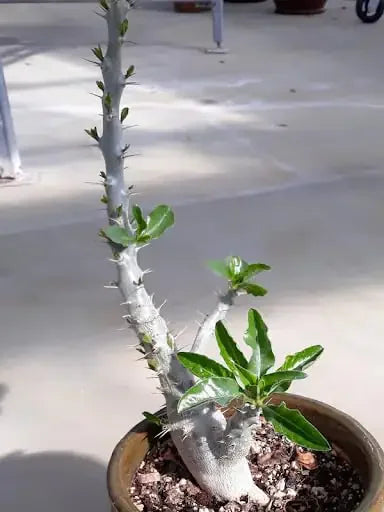
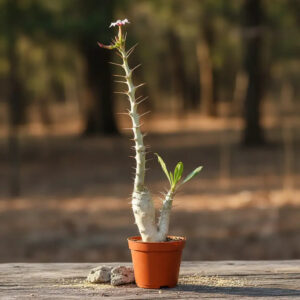
- Stems: Grey to silver-green branches covered with paired sharp spines.
- Leaves: Glossy green, oval leaves that appear during the growing season and may drop during dormancy.
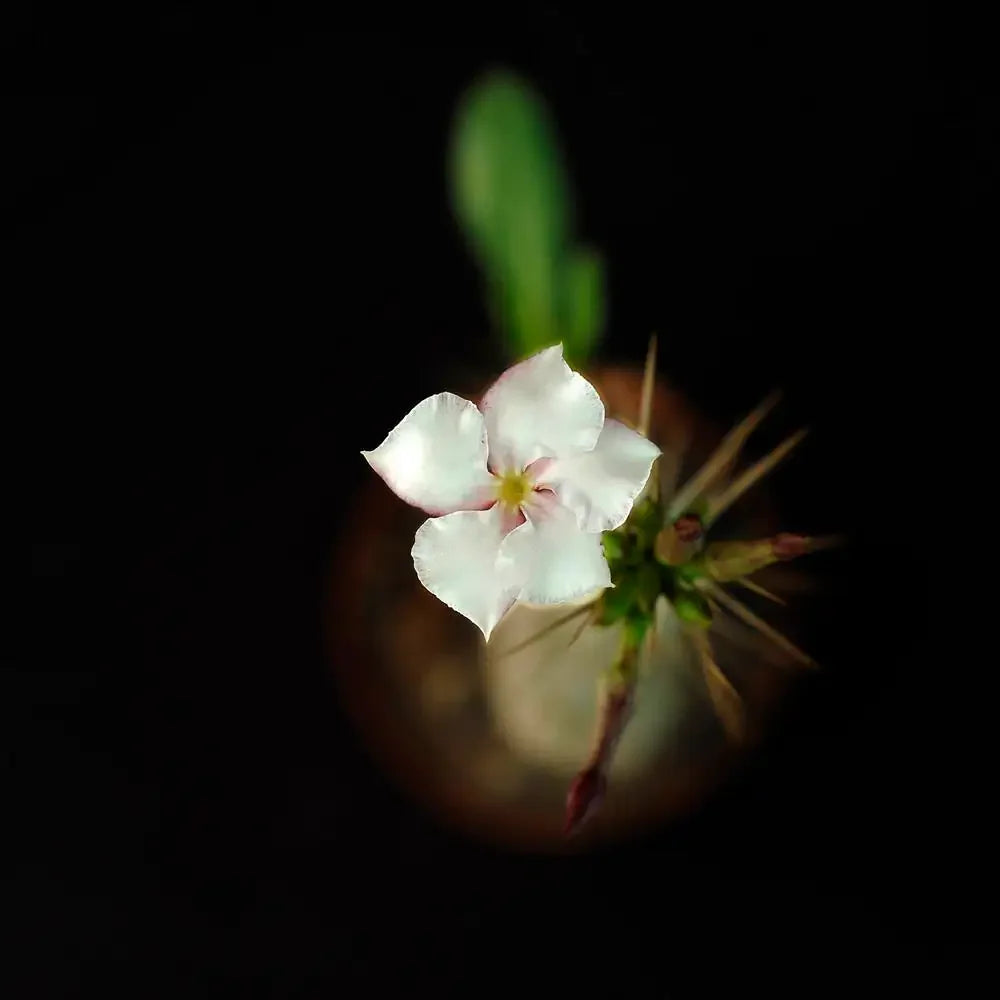
- Flowers: Large, star-shaped white flowers with a pink tinge, usually appearing from late spring through autumn.
- Size: Typically grows 1–2 meters (3–6 feet) tall in cultivation.
Caudex Pattern
Young plants develop a rounded, smooth caudex that gradually becomes irregular and sculptural with age. Mature specimens often develop multiple swollen branches, giving the plant a bonsai-like appearance.
Growing Conditions
Light:
Prefers full sun to bright indirect light. At least 5–6 hours of sunlight promotes compact growth and flowering.
Soil:
Requires an extremely well-draining mix, such as:
- 50% cactus mix
- 25% pumice or perlite
- 25% coarse sand or grit
Watering:
- Water Pachypodium Saundersii thoroughly during active growth (spring and summer).
- Allow the soil to dry completely between waterings.
- Greatly reduce or stop watering during winter dormancy when the plant is leafless.
Temperature:
- Ideal range: 20–35°C.
- Protect from temperatures below 8–10°C, especially when wet.
Flowering
One of the most floriferous species of Pachypodium Saundersii, mature plants can produce numerous white flowers with a subtle fragrance. Flowering is encouraged by:
- Plenty of sunlight
- A dry winter rest
- Slightly root-bound conditions
Care Tips
- Use a clay pot for better moisture control.
- Avoid overwatering, which is the primary cause of root rot.
- Fertilize lightly during the growing season with a low-nitrogen cactus fertilizer.
- Repot only every few years, as the plant dislikes frequent root disturbance.
Propagation
- Seeds: The preferred method, producing plants with attractive swollen caudices.
- Cuttings: Possible but usually do not develop the same prominent caudex as seed-grown plants.
Uses
- Exceptional specimen plant for succulent collections.
- Ideal for bonsai-style cultivation.
- Perfect for container gardening and caudiciform displays.
Reviews
There are no reviews yet.