
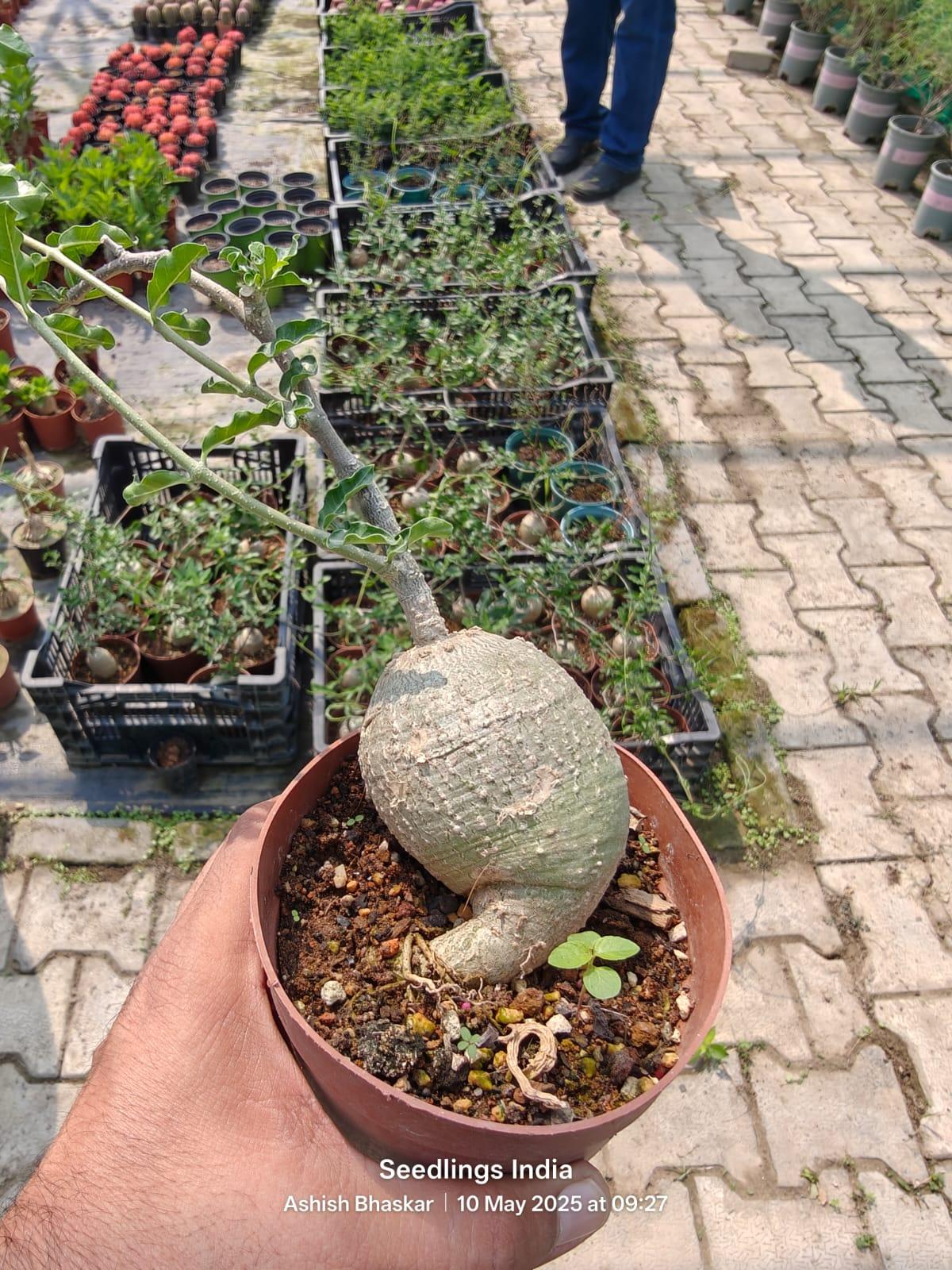
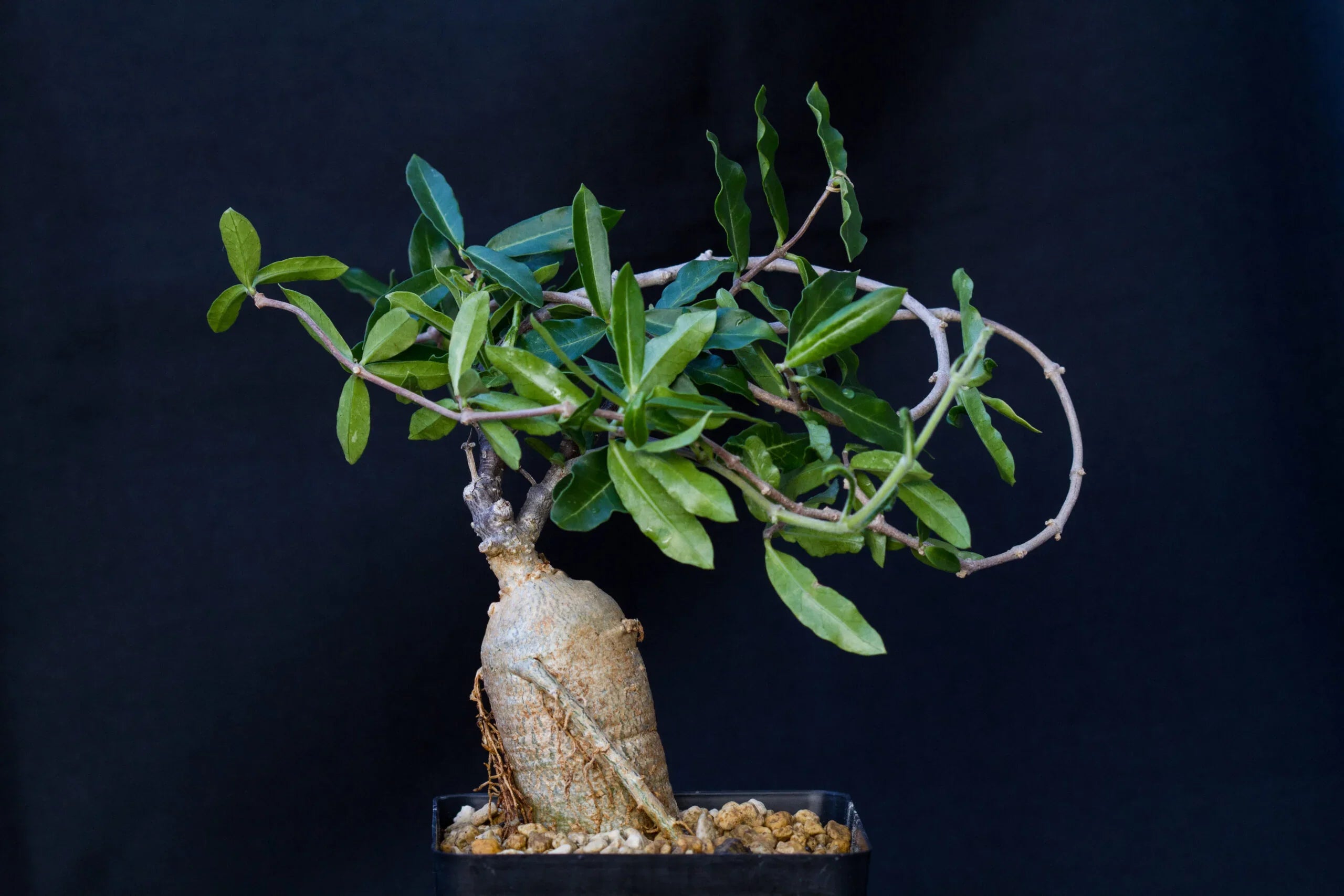
Hottentot Bread – Fockea Edulis
Origin and Background
Fockea edulis is a highly resilient caudiciform succulent native to the semi-arid savannahs and rocky areas of South Africa and Namibia. It belongs to the Apocynaceae family, making it a relative of milkweeds and the previously mentioned Matelea cyclophylla.
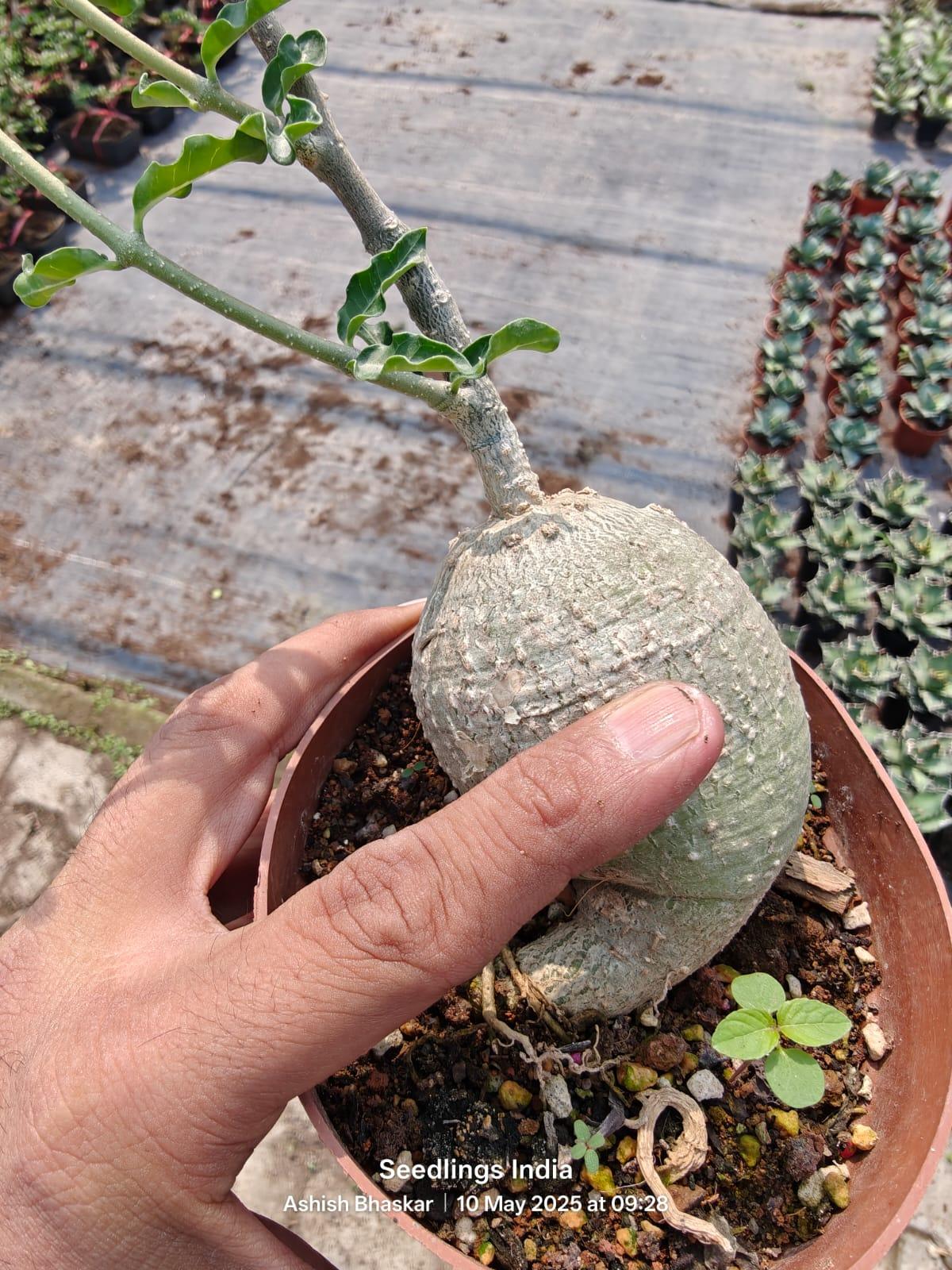
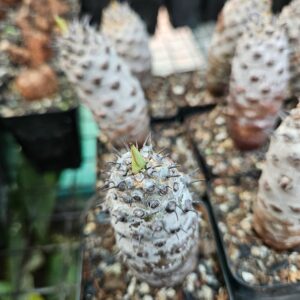
The common name “Hottentot Bread” carries historical weight. The massive, warty, greyish-white caudex is rich in water and starches. Indigenous Khoisan peoples historically used this underground tuber as a vital food and water source during severe droughts. However, the raw sap is toxic and alkaline; the caudex had to be extensively boiled or roasted to neutralize the toxins before it could be eaten safely.
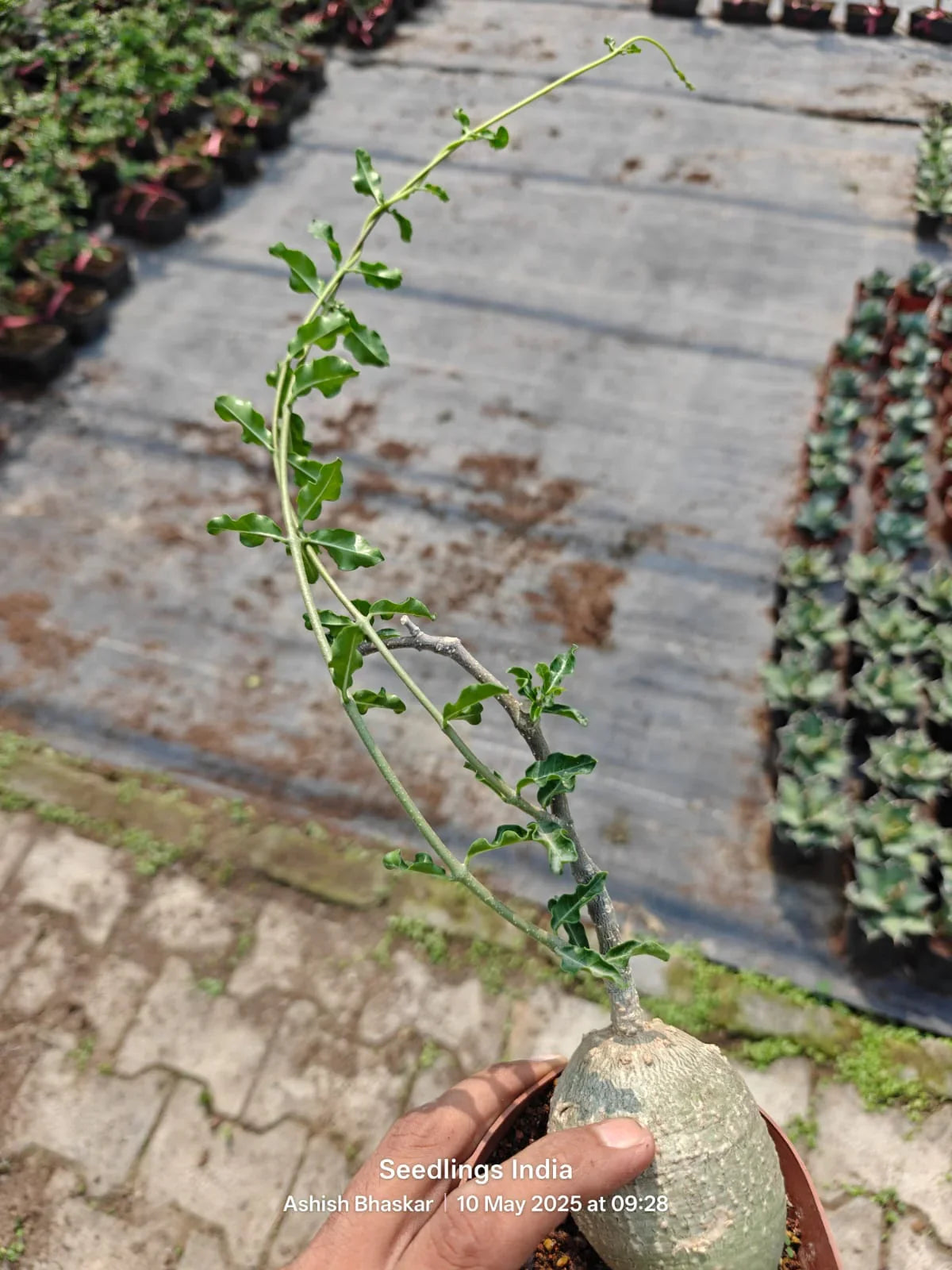
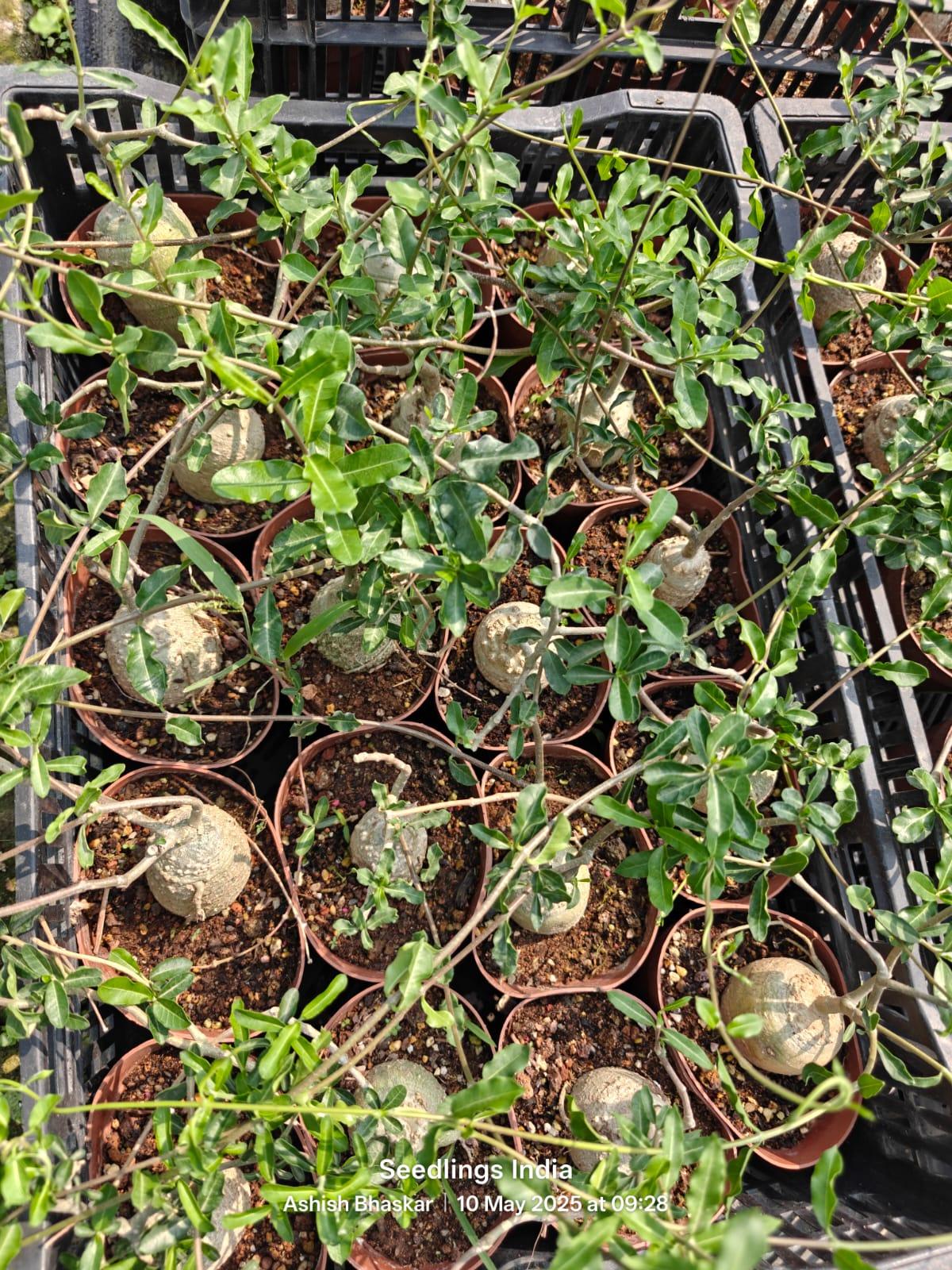
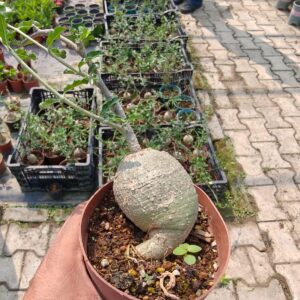
In cultivation, growers lift the caudex above the soil line to display its textured, sculptural beauty. During the growing season, it sends out vigorous, twisting vines covered in somewhat crinkled, oblong green leaves. It produces tiny, inconspicuous, star-shaped greenish-yellow flowers that have a surprisingly sweet, somewhat musky scent.
Comprehensive Care Guide
Fockea edulis is famously robust and is often recommended as an excellent “starter” caudiciform because it is quite forgiving. It is a summer-growing, winter-dormant plant.
Light
-
Vines in the Sun, Caudex in the Shade: The vining foliage thrives in full sun to partial shade. However, because the caudex grows completely underground in nature, it is susceptible to sunburn if exposed to harsh, direct afternoon rays.
Watering
-
Growing Season (Spring and Summer): It is a thirsty plant when actively growing. Water it thoroughly and deeply, then allow the top half of the soil to dry completely before watering again.
-
Dormancy (Winter): When temperatures drop, it will stop growing and may drop its leaves. Reduce watering significantly, giving it just enough to prevent the caudex from feeling soft or spongy (perhaps a light watering every 4 to 6 weeks).
Soil and Potting
-
Deep Pot Required: Fockea edulis develops a thick, aggressive taproot beneath the main caudex. It requires a deeper pot than most succulents to grow to its full potential.
-
Excellent Drainage: Use a highly porous, gritty mix. A blend of 50% pumice or perlite, 25% coarse sand, and 25% standard potting soil works beautifully.
Temperature
-
Warmth: It thrives in warm summer temperatures.
-
Winter Protection: It is not frost-hardy. Keep it in a dry environment with temperatures safely above 10°C (50°F) during the winter months.
Support
-
Vigorous Climber: You will need to provide a trellis or wire hoop. Without support, the long vines will aggressively tangle into themselves or neighboring plants.
Reviews
There are no reviews yet.