
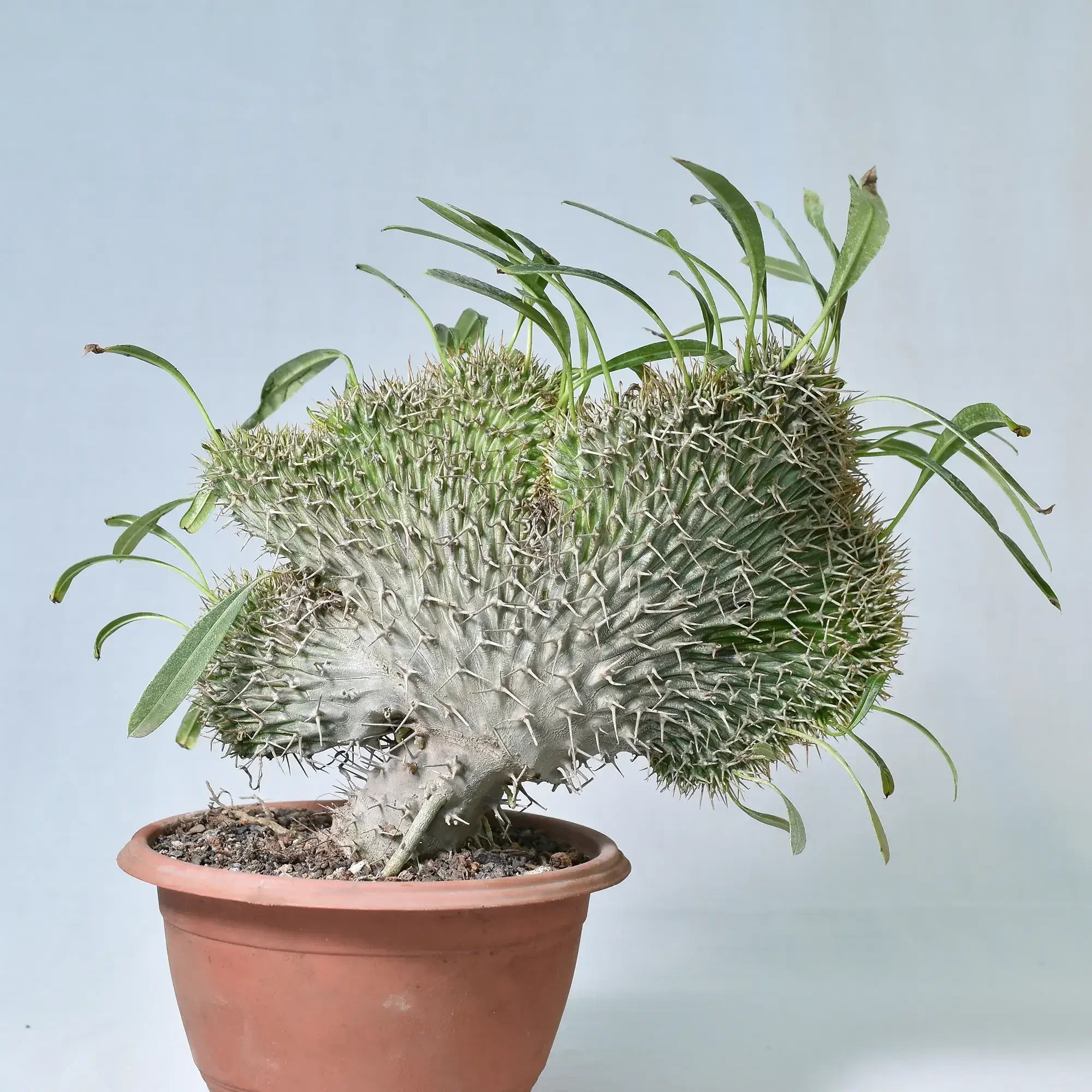
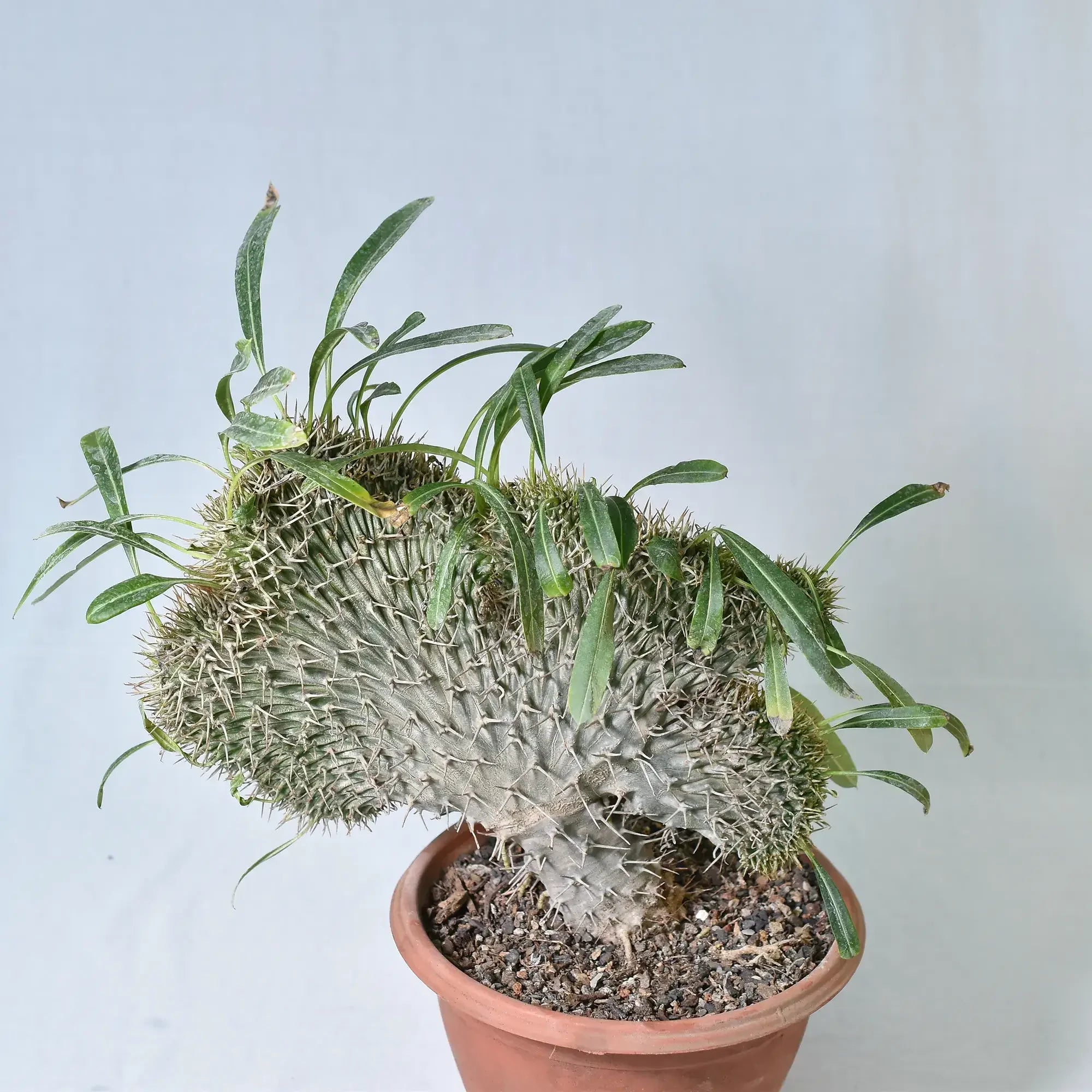
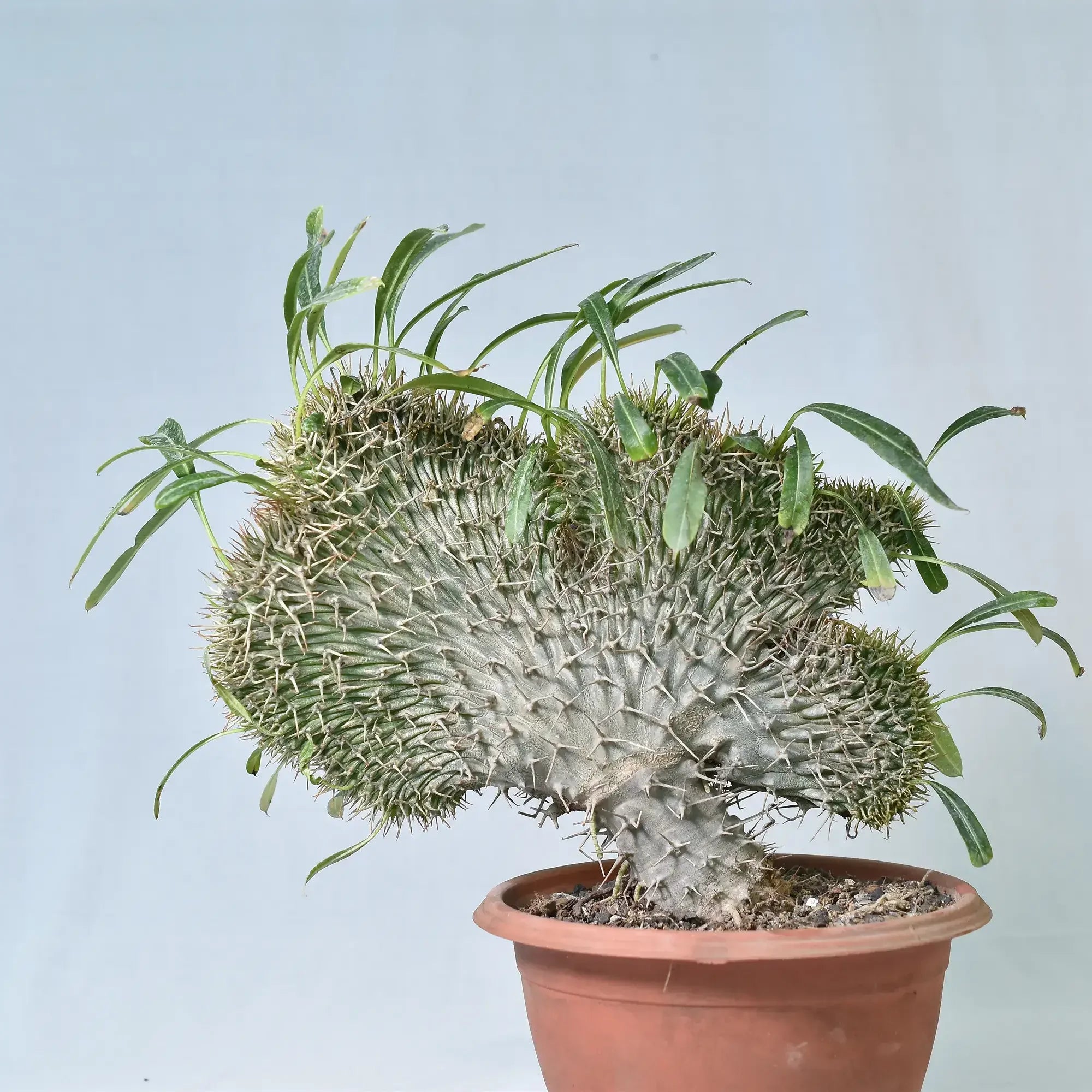
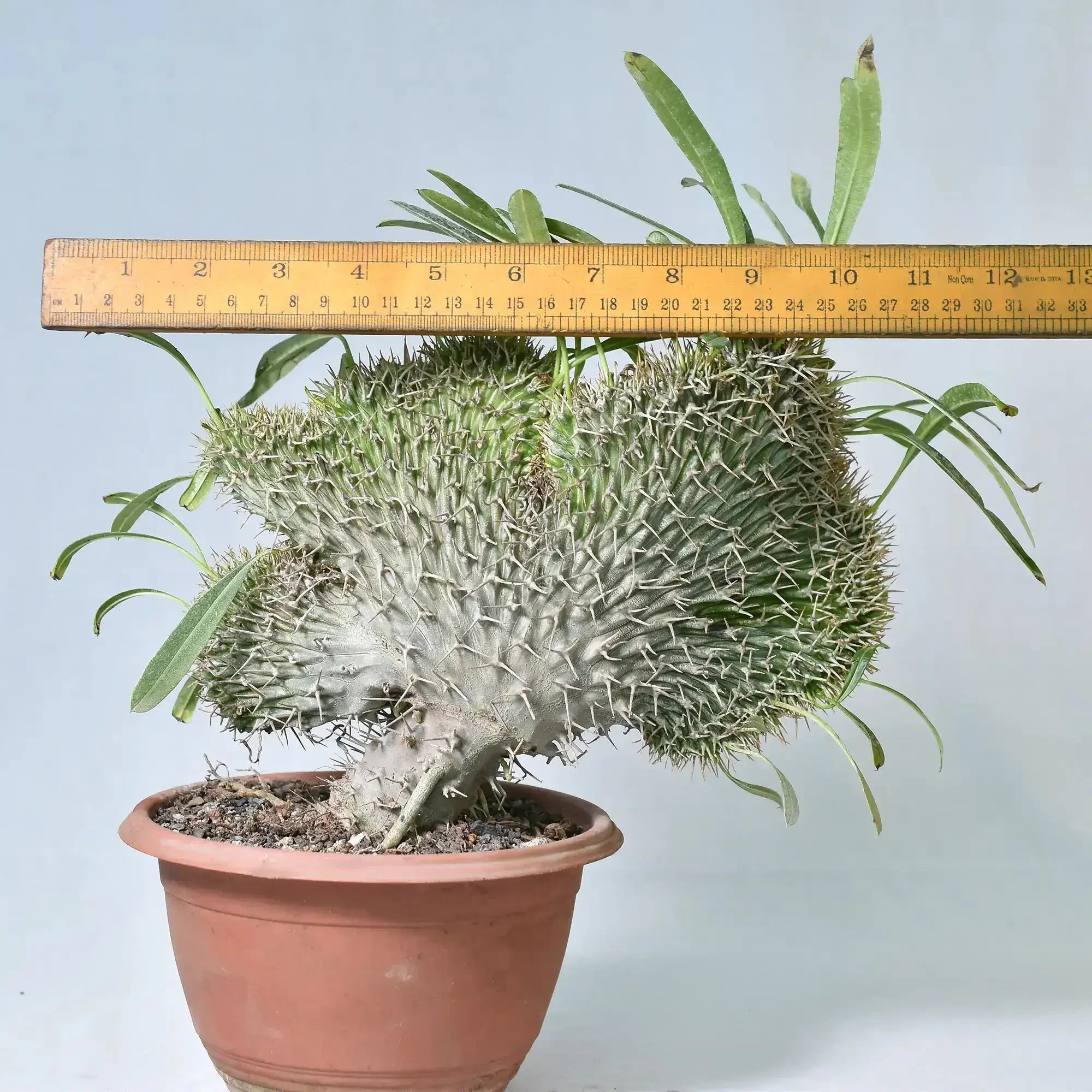
Pachypodium lamerei crest
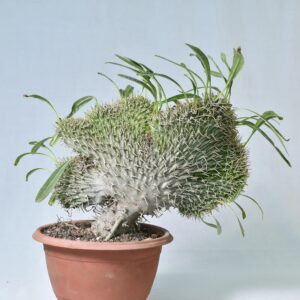
Pachypodium lamerei crest is a rare and highly ornamental cresting (cristate) form of the Madagascar Palm (Pachypodium lamerei). Instead of growing in a single upright column, the growing point mutates into a fan-like or wavy crest, creating a dramatic, sculptural silhouette that is highly prized by collectors.
Key Features: Pachypodium lamerei crest
- Growth Type: Crested succulent tree form
- Trunk: Thick, columnar base that develops a flattened or undulating crest at the top
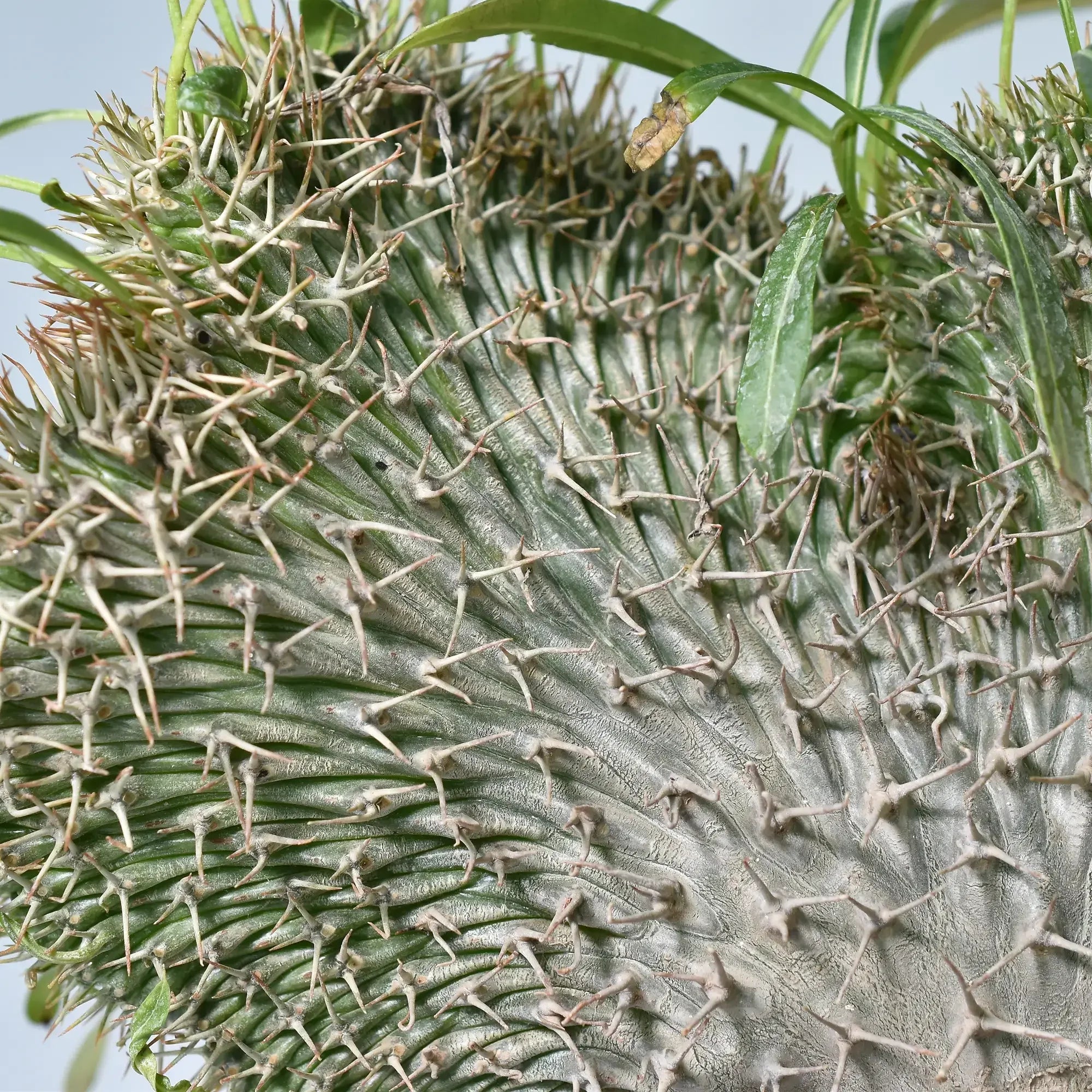
- Spines: Sharp paired spines along the trunk, typical of Pachypodium species
- Leaves: Long, narrow green leaves that emerge from the crest during active growth
- Overall Form: Fan-shaped, brain-like, or wave-like structure instead of a single stem
Cresting Pattern (Cristation)
The crest occurs due to a natural mutation in the plant’s growth point:
- Growth becomes horizontal or irregular instead of vertical
- Produces a fan-like ridge or folded ribbon structure
- Each plant has a completely unique sculptural shape
- Highly valued in rare plant collections
Growing Conditions
Light:
Prefers full sun to bright direct light. Strong light encourages compact growth and healthy crest development.
Soil:
Requires a very well-draining cactus mix, such as:
- 50% mineral soil (sand, pumice)
- 50% cactus or succulent mix
Watering:
- Water deeply during active growth (spring–summer)
- Allow soil to dry completely between watering
- Minimal water in winter dormancy
Temperature:
- Ideal range: 20–35°C
- Protect from temperatures below 10°C
Growth Cycle
- Spring: New leaves emerge from the crest
- Summer: Active growth and thickening of crest
- Winter: Dormant or leafless period
Care Tips
- Use a clay pot for stability and drainage
- Avoid overwatering (very sensitive to root rot)
- Feed lightly during growing season with cactus fertilizer
- Protect crest from physical damage, as it is more delicate than normal growth
Propagation
- Grafting: Often used to maintain crest forms
- Seeds: Do not reliably produce cresting mutations
- Cuttings: Rare and difficult
Uses
- Collector’s specimen plant
- Sculptural focal point in succulent gardens
- Bonsai-style caudiciform display
- Indoor/outdoor ornamental feature in warm climates
Reviews
There are no reviews yet.