
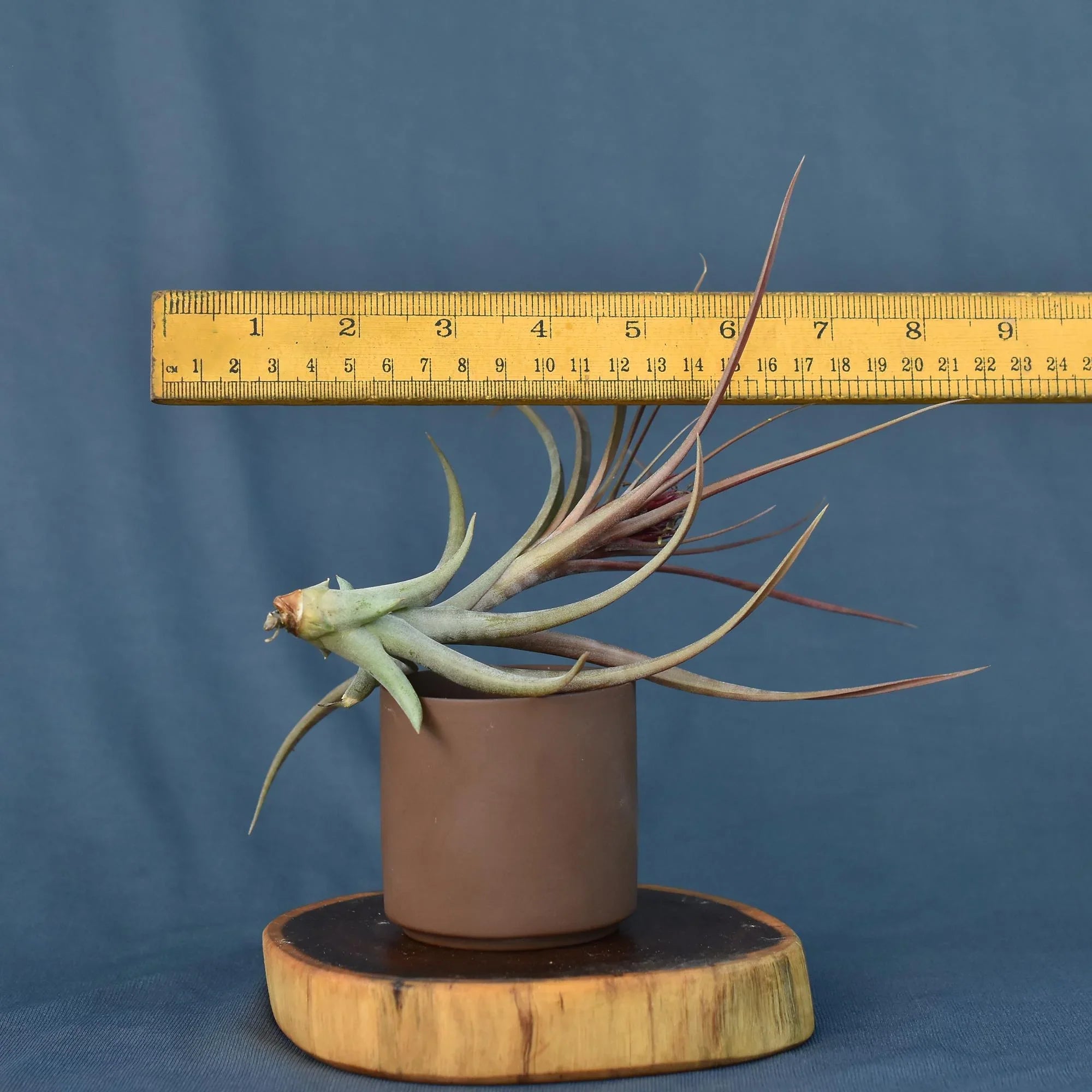
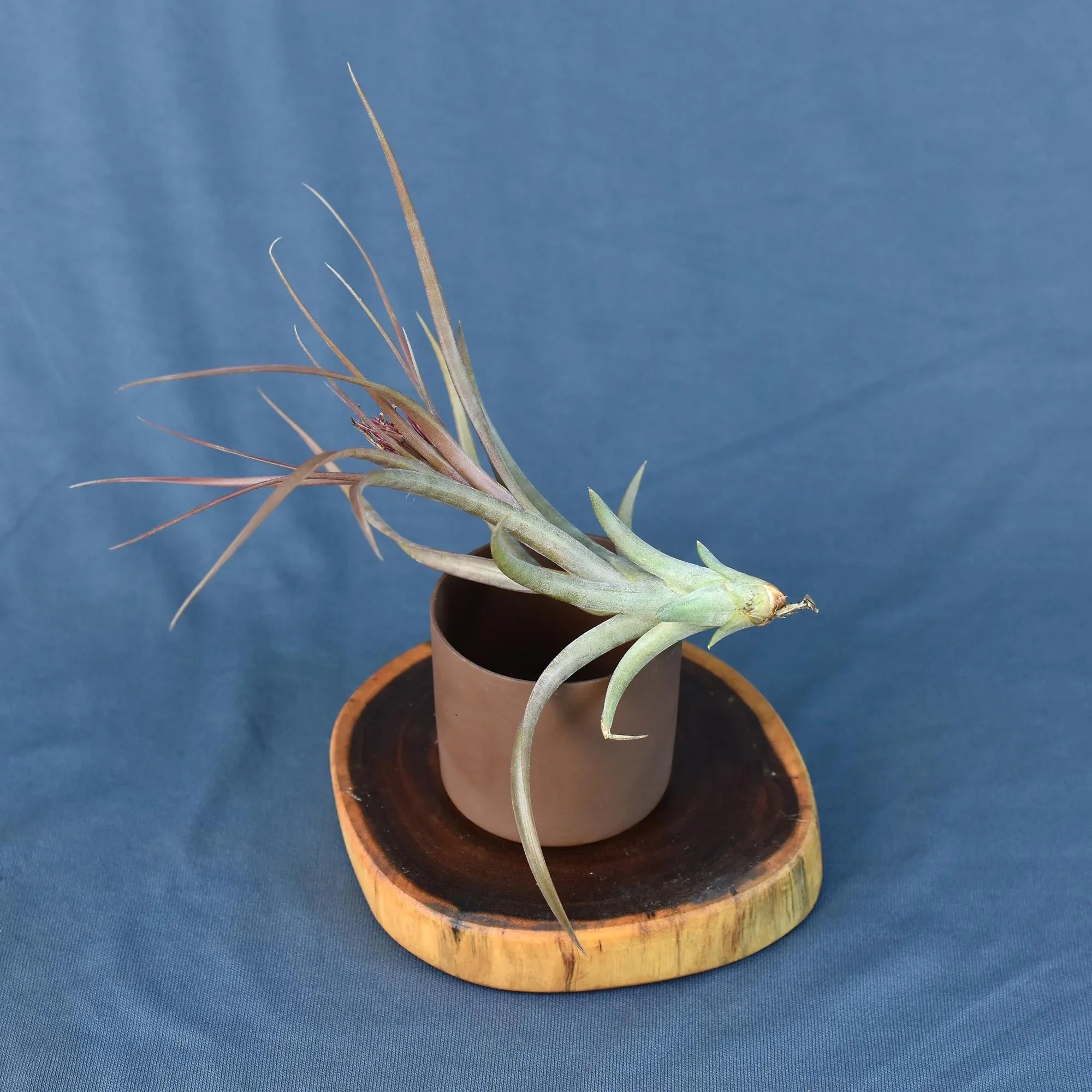
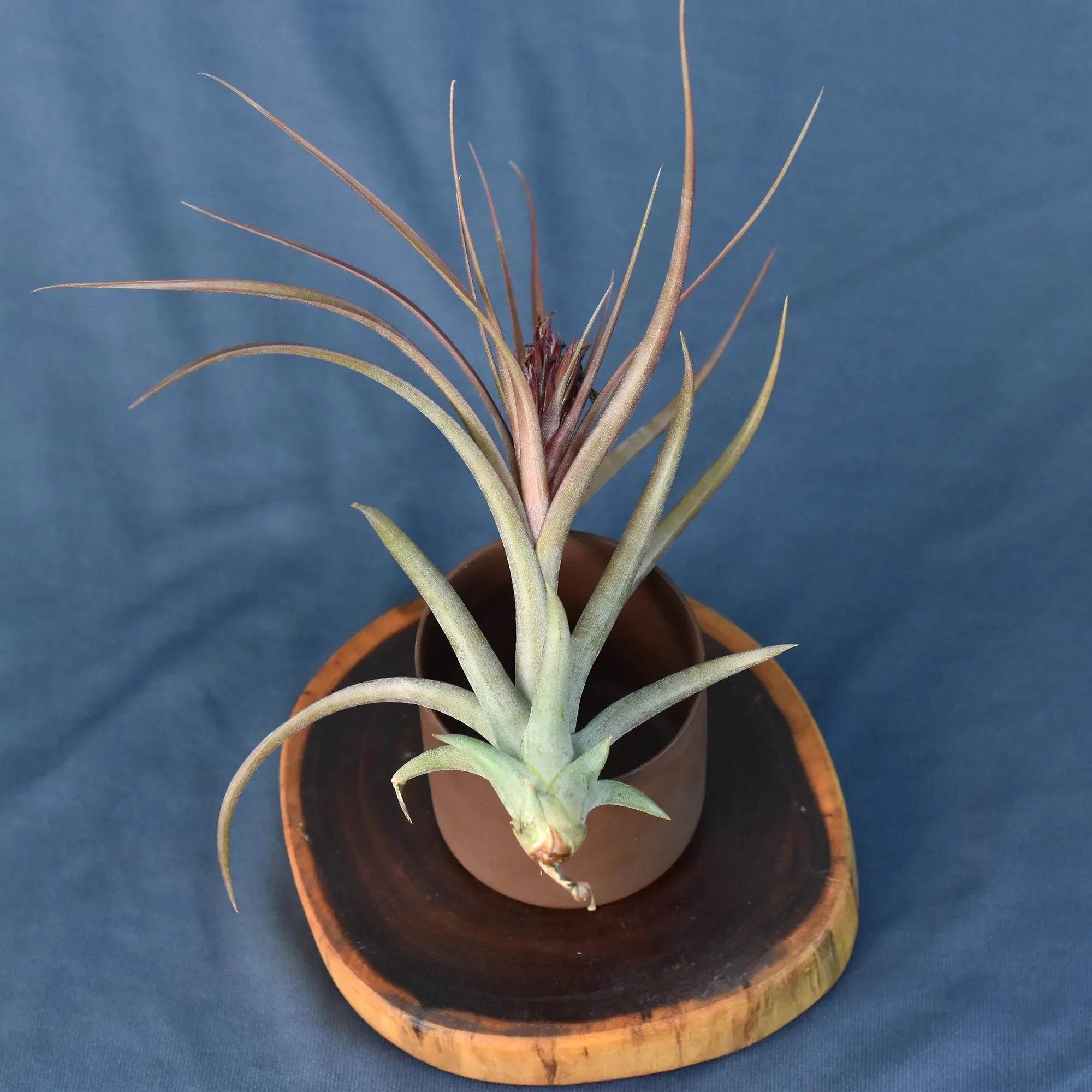
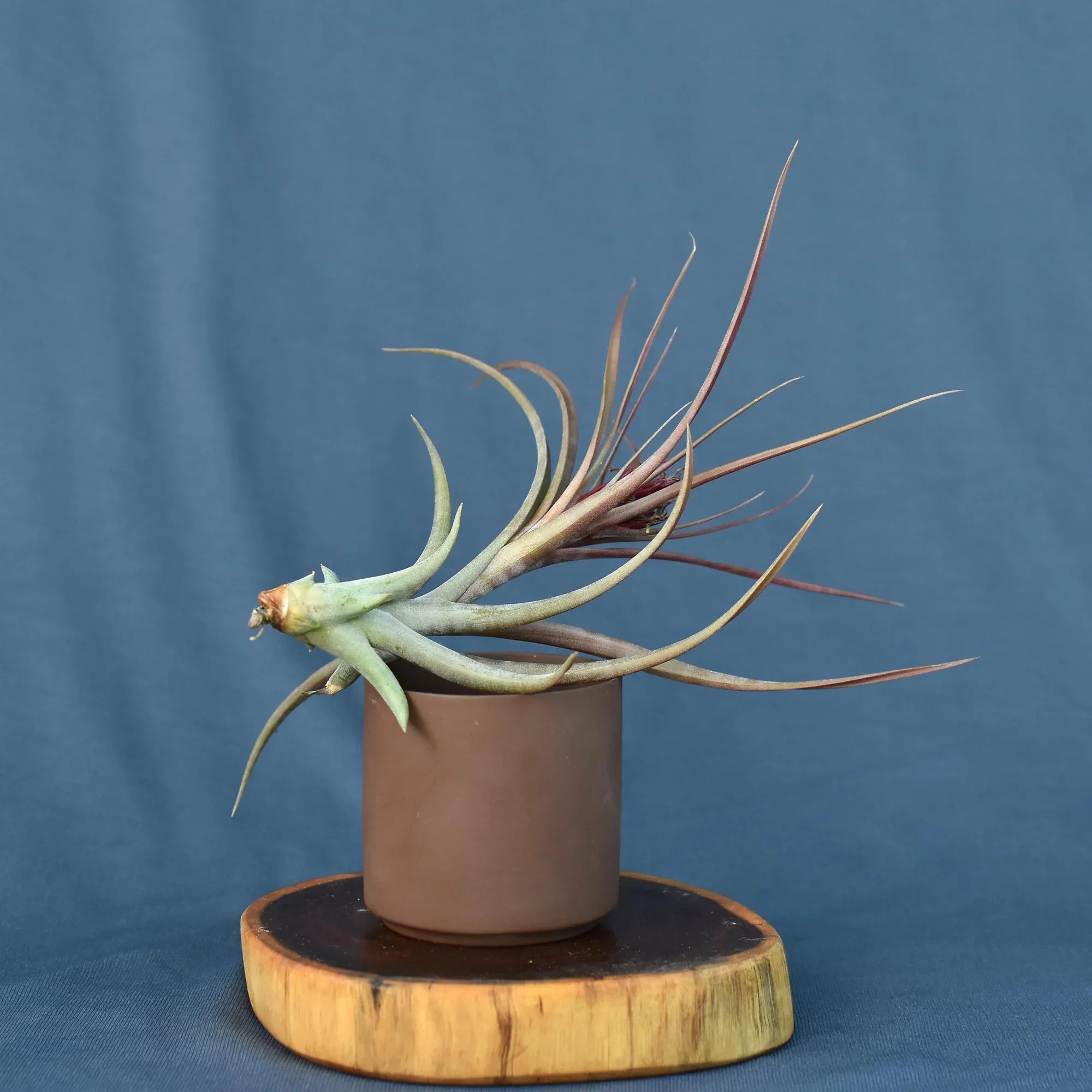
Vivid Hybrid Fusion: Tillandsia concolor x brachycaulos
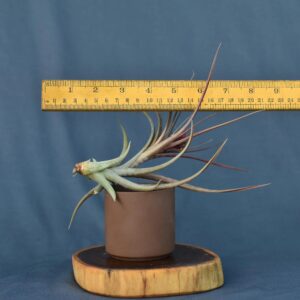
A robust architectural hybrid blending the rigid structural integrity of T. concolor with the brilliant floral blushing of T. brachycaulos.
- Origin & History of Name: The genus Tillandsia was named by Carl Linnaeus in 1738 to honor the Swedish physician and botanist Elias Tillandz. The specific epithet concolor derives from Latin for “uniform color,” referring to its consistent leaf tint, while brachycaulos combines the Greek brachys (short) and kaulos (stem), denoting its acaulescent or stemless growth habit. This hybrid name signifies a controlled cross between these two distinct species.
- Morphology: This hybrid displays a classic rosette form with a superior trichome density, giving the epidermis a velvety, silvery-green appearance. From T. concolor, it inherits stiff, channeled leaves that resist dehydration; from T. brachycaulos, it gains the “blushing” trait, where the entire plant undergoes a dramatic chromatic shift to vibrant red or pink during the anthesis (blooming) phase. The inflorescence is typically a short, capitate spike nestled within the center of the rosette.
- Habitat & Origin: This plant is a cultivars/hybrid, created through selective cross-pollination in a nursery environment. The parent species are native to the dry and deciduous forests of Mexico and Central America. This hybrid is produced via sustainable greenhouse cultivation, ensuring that no wild-collected specimens are removed from their sensitive neotropical habitats.
- Cultivation Profile:
- Substrate: Strictly epiphytic; do not use soil. Mount on cork bark, driftwood, or place in a wire basket to ensure maximum airflow around the base.
- Light: Requires bright, indirect solar radiation. In the Indian subcontinent, it thrives near east or north-facing windows. Avoid direct mid-day sun in tropical regions like Mumbai or Chennai to prevent leaf scorch.
- Water/Dormancy: Mist 3–4 times weekly or perform a 20-minute submersion twice a week. In humid monsoon months, reduce watering frequency. Unlike desert succulents, this hybrid does not have a true dormancy but grows slower during the cooler months in Northern India.
- Scientific/Historical Anecdote: Tillandsia are among the most advanced “atmospheric” plants in the world. They lack functional roots for nutrient uptake, instead utilizing specialized cells called peltate trichomes. These microscopic, umbrella-shaped scales act as biological valves: they lie flat to seal in moisture when dry and lift up to rapidly absorb water and minerals from the air via capillary action when wet.
Reviews
There are no reviews yet.